Adrian C. Finlayson
The publication The Architectural Record edition of August, 1920 includes an article titled Recent Civic Architecture in Porto Rico: Adrian C Finlayson Architect. The article is about the work done by this architect on the island, which includes a diversity of subjects that include schoolhouses, urban and rural, institutional buildings, city halls, market houses, hospitals and bridges. The article begins with these words:
“Visitors to Porto Rico are invariably impressed by the admirable quality of the modern civic architecture that abounds in all sections of the beautiful island. There are few towns that do not possess at least one fine schoolhouse, and not infrequently in such a town may be seen two or three other notable public buildings…The impress thus made upon the island's aspect, imparting a distinctively new note to its architectural quality that keeps well in accord with its Spanish traditions, speaks highly for what has been achieved by American influence in the little more than two decades since Porto Rico became United States territory.”
The public buildings buildings referred to in this quote were built by the Interior Department of the US Government. The architect of the Interior Department from 1910 until his death in 1921 was Adrian Clark Finlayson (1883-1921), a native of Boonville, NY and a graduate of the department of architecture at Syracuse University in New York. His work as an architect began in New York City at the firm of former professor at Syracuse, Albert L. Brockway (1864-1933) from where he moved to the Office of the Supervising Architect for the U.S. Treasury in Washington, DC. In 1927 advancement there brought him to assignment in Puerto Rico .
The Department of the Interior architectural division had a staff consisting for the greater part of local draftsmen and a few Americans attracted by the charms of the island’s tropical climate and the opportunity to familiarize themselves with the requirements of construction under such conditions, so different in various important respects from those imposed by a northern climate. The Architectural Record states that the work turned out by the local staff attests to the existence of much artistic talent and that no greater competence could be desired than that shown by the talented chief draftsman of the office, Mr. Francisco Roldán Martinó (1890-1988), who in a course of architectural study in Spain has enjoyed excellent opportunities in the line of professional training. Other notable architects that worked for the Department of the Interior during the tenure of Mr. Finlayson were Rafael Carmoega and Pedro Adolfo de Castro y Besosa.
Finlayson’s architectural legacy includes some of the most highly regarded buildings on the Island, structures deemed by Jorge Rigau, founder and first dean of the School of Architecture at the Polytechnic University of Puerto Rico in his article titled Flotsam, Jetsam and Foreign Cargo: American Architecture and Urbanism in Puerto Rico after I898, as unsurpassed in the rest of the Hispanic Caribbean. One of his most notable designs is Central High School in Santurce, a blend of Spanish Revival and Beaux Arts styles, included in the National Register of Historic Places in 1987. Some of his other work on the island include the Ponce High School, Mayagüez High School, Román Baldorioty de Castro Grade and Technical School in Old San Juan, Rafael Cordero Graded School in Santurce, Rafael Balseiro Madeira School in Barceloneta also included in the National Register of Historic Places, Salinas City Hall, Aguadilla City Hall, Plaza del Mercado or Municipal Market in Rio Piedras, Fajardo Municipal Hospital, bridge over the Inabón River on PR-2 and the Rafael M. Labra Grade School in Santurce also included in the National Register of Historic Places. The “Labra," as it is commonly called, constitutes a departure from Finlayson’s traditional concrete designs and is a fine example of Georgian Style and brick construction. Its masonry detailing, slightly sunken patio, cloister-like appearance, and square cupola constructed in wood are part of Finlay’s contribution to the island’s architectural landscape.
His untimely death came at age 37 of a relapse following months of convalescence from malaria, pleurisy and pneumonia. At the beginning of his fatal illness, he was bringing to completion the construction of the Capitol Building in San Juan.
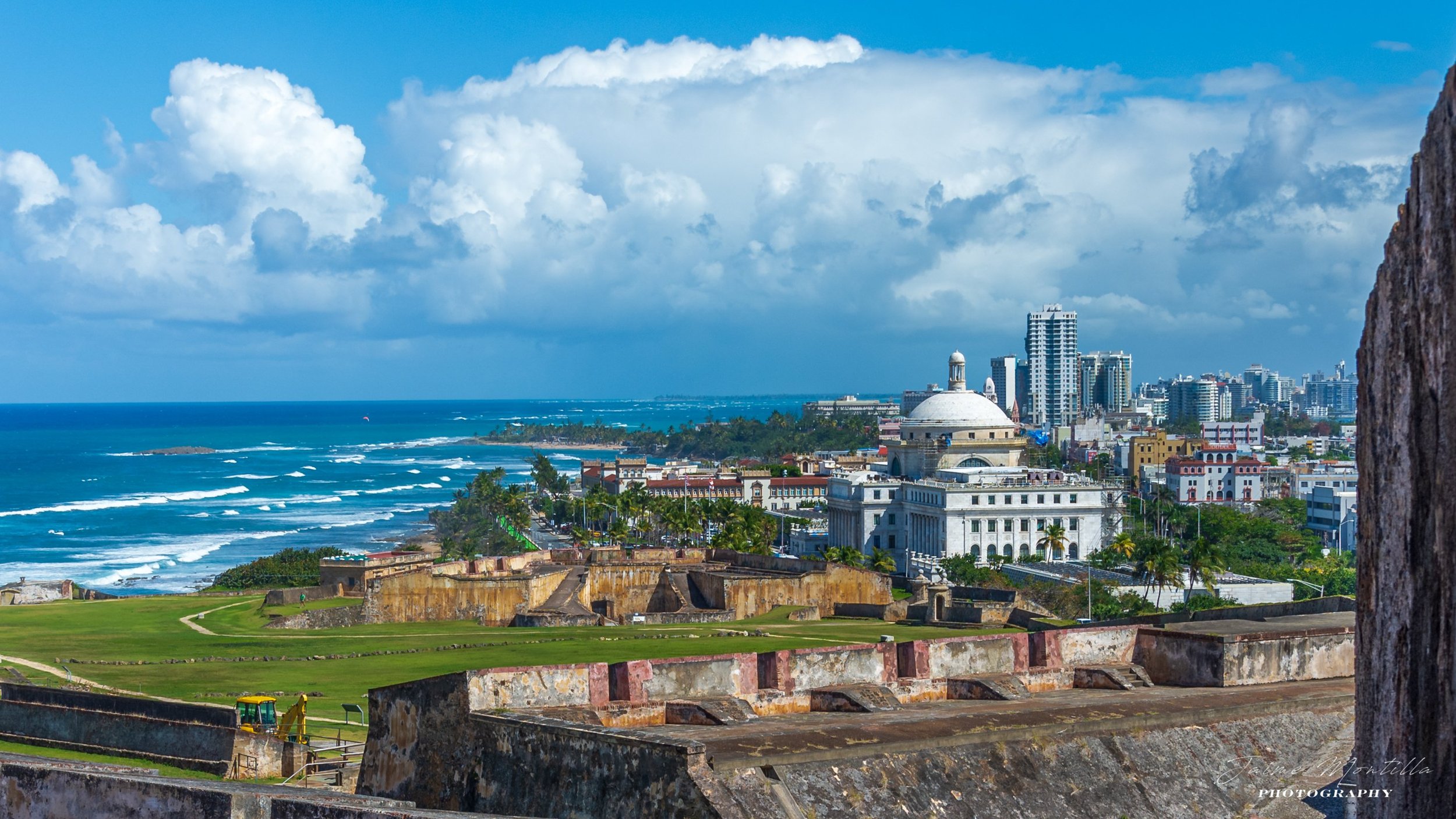
Capitol Building - Initial design in 1907 by Frank E. Perkins of New York never built, second design in 1920 by Adrian C Finlayson partially built by Rafael Pons between 1921-22, third design in 1924 by Rafael Carmoega completed in 1929.
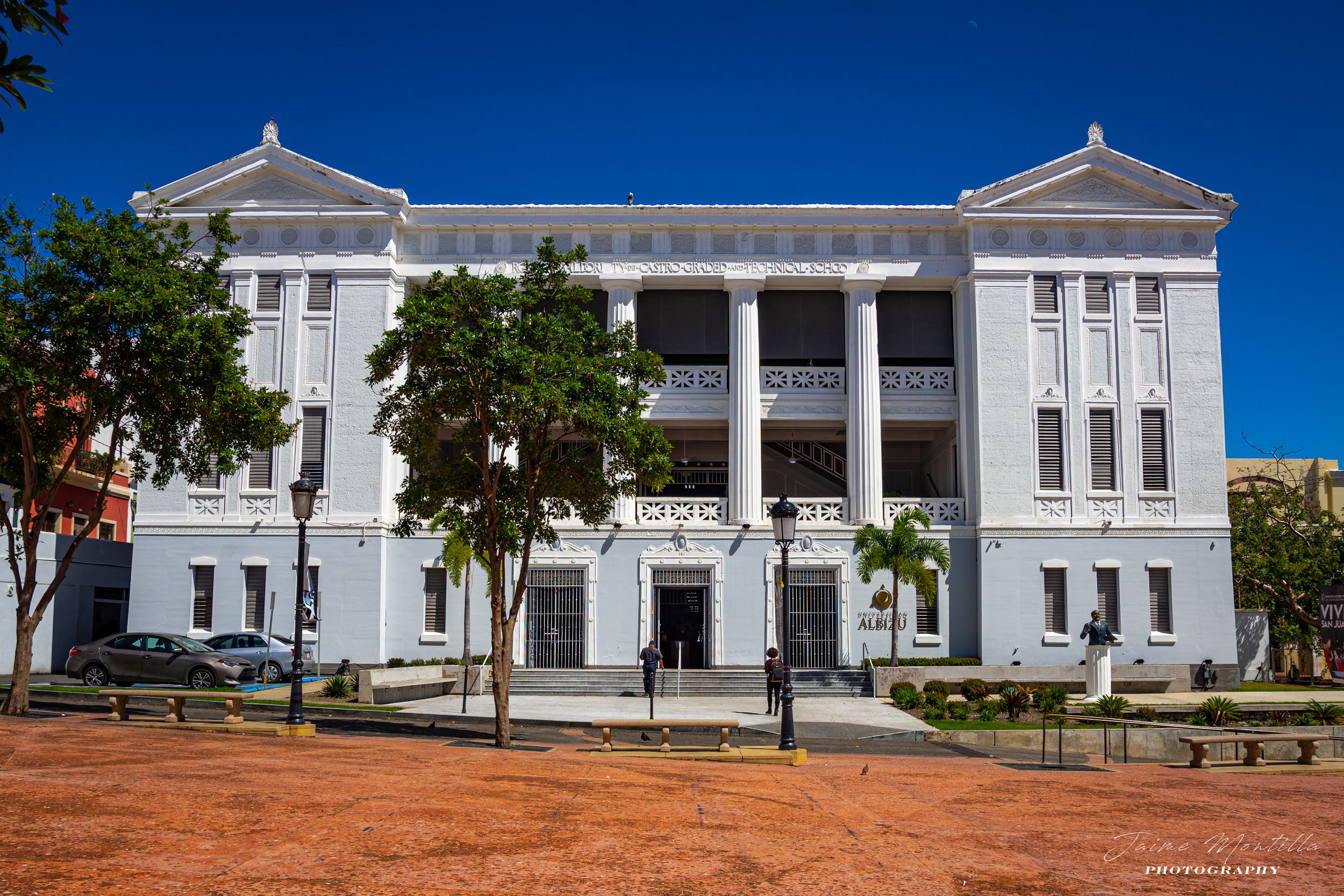
Román Baldorioty de Castro Grade and Technical School construction completed in 1918 on the site of the ancient Franciscan monastery which had fallen into disrepair.
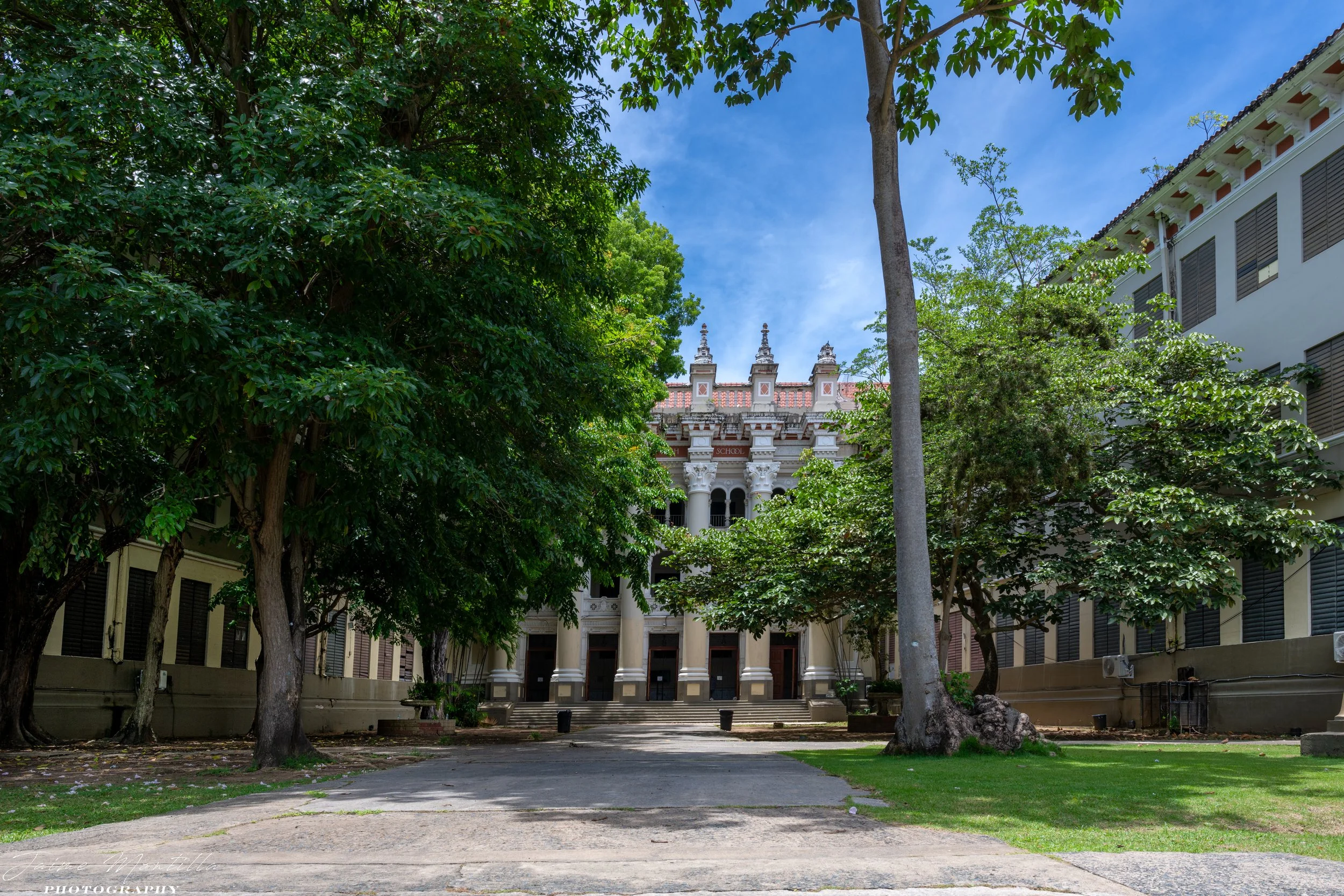
Central High School - San Juan, 1925 design in Spanish Renaissance style.
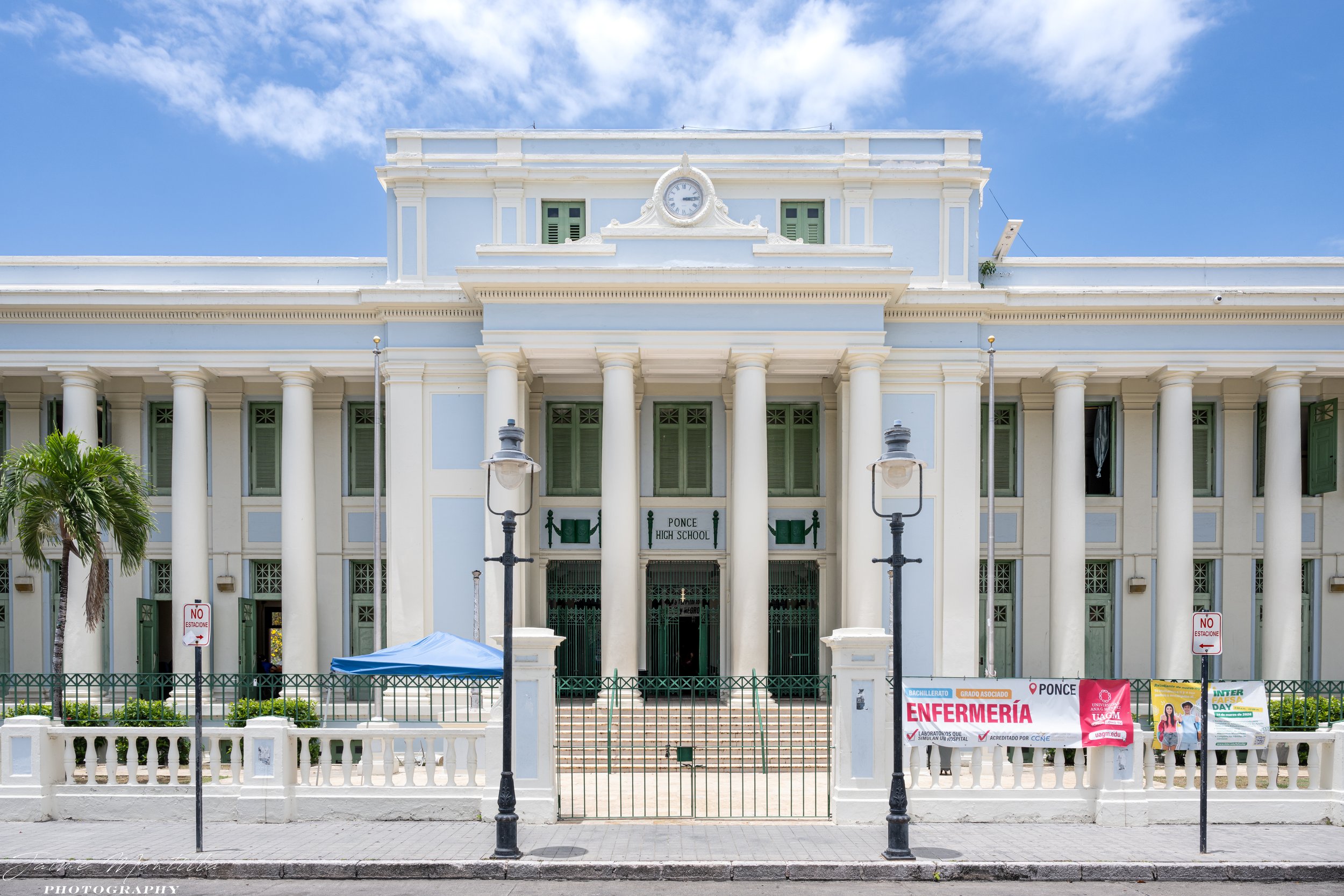
Ponce High School - Ponce, 1915 neo-classical design.
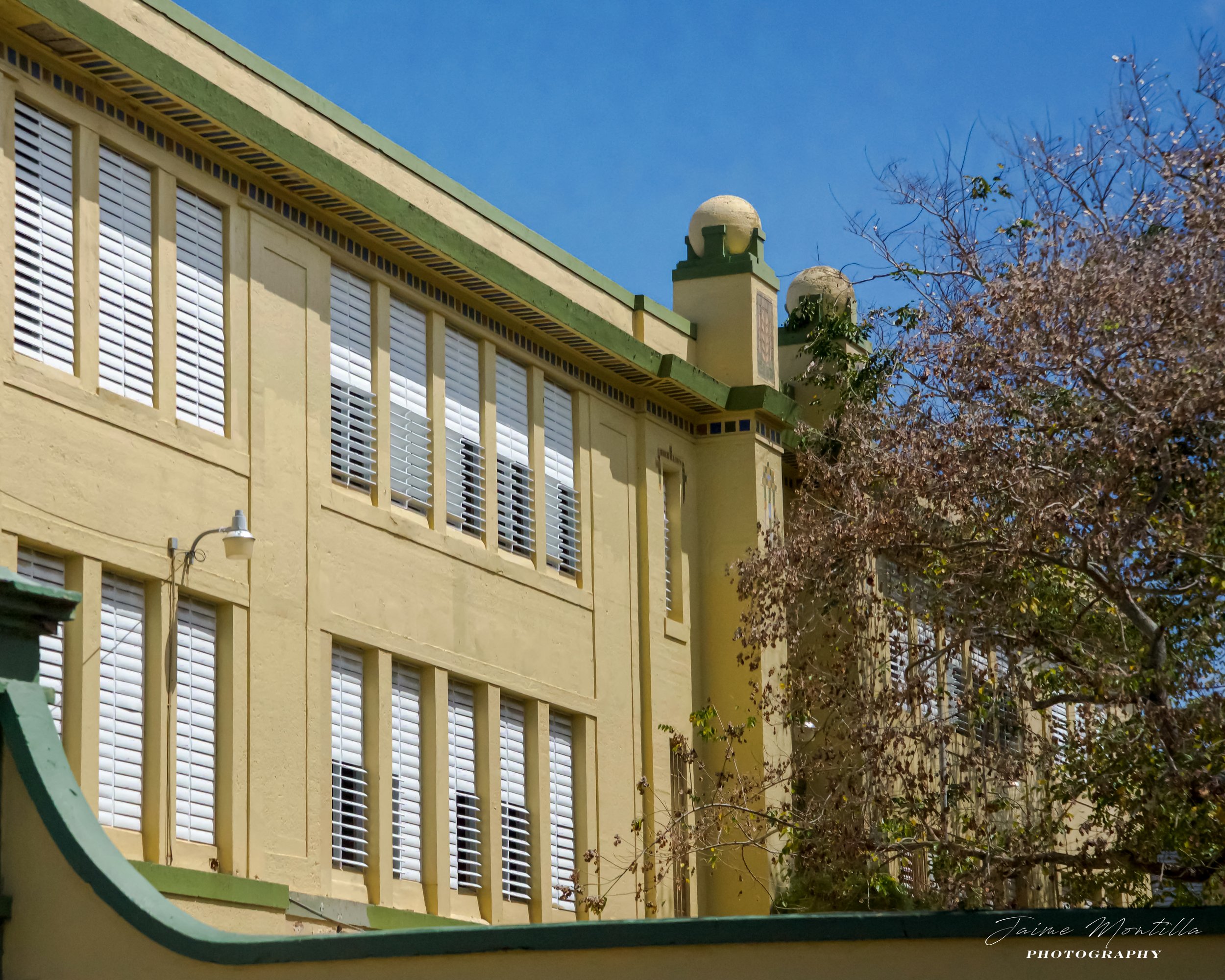
Arecibo High School - date unknown design by Finalyson while working at the Interior Department when he designed many schools and public buildings all throughout the island. Thomas Marvel states the design offer charactristics typically used by Antonin Nechodoma, specifically the two pilasters framing the front entrance topped by spheres which he states are in the same spirit as the Larkin Building in Buffalo, NY designed by Frank Lloyd Wright. The school, located at Ave. José De Diego corner Calle Adraino Gonzalez, closed down in 2000 and the building is now vacant.
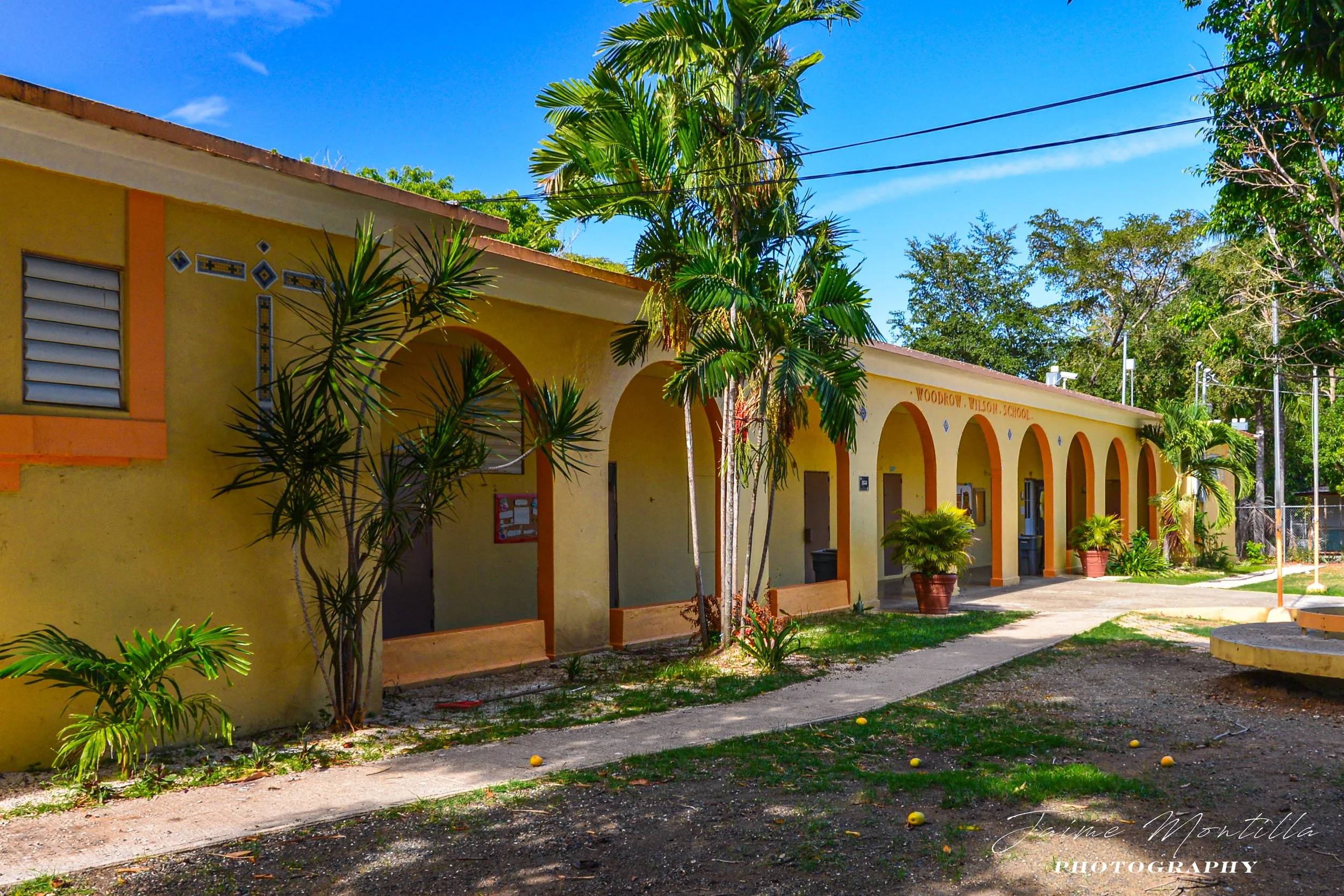
Four-room school built for the Municipality of Salinas for Central Aguirre