Henry Klumb
Heinrich “Henry” Klumb (1905-1984) was born in Cologne, Germany where it is generally stated that he studied architecture probably at the Kunstgewerbeschule, a historic school of applied arts graduating in 1926, the year it was renamed the Kölner Werkschulen by Konrad Adenauer while mayor of Cologne. At the time he was studying architecture, the modernist movement took prominence in Germany with the establishment in 1919 of the Staatliches Bauschule School of Architecture[1] in Weimar, later known as the Bauhaus. Although Klumb’s work was a product and a part of the modern architecture movement, Klumb did not identify himself with the prevalent architectural concepts of the day and later credited Frank Lloyd Wright with influencing his outlook on architecture. He came to the US as he states in his diaries: “…facing a full life ahead I could not identify with the architectural concepts of the day. To give my existence meaning I had to search for higher values…”
César A. Cruz in his essay Henry Klumb: Puerto Rico’s critical modernist, states that Klumb expressed himself on the teachings at the Bauhaus by saying that for Klumb, the Bauhaus was a personally felt presence by virtue of the famed school’s proximity to his native city of Cologne. Cruz states that Klumb pointedly called the Bauhaus movement “the Bauhaus indoctrination” and further characterized the European architectural scene of the late 1920s as “alive alright with intellectual vengeance, but void of spirit and man’s inner needs”. In one overarching critique of modernist influence, Klumb mocked Le Corbusier, Adolf Loos, and Hannes Meyer [2] when he wrote, “Houses were to become machines for living, pitched roofs became a heresy and ornament a crime. Architecture was reduced to a formula adhered to with intellectual vengeance.”
In 1927, Klum emigrated to the United States establishing residence in St. Louis, Mo. In October, 1928, Klumb received an invitation to visit Taliesin, where Frank Lloyd Wright had plans for establishing the Taliesin Fellowship at Spring Green. For the following five years Klumb would be, as he himself described it, a student and assistant at Taliesin. In early 1929, Klumb states that in search for those “higher values, he was fortunate to find himself in Taliesin East as another member of our little family in Architecture”. For five years he was part of a sheltered and inspiring life, always surrounded by beauty, exposed to the “art of work and living, observing the principals at work to bring creative truth to earthly efforts”.
During this time, Klumb also spent five months with Wright in the Arizona desert where they built the Ocatillo Camp, a series of small buildings designed by Wright modeled on tent houses as living and work facilities for his family and staff during the time they were working on the design of a large hotel called the “San Marcos in the Desert.” The hotel was about ready to go into construction, but due to the 1929 stock market crash the project was halted. The abandoned Ocatillo Camp eventually disappeared as materials were taken for other uses. Once back in Taliesin, Wright charged Klumb with the organization of the first Frank Lloyd Wright exhibition in Europe where he spent from May through September, 1931 lecturing and managing the exhibits in Amsterdam, Berlin, Stuttgart, Antwerp and Brussels.
In September 1933, Klumb left Taliesin and for the next ten years practiced in various cities across the United States including Minneapolis and Chicago before settling in Washington, DC in 1934. During that period of time he engaged in the design of low cost pre-fabricated houses. In February 1938, Klumb was hired by the Golden Gate International Exposition Commission to design displays for a Native American exhibit planned for the spring and summer of 1939 in San Francisco. This led to an ongoing partnership with the U.S. Department of the Interior’s Indian Arts and Crafts Board that led eventually to his relocation to Los Angeles.
In December 1943 Steve Arneson, a former business partner and fellow Taliesin apprentice who was then working at the Committee on Design of Public Works (CDPW) in Puerto Rico, served as intermediary between Klumb, the CDPW and Governor Rexford Guy Tugwell to invite Klumb to San Juan to work as Architect in charge of General Design of the newly established CDPW. Tugwell and Klumb had met in Maryland while collaborating on the Greenbelt/Tugwell Towns in Greenbelt, MD; Greenhills, OH and Greendale, WI; three planned, New Deal era communities built by the U.S. Resettlement Administration headed Tugwell to provide affordable, suburban housing surrounded by greenbelts, influenced by Ebenezer Howard’s garden city movement. The CDPW was charged with the design of $50 million worth of public works focused on the design of hospitals, housing, schools and community centers. However, Klumb’s work at the Committee lasted only from February to November 1944. In 1945 Klumb founded the Office of Henry Klumb, which soon became an important architectural firm on the island, he also resumed his relationship with the CDPW as an architect-consultant in which capacity one of his most notable work was the design of the residences for the newly implemented Low Cost Rural Houses program
Klumb’s first design on the island, done together with Arneson, was the Bosch house in Cataño for the head of Barcardi Corporation José “Pepín” Bosch. The first designs of his private practice were the Haeussler Residence, the New York Department Store building in Santurce in 1946, the campus and church of the Colegio San Ignacio de Loyola School and the San Ignacio of Loyola Parish. Other commercial buildings attributed to Klumb are the Hotel La Rada in El Condado in 1950, the IBM Building at Calle Loiza in Santurce in 1957 and the Parke Davis Pharmaceutical Industrial Complex in Carolina also in 1957 and an expansion of the UPR School of Tropical Medicine building in Puerta de Tierra. Klumb is also credited with several religious structure designs including the the Santa Rosa Chapel in Guaynabo in 1948, the church of San Martín de Porres in 1949 and the Virgen del Carmen church in 1953 both in Cataño and the San Ignacio de Loyola School and Church in Rio Piedras.
Between 1946 and 1966 Klumb worked at the University of Puerto Rico Rio Piedras and Mayagüez campuses as the university’s only architect. His most notable work at the Rio Piedras Campus are the Facundo Bueso Building, the Río Piedras Faculty Residences in 1946, the Río Piedras Agricultural Experimental Station, the UPR Museum of Anthropology, History and Art, the UPR General Library, the UPR Student Center. and the Law School building. In the Mayagüez Campus are the General Library Building, the Agricultural Studies Building in 1952, the General Studies Building in 1954, the original student dorms, the Student Center built in 1954 and the Rafael Mangual Coliseum built in 1974.
Towards the end of his career, the Office of Henry Klumb dedicated itself almost exclusively to the design of industrial facilities specifically pharmaceutical manufacturing plants including Eli Lilly, Parke-Davis, Baxter, Roche, Searle and and Travenol Laboratories.
Beginning in the late 1940s and the1950s, architecture in Puerto Rico adopted, in an overwhelming way, the principles of the international style in favor of the up to then traditional style architectural designs. Enrique Vivoni Farage in his essay Modern Puerto Rico and Henry Klumb, states that Klumb expressed this feeling in superb fashion in an Interiors Magazine edition of May 1962 article entitled Designs for the Tropics that quoted him as saying:
“There is no real architecture of the tropics in Puerto Rico. Everything is bastard Spanish, which was never the heritage of more than 10% of the Puerto Ricans anyway. And the Spanish enclosed everything behind thick walls and grilles. Their women weren’t to be seen; everything was protected. Then you superimpose the Anglo-Saxon traditions on top of that, and you get the most wretched architectural results imaginable.”
The dissertation titled The Phenomenology of a Modern Architect and his Sense of Place: Henry Klumb’s Residential Architecture in Puerto Rico, 1944-1975 by César A. Cruz is a very interesting reading about Klum’s life and lists and all the residential properties designed by Klumb in Puerto Rico. In 1981, the Colegio de Arquitectos de Puerto Rico established the Henry Klumb Award, the College's highest honor. Current photos of his work still standing are forthcoming.
__________________________________________________________
[1] The Staatliches Bauhaus (1919–1933) was a revolutionary German school founded by Walter Gropius in Weimar to unite fine arts with craftsmanship, prioritizing functional, industrial-friendly design. It aimed to create a new "total" work of art, merging disciplines like architecture, weaving, metalworking, and painting. The school was closed in 1933 due to Nazi pressure which labeled the school's modernist, avant-garde style as "degenerate".
[2] Le Corbusier, Adolf Loos, and Hannes Meyer were pivotal 20th-century architects who rejected traditional ornamentation in favor of functionalism, yet differed in ideology. Le Corbusier emphasized poetic, geometric form (5 Points of Architecture), Loos championed austere, utilitarian spaces ("Ornament and Crime"), and Meyer promoted a strictly functional, sociologically driven, "biological" approach.
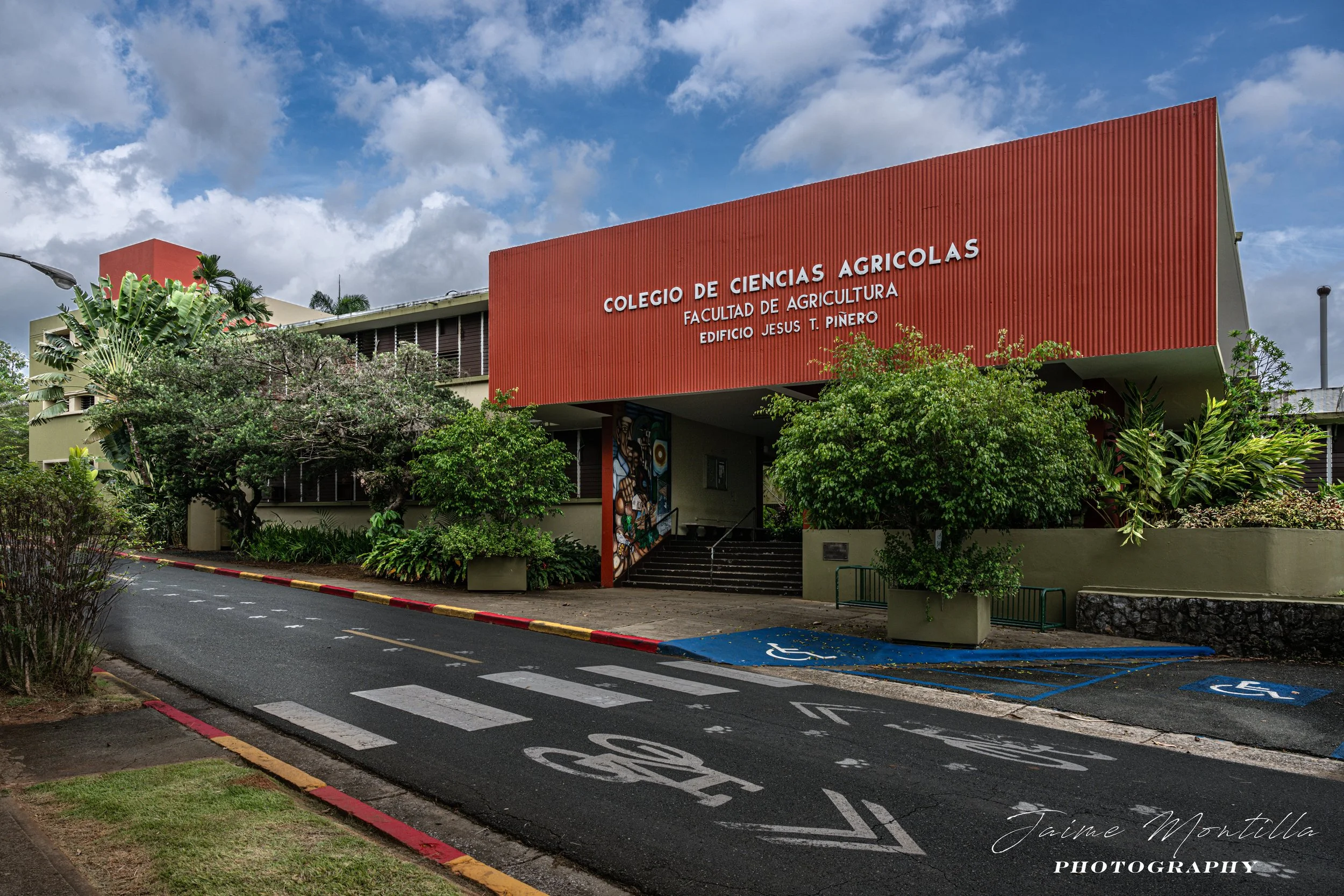
UPR Mayagüez Campus - Agricultural Studies Building
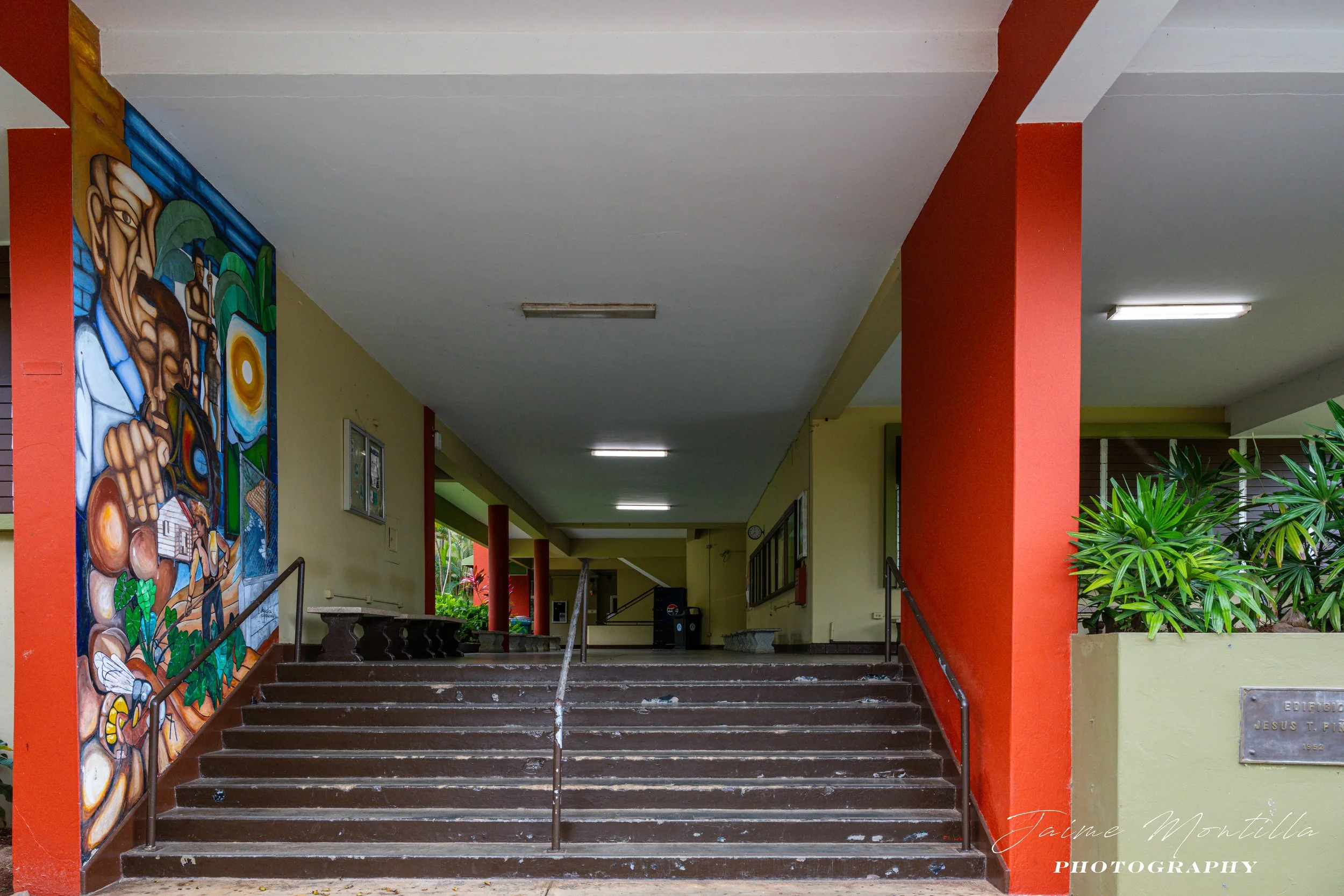
UPR Mayagüez Campus - Agricultural Studies Building
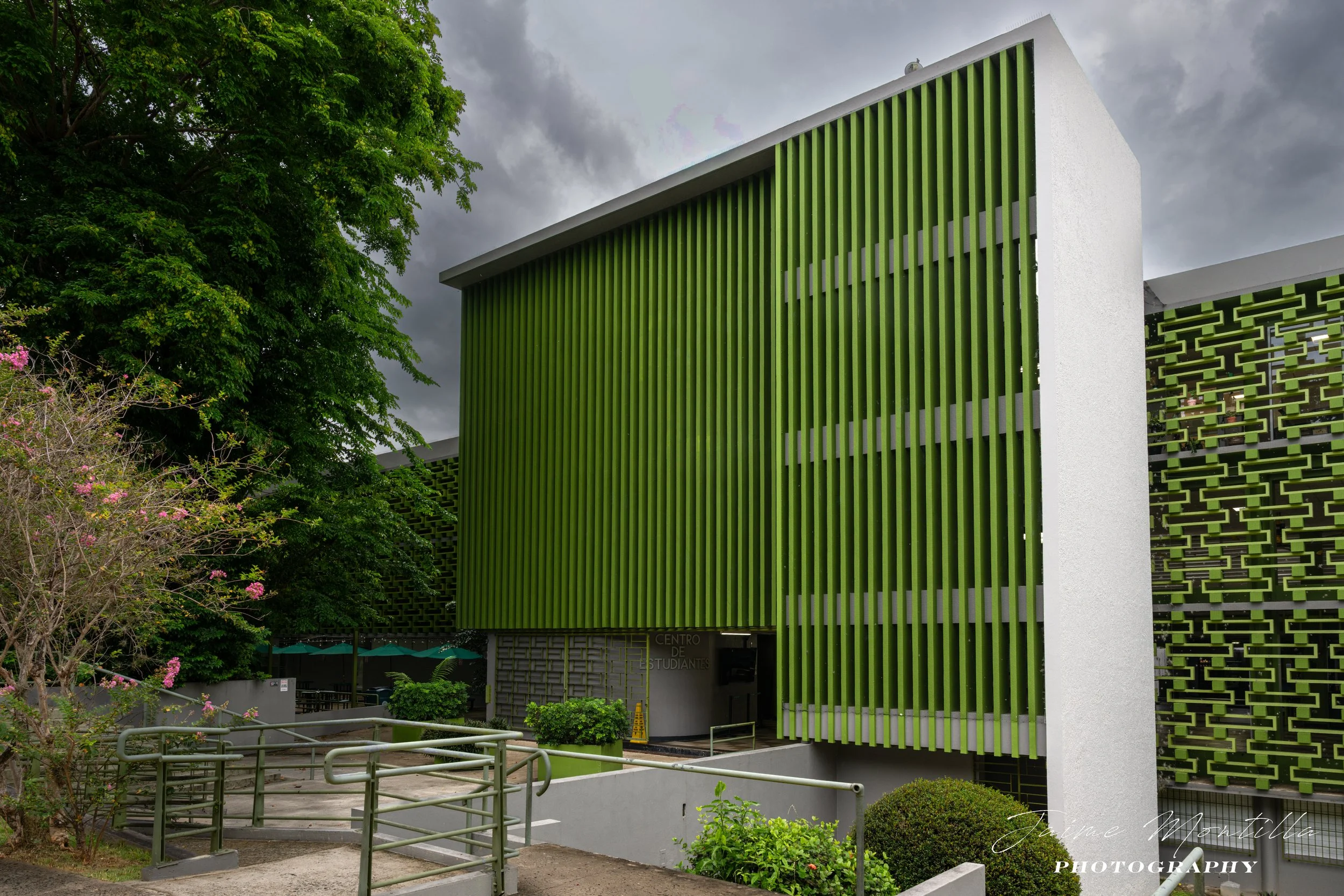
UPR Mayagüez Campus - Student Center
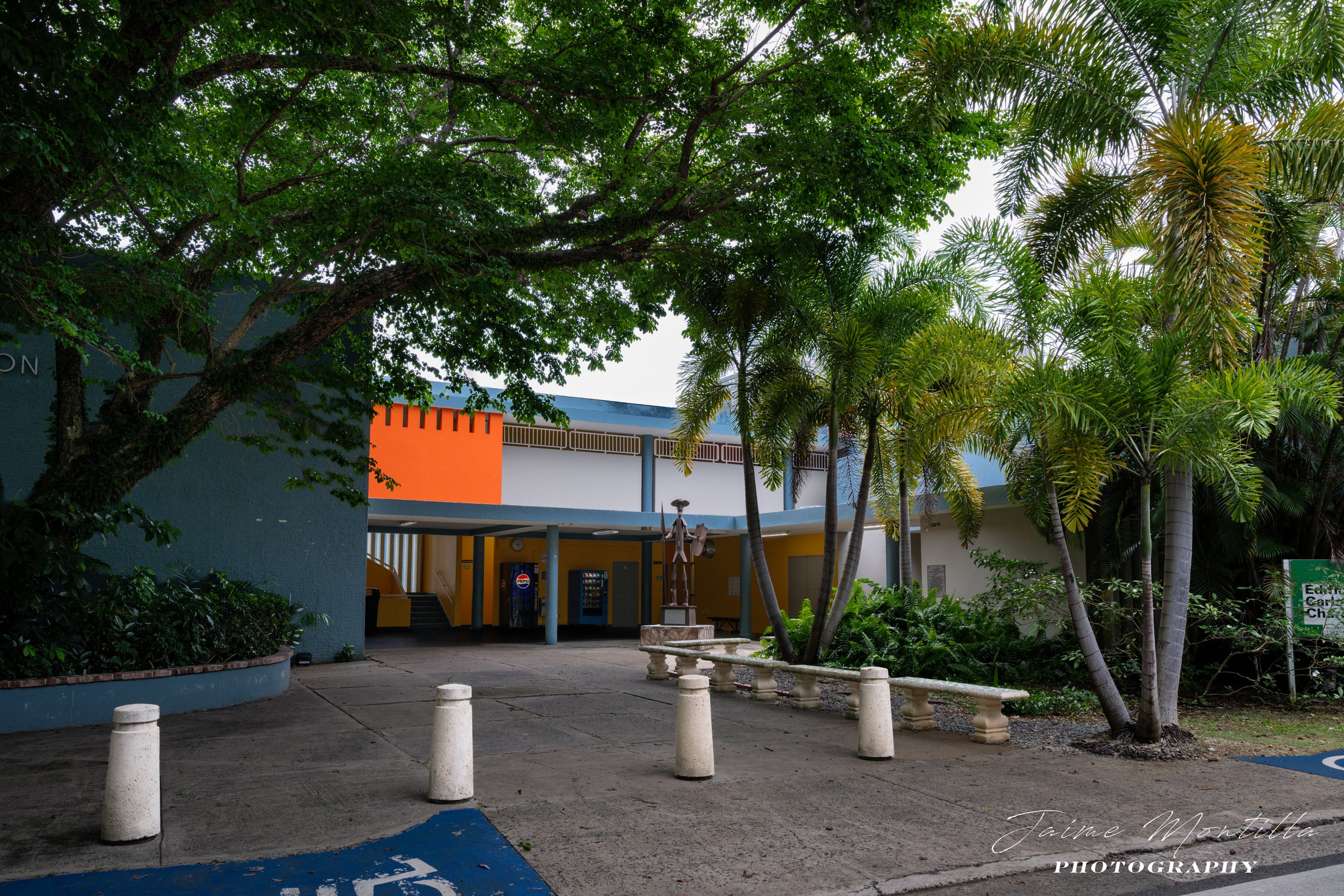
UPR Mayagüez Campus - General Studies Building
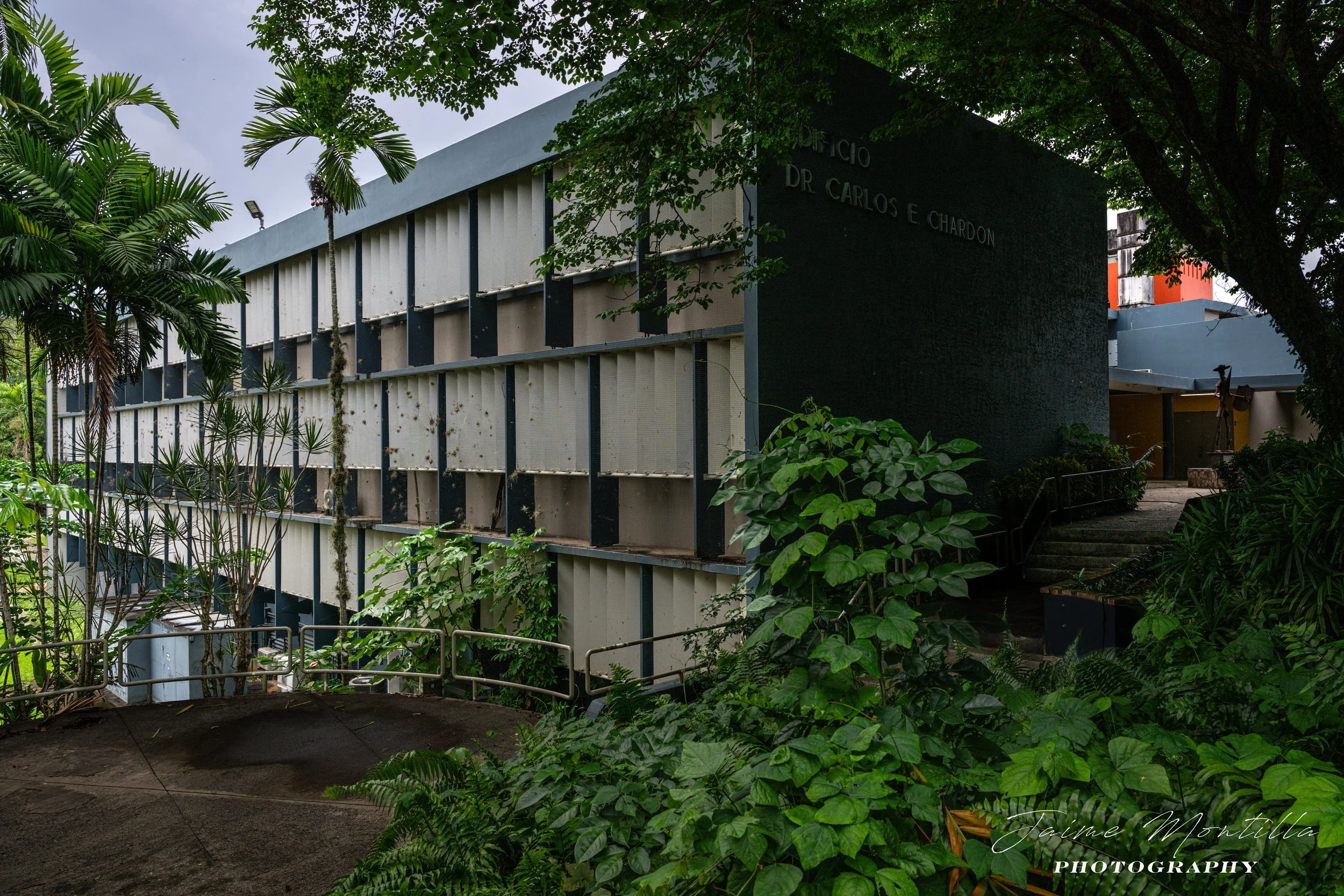
UPR Mayagüez Campus - General Studies Building
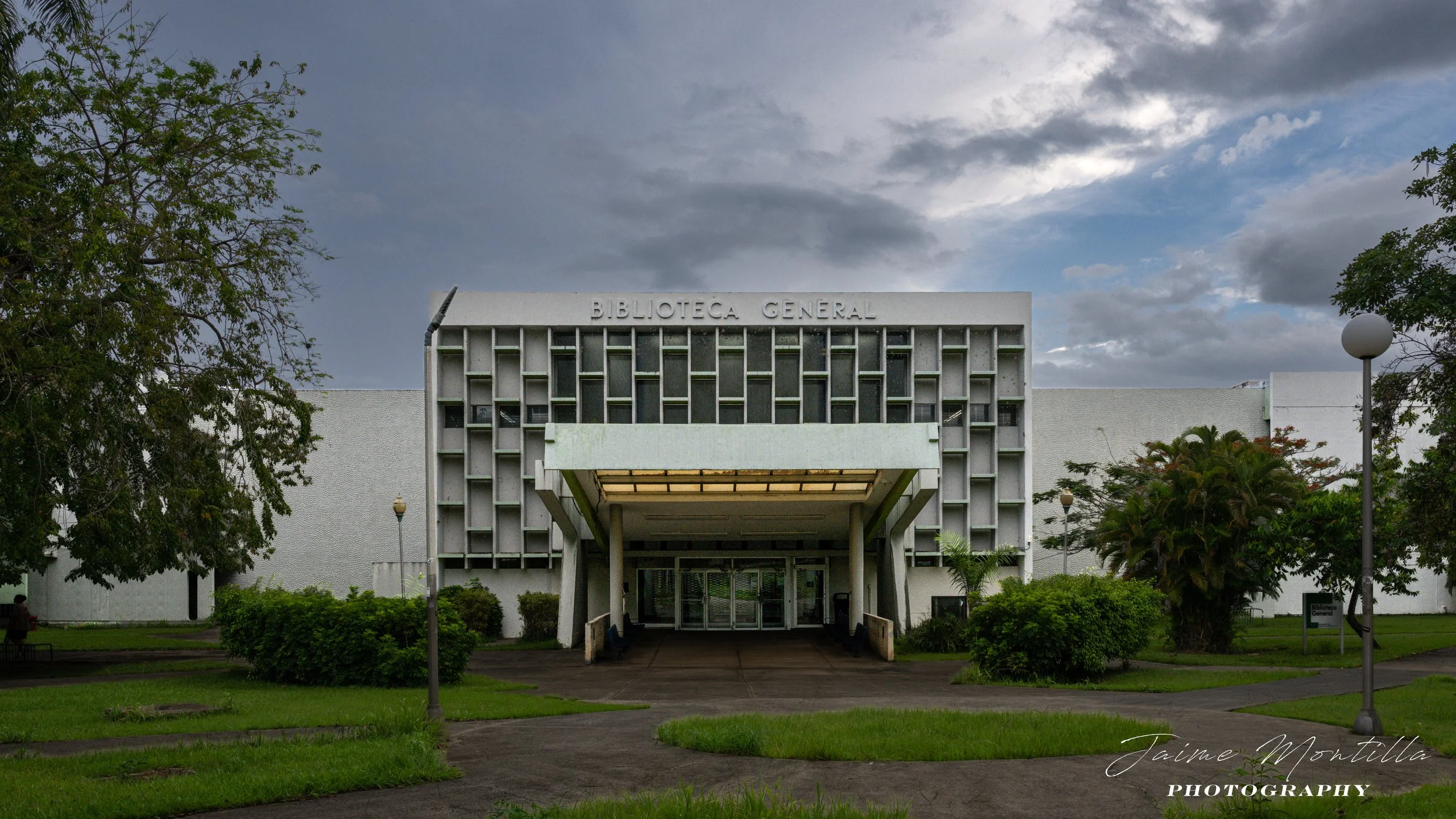
UPR Mayagüez Campus - General Library
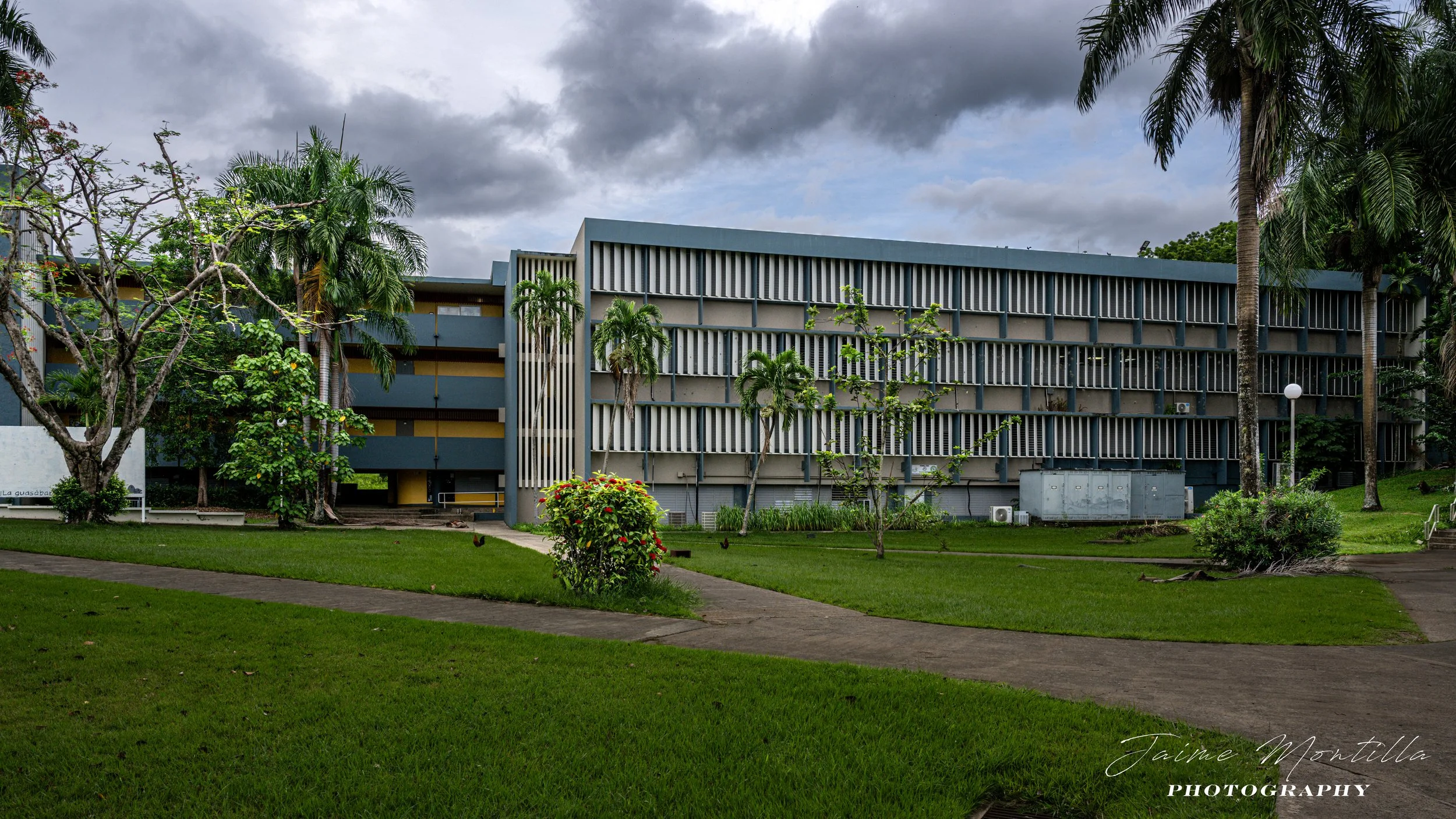
UPR Mayagüez Campus - General Studies Building
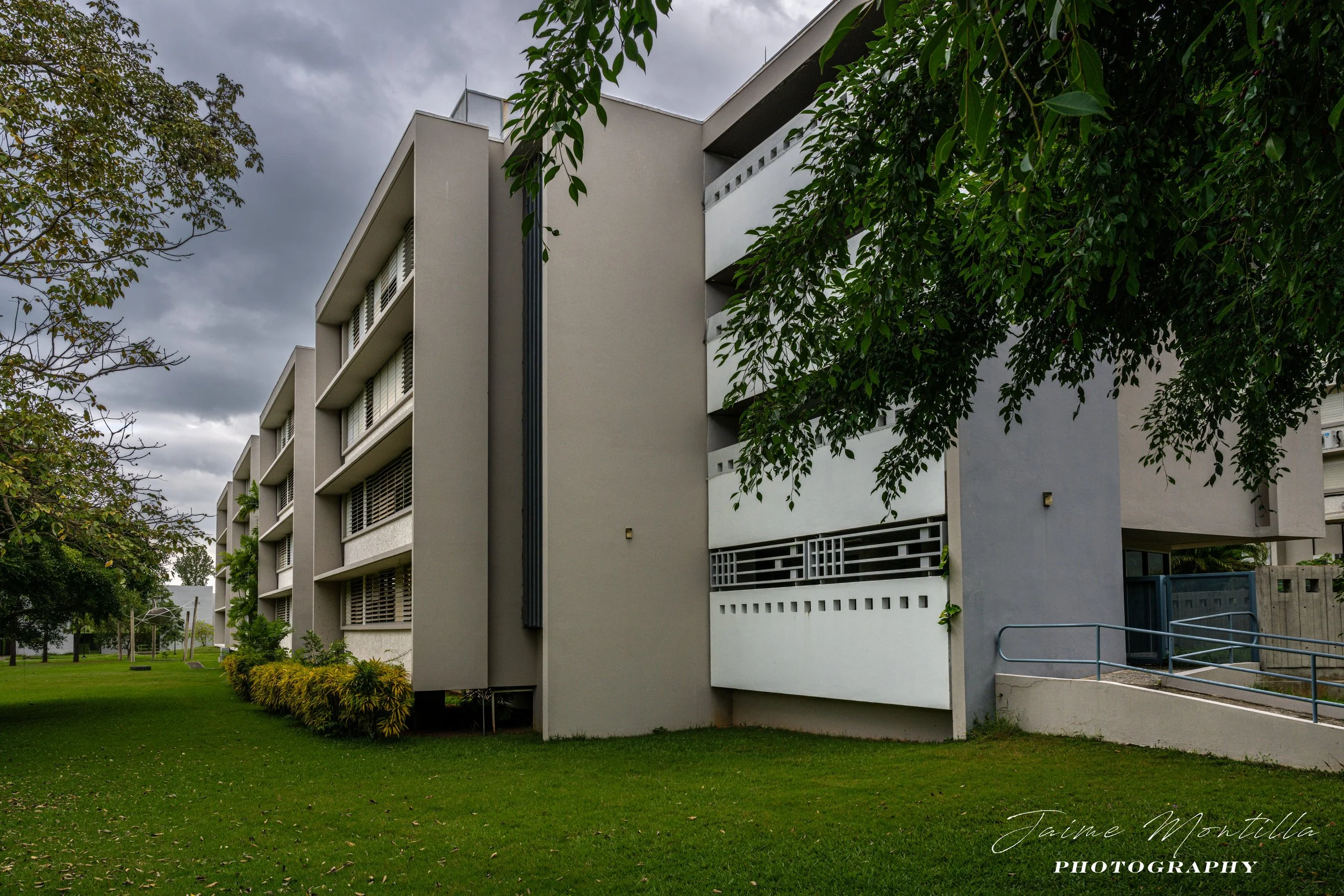
UPR Mayagüez Campus - Student Dormitories
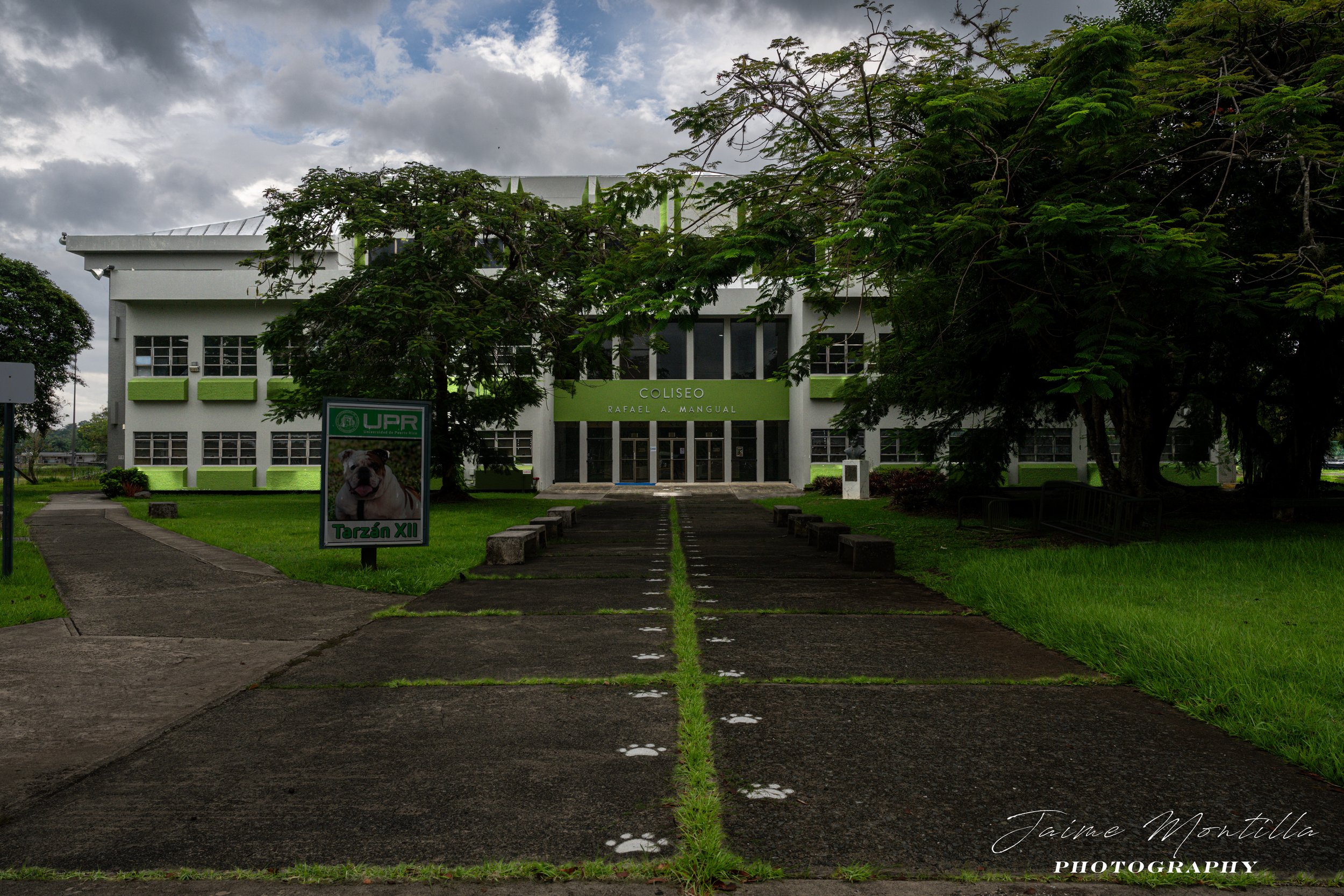
UPR Mayagüez Campus - Athletic Coliseum
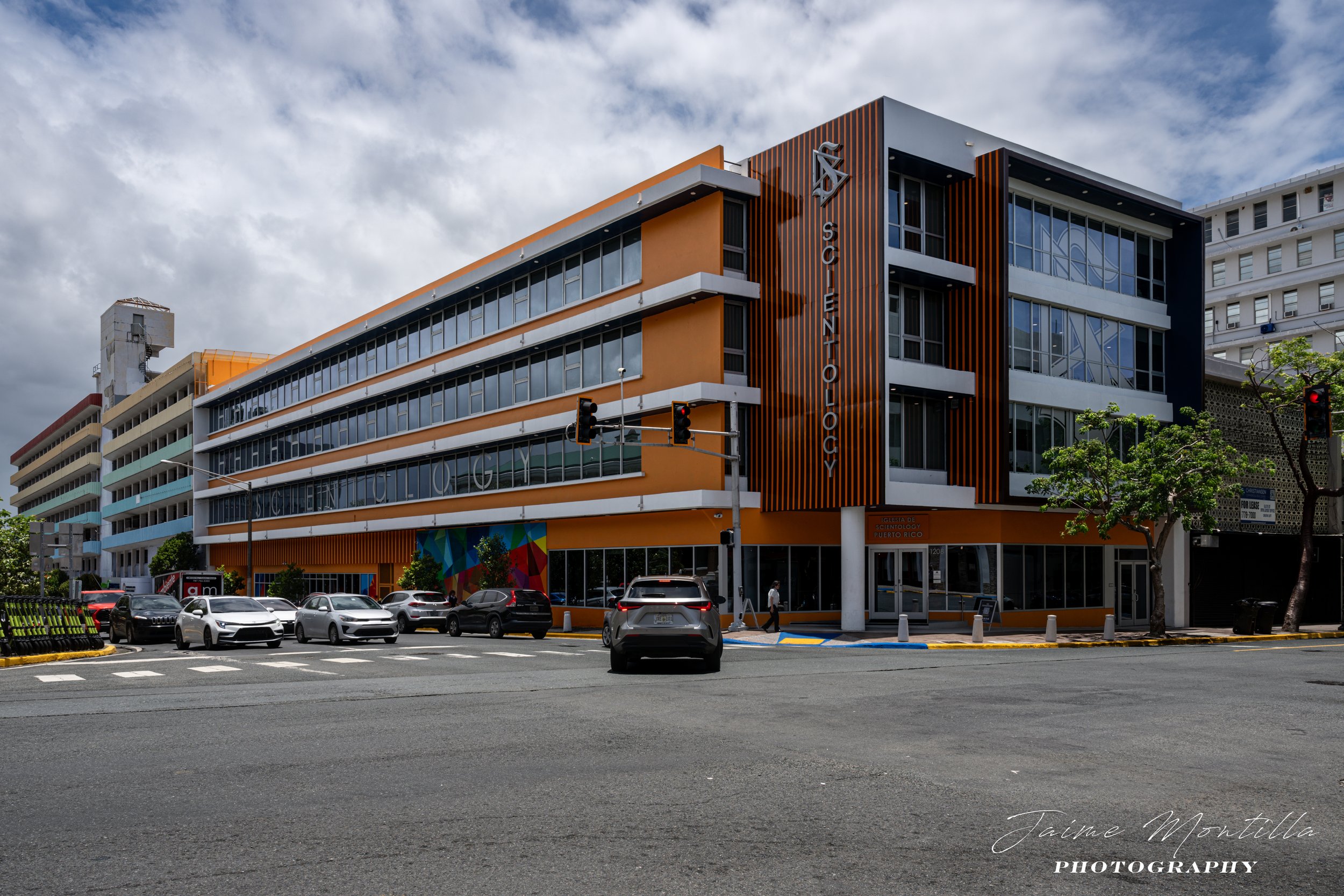
New York Department Store Building, Santurce
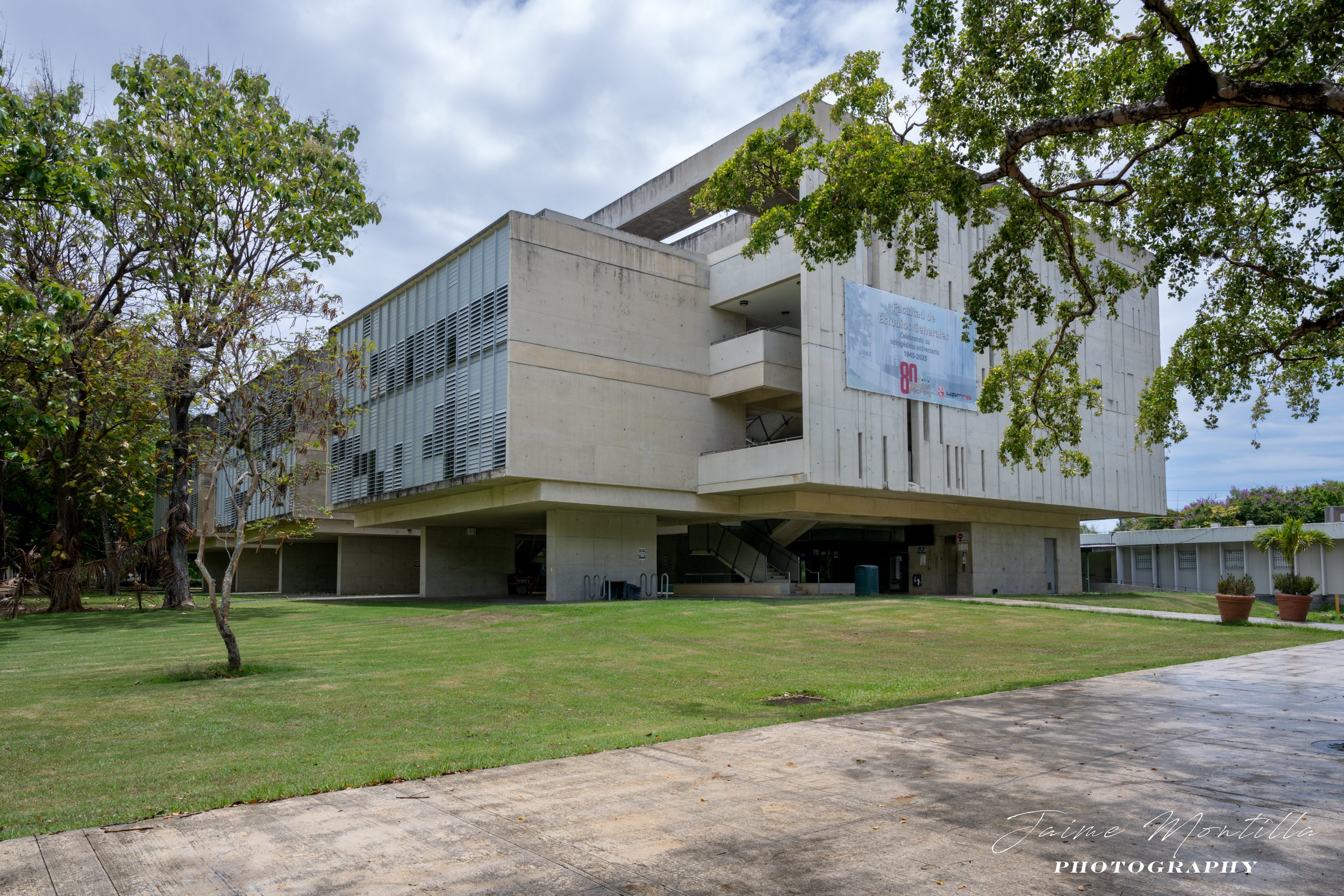
General Studies Building, University of Puerto Rico, Rio Piedras
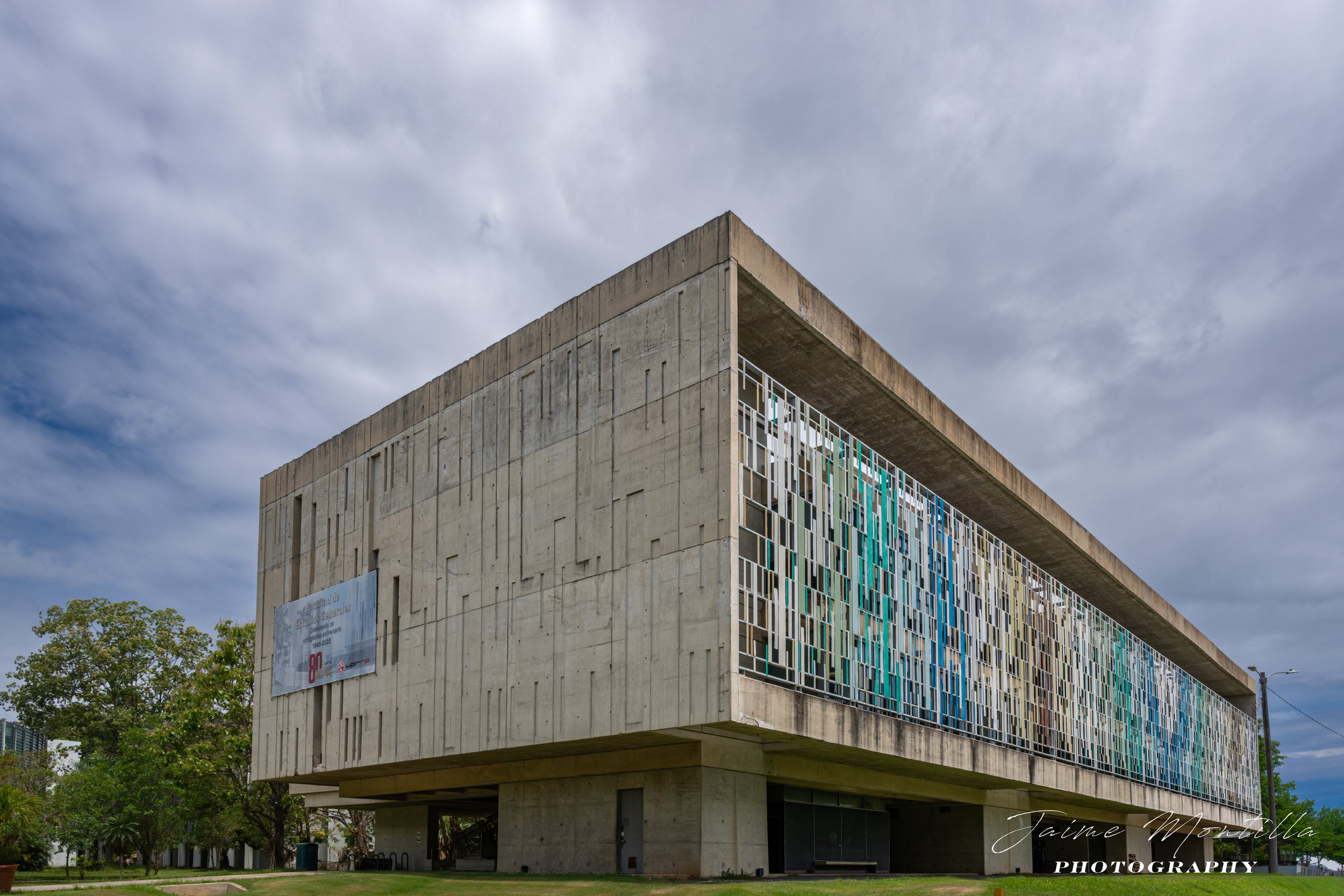
General Studies Building, University of Puerto Rico, Rio Piedras
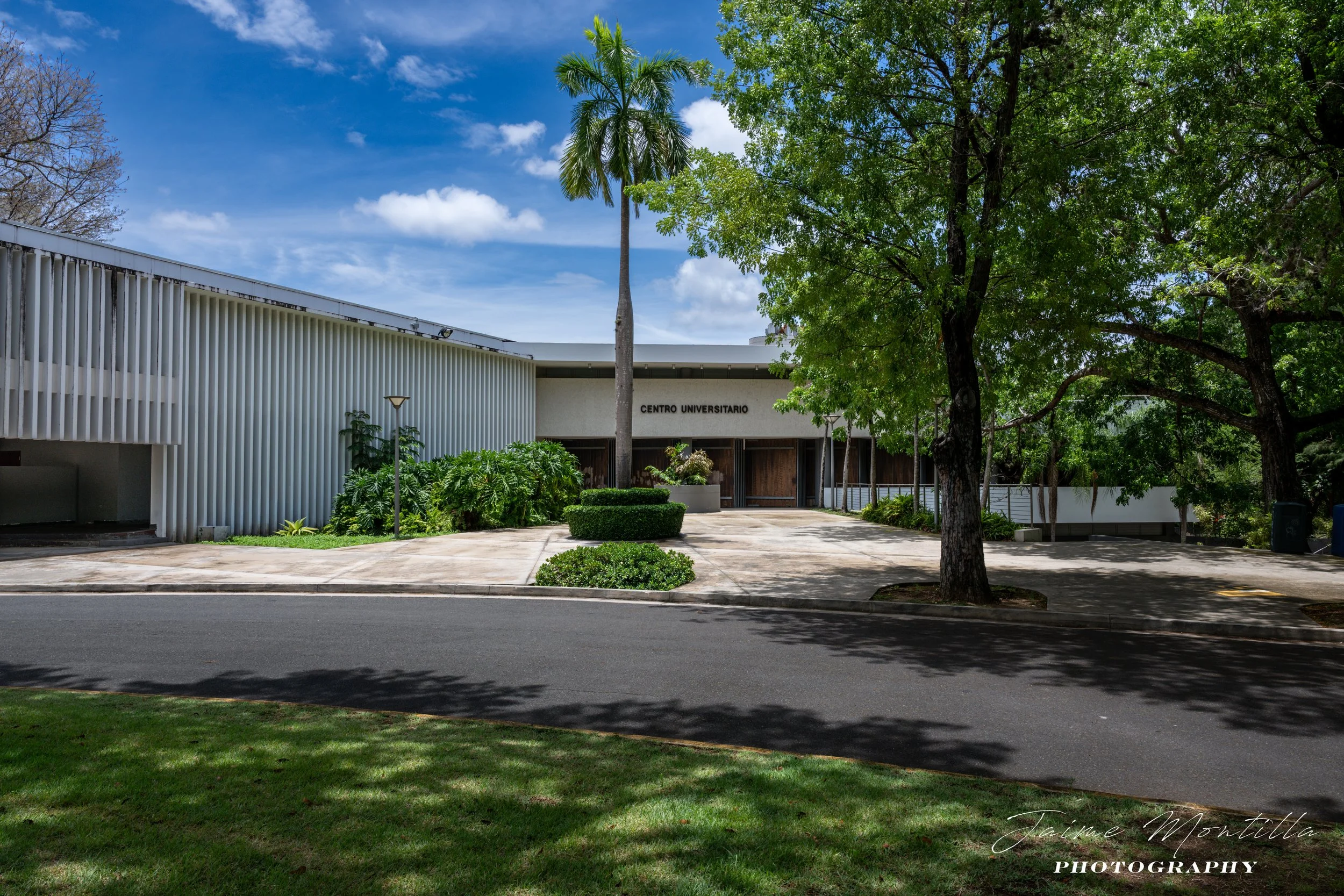
Student Center, University of Puerto Rico, Rio Piedras
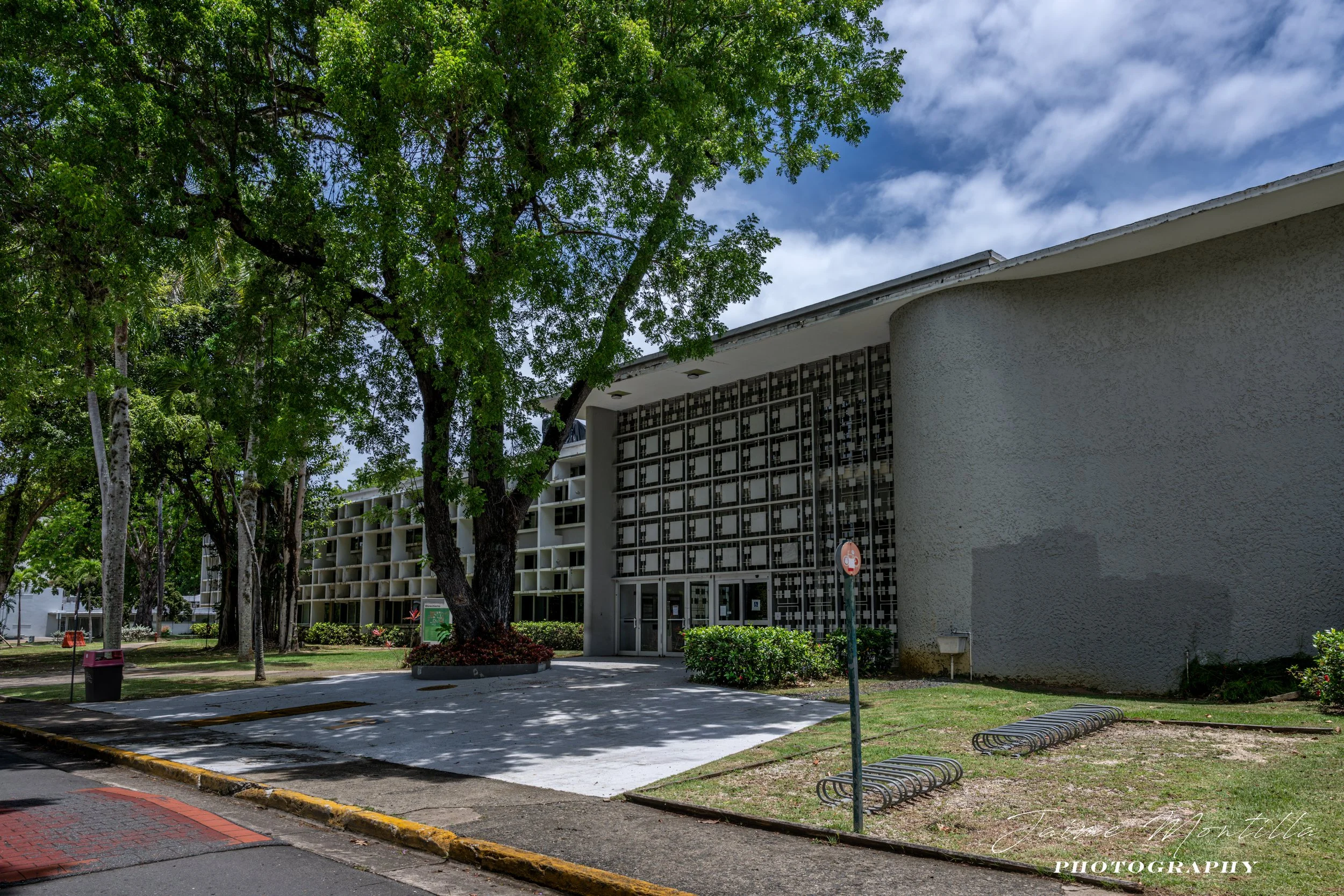
Library, University of Puerto Rico, Rio Piedras
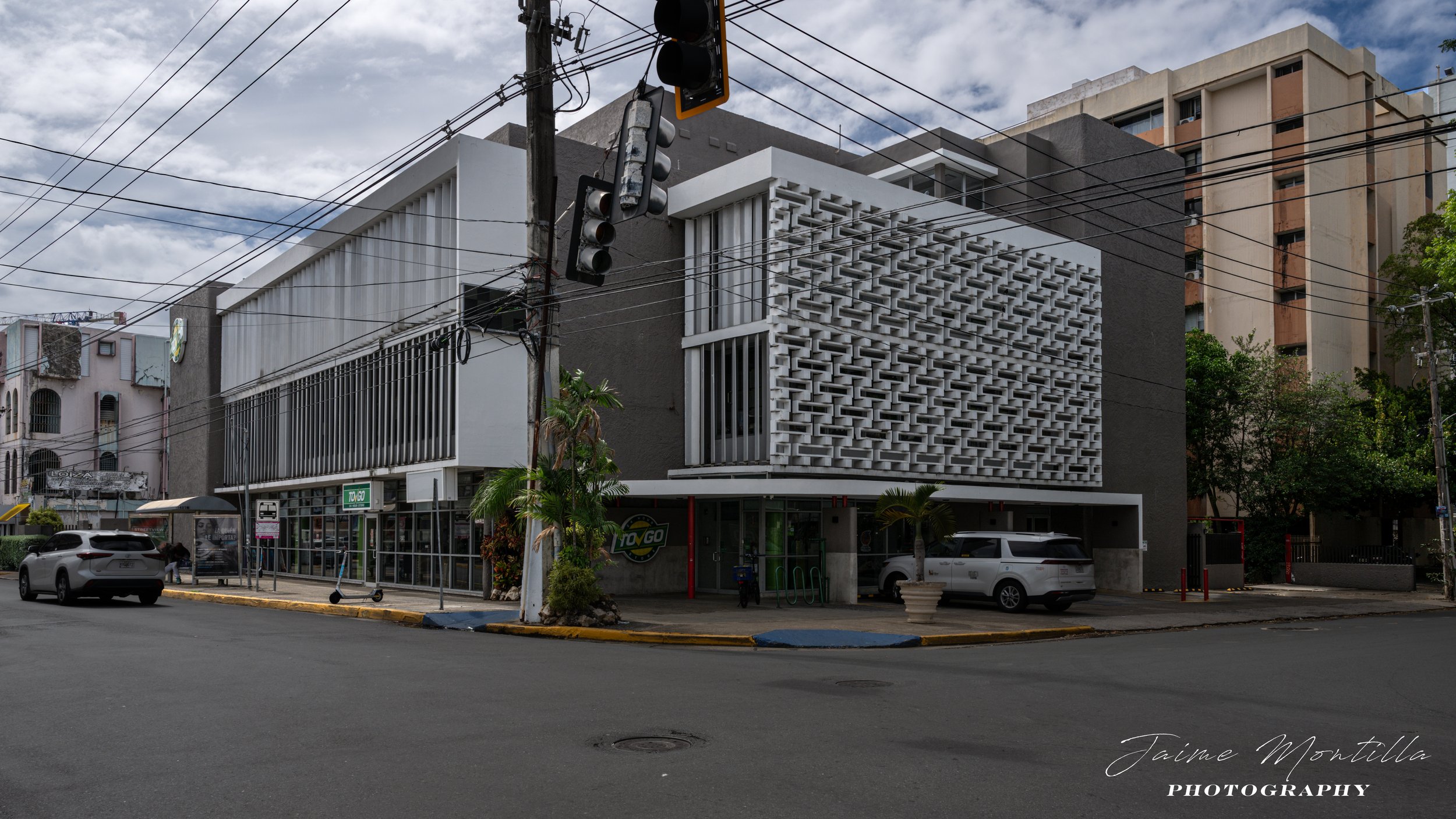
IBM Building, Calle Loiza, Santurce