Central Los Caños
Location: Arecibo
Date Established: 1884
Date Ceased Operations: 1972
Annual Production Graph
Average Annual Production: 19,632 Tons
Best Production Year: 1952/43,290 Tons
Family Ownership: Pavenstedt, Georgetti
Corporate Ownership: Los Caños Sugar Cooperative
In 1841 Hacienda Los Caños belonged to the estate of Francisca Torrin and it is reported that in 1845 it consisted of some one hundred thirty cuerdas planted with sugarcane. The agent representative of the estate was José Ramón Larrieu Despiau (1801-1856) who later was its owner. On March 19, 1844, Larrieu was awarded the "Cruz de Caballero en la Real Orden de Isabel la Católica" due to his initiative to build a canal at the Tanamá River in Arecibo. He was also appointed "Comendador de la Real Orden de Isabel la Católica" on June 19, 1848 to recognize his contribution to the Spanish Crown for providing lumber for the construction of battleships. He was awarded the title "Vizconde del Caño" making reference to the name of the hacienda he owned.
Regarding the death of Ramón Larrieu in 1856, my 2nd Great Uncle Cayetano Coll y Toste in his Crónicas de Arecibo states;
"...don José Ramón Larrieu, owner of Ingenio Los Caños, and numerous members of his family disappeared under the deadly attack of the cholera epidemic..."
Francisco Ulanga (1801-1860) was a Spanish immigrant from Bilbao in the Basque Country who arrived in Arecibo at the age of nine and died on September 19, 1860. He lived all his adult life in Arecibo where he married Santos Figueroa, the daughter of Sebastián Figueroa ( -1835) owner of Hacienda Vega, since 1817 until his death one of the wealthiest resident and largest taxpayer of Arecibo. His son Manuel Figueroa, in partnership with his brother-in-law Francisco Ulanga were owners of hacienda San Francisco which until the 1880s remained in the Figueroa family. Due to the important role Francisco Ulanga played in the development of Arecibo, it is worthwhile expanding on his businesses and contribution to the area. Astrid Cubano Iguina in her essay La Economía Arecibeña del Siglo XIX Identificación de Productores y Comerciantes states that in 1831 Ulanga’s capital consisted of 6,000 pesos. In 1832, Ulanga was a partner with Caracas born Luis Salicrup in the first mercantile enterprise in Arecibo named Ulanga & Salicrup. Shortly thereafter he established the firm Ulanga & Ortiz with fellow Basque Manuel Ortiz Latorre, which firm by 1845 was the largest and most important in the area with correspondents in St. Thomas and the USA. In the 1850s his nephew and Santander, Spain born Agustín Goicouría Ulanga and Sweden born Gustavo Fernando Bahar became partners in the firm with 25% participation and the firm name was changed to Ulanga, Ortiz & Cia. When partner Manuel Ortiz Latorre died in 1856, the name of the firm changed to Ulanga & Cia. with a subscribed capital of $100,000 pesos of which 50% belonged to Ulanga. Cayetano Coll y Toste says about Ulanga & Cia.,
"merchant firm that came to be like a small agricultural bank for all the district, under whose auspices and protection almost all the sugar factories of our area changed from the rustic oxen driven mill to the potent steam mill"
In 1858 Ulanga & Cia. acquired the two hundred seventeen cuerdas Hacienda Los Caños when the judge in the court case related to the intestate death of Francisca Ruiz de Sagredo and José Ramón Larrieu ordered its sale at public auction. On November 6, 1860 Ulanga & Cia. filed for bankruptcy and Felipe Toste Torres (1812-1892) was named Trustee, followed in 1865 by the son of British immigrants Carlos Federico Storer Weyley (1829-1889) also known as C. F. Storer. In a meeting of creditors held on June 9, 1866, Johan Abraham Edmund Pavenstedt (1810-1891) a German immigrant from Bremen resident of New York and principal at E. Pavenstedt & Co., entered into a contract to acquire Hacienda Los Caños and Hacienda Cambalache from the defunct Ulanga & Cia. In September 1866, the court awarded all the assets of Ulanga & Cia. to the firm C. F. Storer & Cia., who agreed to pay creditors 60% of the amount owed. Subsequently, Pavenstedt acquired Hacienda Los Caños and Hacienda Cambalache from C. F. Storer & Cia. on the terms of the June 9, 1866 agreement.
In his book Leopold Strube (1873-1919) Fritz Lohmann states that the acquisition transaction of Hacienda Los Caños and Hacienda Cambalache by Pavenstedt was marred by several legal problems. To clarify these, in 1878 attorney Jules Shröder (1853-1908), who at the time worked at the law firm of Johann Pavenstedt in Bremen, was sent to Arecibo. It took Jules ten years to solve the legal issues regarding the acquisition transaction, during which time he represented Pavenstedt in several lawsuits and negotiations and also became the successful administrator of both haciendas. La Gaceta de Puerto Rico in its edition of October 8, 1881, published a notice by Julián E. Blanco as the only representative in Puerto Rico of Bremen, Germany resident Edmund Pavenstedt in the absence of Dr. Julio Schröder. The notice was to give public notice that any sale related to products or goods from the Pavenstedt owned Hacienda Los Caños and Hacienda Cambalache made without his supervision and approval, or a court order, was unlawful.
Under Pavenstedt’s ownership and Schröder’s management, by 1884 Hacienda Los Caños had grown into a central sugar mill. In 1888 Edmund Pavenstedt resumed the administration of both sugar estates and Jules returned to Bremen where he became a legal advisor to the Senate. Jule’s brother Victor (1850-1895), who had joined him in 1882 to help him in the administration of both estates, stayed in Puerto Rico. In 1888 no longer involved in the administration of Los Caños and Cambalache, Victor bought and moved with his German wife Erica Aster to Hacienda Jobo in Utuado, then a tobacco plantation turned into a coffee hacienda. In 1895 Victor was joined at Hacienda Jobo by his nephew Leopold Strube (1873-1919), the son of Victor’s older sister Johanne Schröder (1848-1939), who always lived in Bremen and in 1868 had married Georg Strube (1833-1890), the first and very successful ophthalmologist in Bremen. Just nine months after his arrival, Leopold took over ownership of the hacienda when, upon Victor’s death, his widow Erica and the two surviving children of the couple born in Puerto Rico returned to live in Bremen.
After Edmund Pavenstedt’s death in 1891, Los Caños was owned by his estate, the Sucn. E Pavenstedt, and managed by his son Edmund Wilhelm Emil Pavenstedt (1862-1945). Edmund Wilhelm was also born in Bremen where he received his formal education and served in the military. In the 1880s he worked as an apprentice at Geyer & Uungk in New York City, specializing in Tobacco. After his apprenticeship at Geyer & Uungk, Edmund Wilhelm worked for the NYC firm Mosle Brothers, a sugar importing and banking firm established in 1879 by German descendants from Bremen George Rudolf Mosle, Jr. and Arthur Henry Mosle. George Rudolf Mosle, the father of George Rudolf Jr. and Arthur Henry, had been a partner at E. Pavenstedt & Co. from 1859 to 1879 and was familiar with doing business in Puerto Rico.
Edmund Wilhelm came to Puerto Rico in 1885 to learn the sugar growing business at Central Los Caños and was responsible for the sale of raw sugar in the US market. Upon his return to NYC, Edmund Wilhelm became a 10% partner at Muller, Schall & Co., a private banking and commission business established in 1853 by William Schall Sr. as Schall & Co. The firm name was changed to Muller, Schall & Co. when William Schall's son-in-law Frederick Muller and his brother Carl joined the firm. Muller, Schall & Co. was closely associated with the organization of the South Porto Rico Sugar Company.
From 1884 to July 30, 1895 Carl Westphaling, also a German immigrant from Bremen was bookkeeper, correspondent and cashier of Central Los Caños. Upon leaving his employment at Los Caños, Carl acquired Hacienda San Gabriel from Felipe Correa who had owned it at least since 1841 and established Central Oriente, barely a mile or so north of Central Los Caños on the banks of the Santiago River. The old picture of Central Los Caños ca. 1884-1895 is made available thanks to the courtesy of Bernhardt Westphaling, grandson of Carl Westphaling.
The Alien Enemies Act of 1798 is a wartime authority that allows the president to detain and/or deport the natives and citizens of an enemy nation. It was enacted to prevent foreign espionage and sabotage and allows the president to target these immigrants without a hearing and based only on their country of birth or citizenship. With the declaration of war on April 6, 1917, President Woodrow Wilson called on residents in the United States, citizens and immigrants alike, to loyally uphold all laws and to support all measures adopted in order to protect the nation and secure peace. For individuals termed “alien enemies”, that is, all natives, citizens, denizens or subjects of Germany and its allies (including American-born women who married German men) showing loyalty required a number of additional parameters and processes. Based on this Act, in 1917 Edmund Wilhelm Pavenstedt was questioned by the US authorities in the course of the investigation into the banking firm Muller, Schall & Co. of New York and because of his German connections and was temporarily detained and placed under the supervision of the Alien Property Custodian but did not spend a long time in “strict” internment as Leopold Strube did, when he was detained and jailed at Fort Oglethorpe in GA and his Hacienda Jobo confiscated and sold. His arrest was more of a police detention in connection with the investigation into Muller, Schall & Co.
Central Los Caños was confiscated by the US Government and on March 1919 the Alien Property Custodian sold Central Los Caños to Eduardo Georgetti for a price that did not reflect market value but was set by government appraisers. The proceeds were deposited into an Alien Property Custodian trust account. As an “enemy alien”, Pavenstedt had no access to this money during the war but under the Settlement of War Claims Act of 1928, 80% of the confiscated assets or the proceeds from their sale, were returned to the original owners and the remaining 20% was retained as security for U.S. claims against Germany. Edmund Wilhelm Pavenstedt remained active after the war and spent years until his death in Bremen in 1945 trying to secure just compensation for Los Caños.
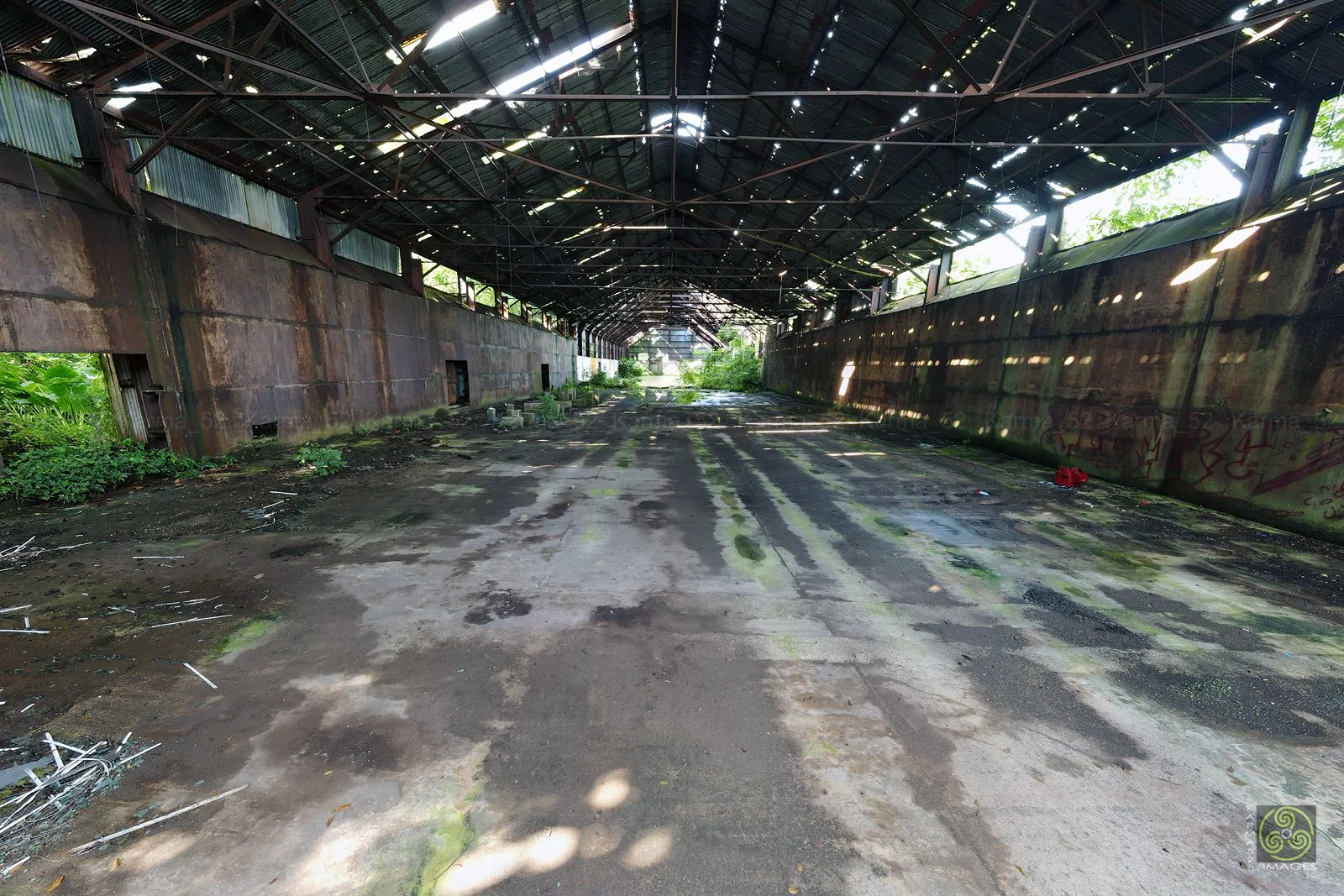
Los Caños did not own any land so it was dependent on individual growers or "colonos" for the sugarcane it processed. In an article on the December 21, 1938 edition of El Mundo Newspaper, the "Asociación de Agricultores de PR" acknowledges and views as positive, the sale of Central Los Caños to the Puerto Rico Reconstruction Administration (PRRA). Los Caños was sold by Georgetti to the PRRA who, in a similar move to what happened at Central Lafayette, sold it to a cooperative formed by sugar growers or colonos and laborers who continued to operate it until its closure in 1972. After its closure, Central Los Caños was dismantled and its machinery sold in Costa Rica where it was incorporated to Central Azucarera Tempisque owned by Spanish immigrant Federico Sobrado Carrera in the Guanacaste Province.
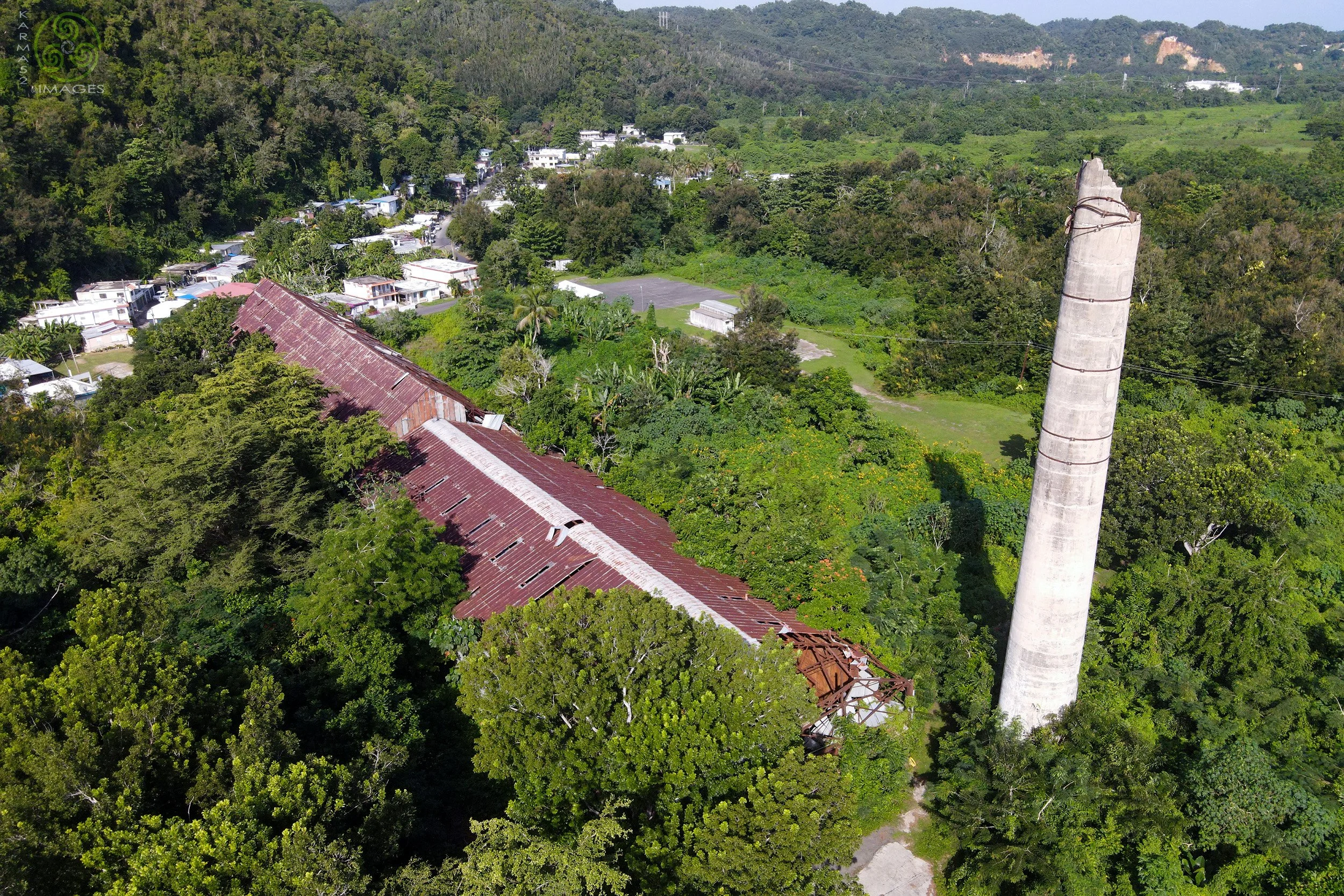
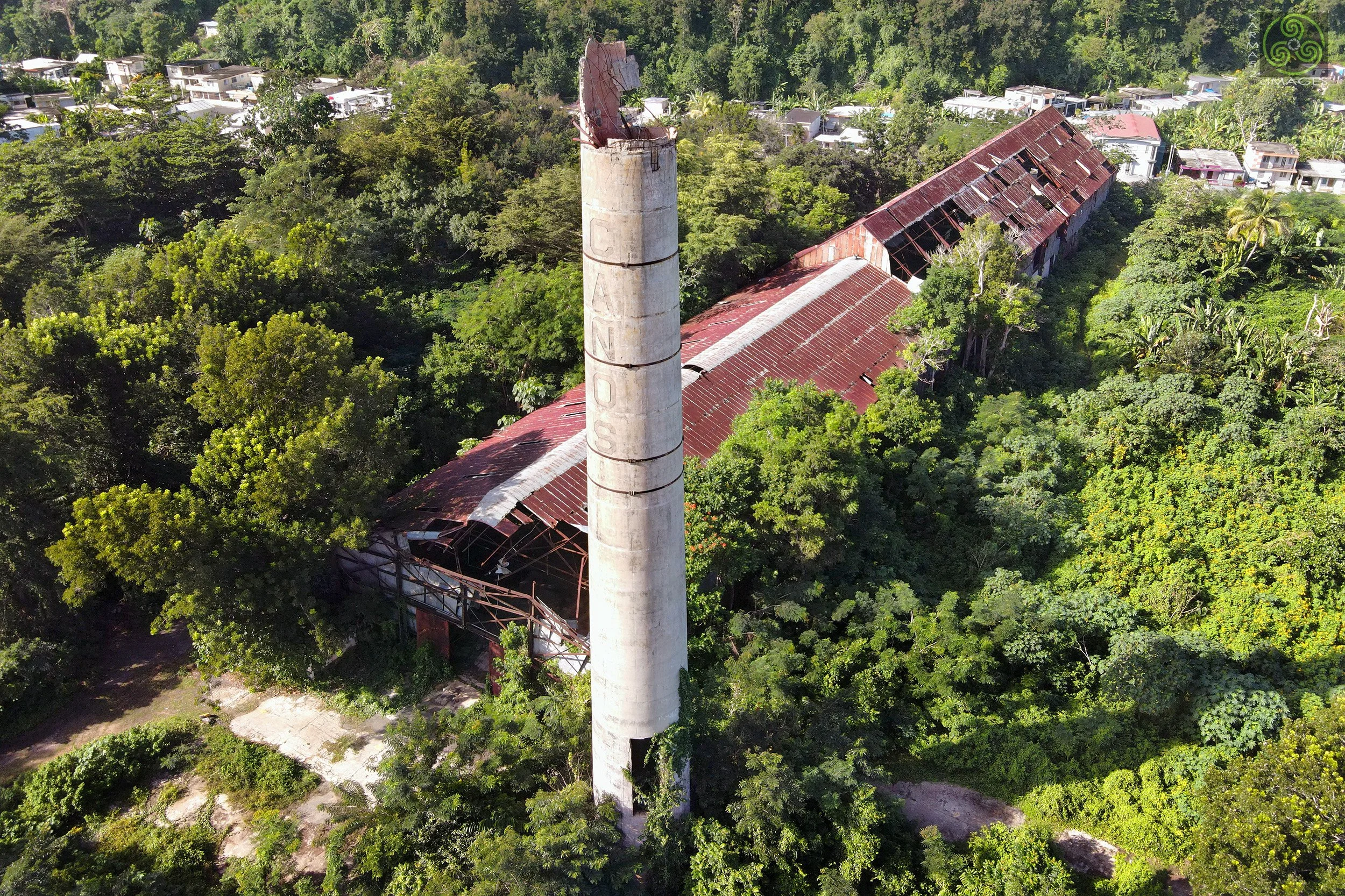
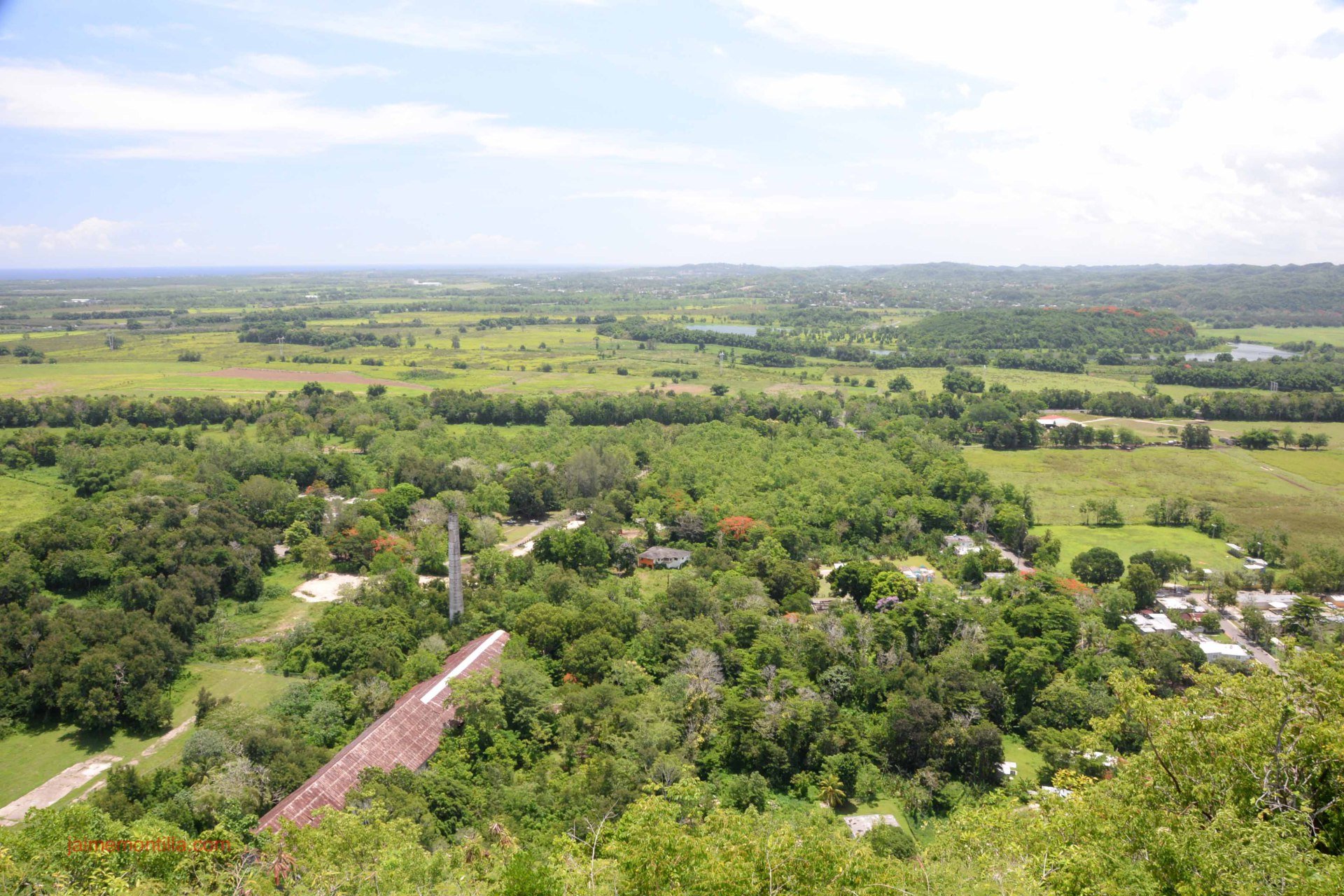
There were seven sugar mills in the valley between Toa Baja and Arecibo; Los Caños, Oriente, Carmen, Cambalache, Constancia, Monserrate and San Vicente. In one of the pictures the smoke stacks of the much larger Central Cambalache can be seen approximately two miles north towards the coast. From the photos below, the first three taken from a mountain top close to the ruins, the expansive valley along the Atlantic Ocean coastline spanning from Arecibo to Toa Baja can be appreciated. The drone pictures in the gallery below were taken by and made available courtesy of Carlos Alemán.
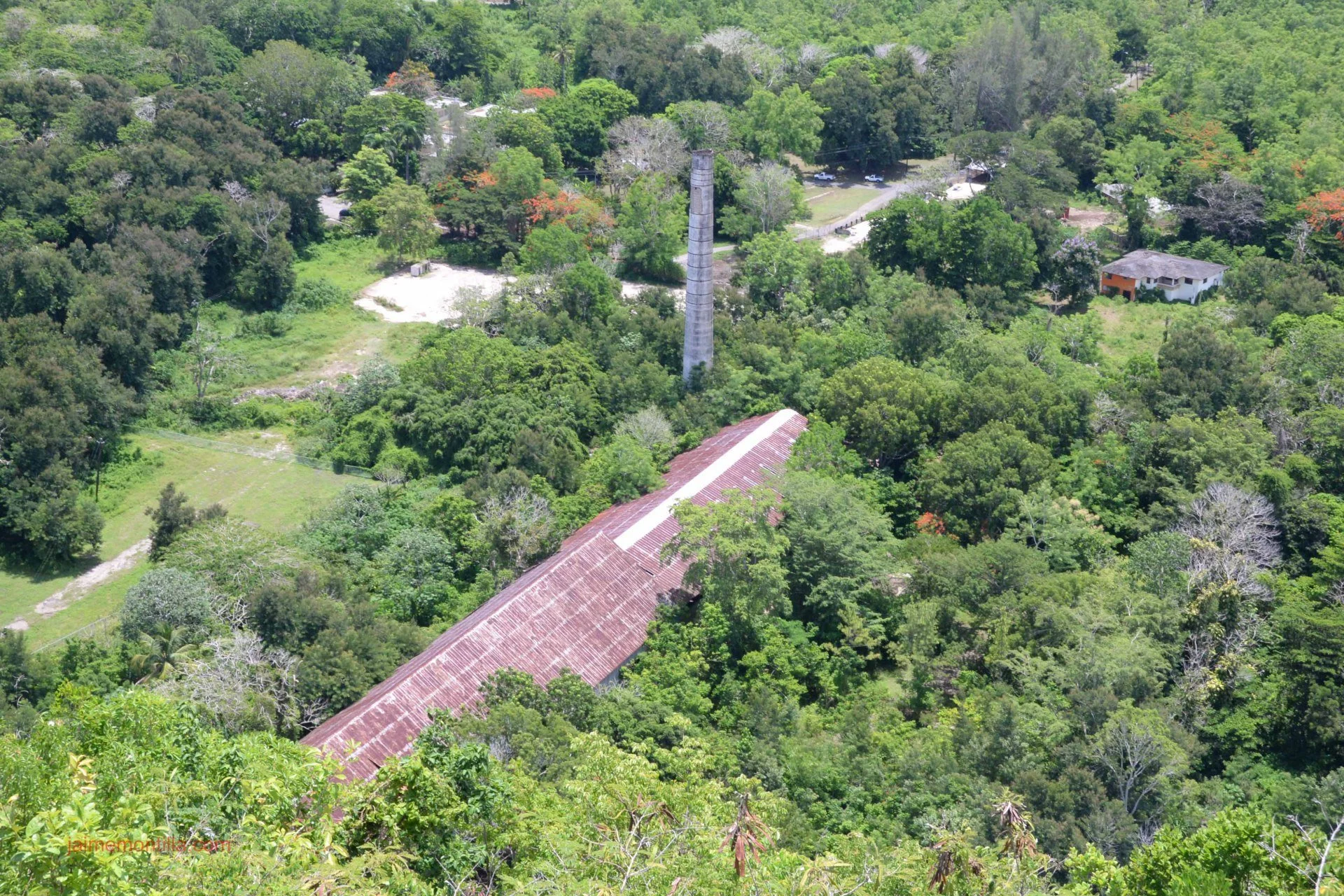

View of the expansive Arecibo Valley looking east
View of the expansive Arecibo Valley looking east