Rafael Carmoega
Rafael Carmoega Morales (1894–1968) was born in Rio Piedras. In 1913 he entered the Cornell University College of Architecture, Art and Planning receiving a Bachelor of Architecture degree in 1918. That same year Carmoega began his career as a draftsman in the Public Buildings Division of the US Department of the Interior. After the death of then State Architect Adrian C. Finlayson in 1921, Carmoega was the first Puerto Rican to become State Architect, a position within the Department of the Interior which he held until 1936.
In 1936 he went to work for the Puerto Rico Reconstruction Administration (PRRA) where his work included the execution of the design of the University of Puerto Rico area behind the Franklin Delano Roosevelt Tower known as the Quadrangle based on the Parsons Plan of 1924. The Parsons Plan was a master plan mainly designed by architect William E. Parsons of the Chicago firm Bennett, Parsons & Frost, for the expansion of the University of Puerto Rico Río Piedras campus. The plan consisted of a Spanish Renaissance Revival style U-shaped quadrangle and the construction of a clock tower named the Roosevelt Tower, a grand stand at the athletic field, a Library Hall and other main academic buildings.
In 1939 Carmoega established a private practice producing work characterized by a varied mix of architectural styles, frequently utilizing the Spanish Baroque and Neo-Mudejar styles in his designs, emphasizing the use of glazed, mosaic tiles. He produced the designs for the residences of Secundino Lozana known as El Cortijo in Barranquitas in 1939 and Dionisio Trigo in Santurce both still standing, Colegio San José in Río Piedras for the Catholic Marianist Order and the old Casino de Puerto Rico in El Condado built in 1946 and now demolished, the Plaza de los Perros in Ponce, the Edificio del Valle in Santurce in Spanish Renaissance Revival style in 1941 and the Humacao City Hall building included in the National Register of Historic Places.
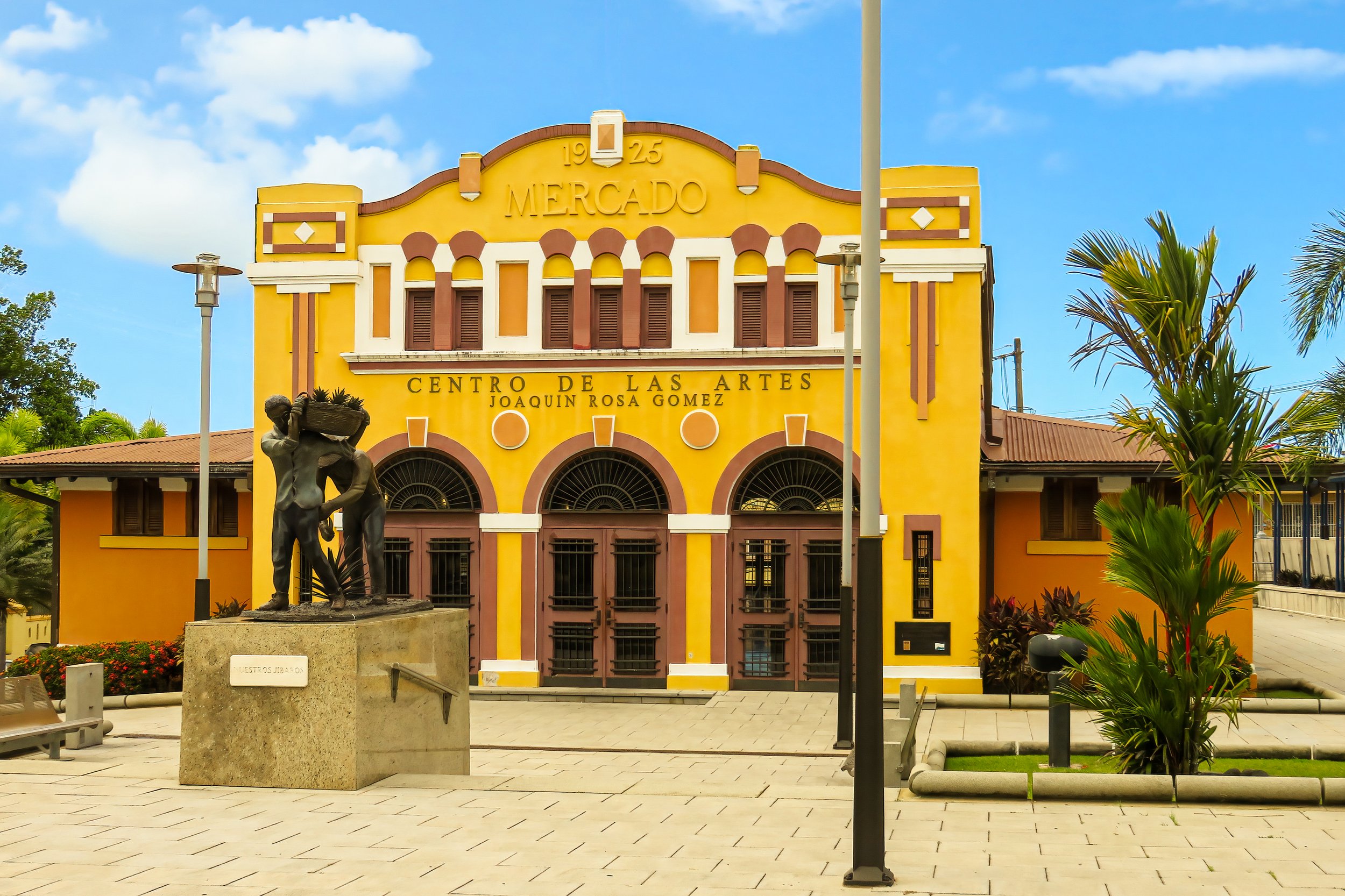
Market Hall - Manatí, 1925 Mission Style design that housed under one roof all of the market functions that until 1925 were carried out in an open lot at the same location.
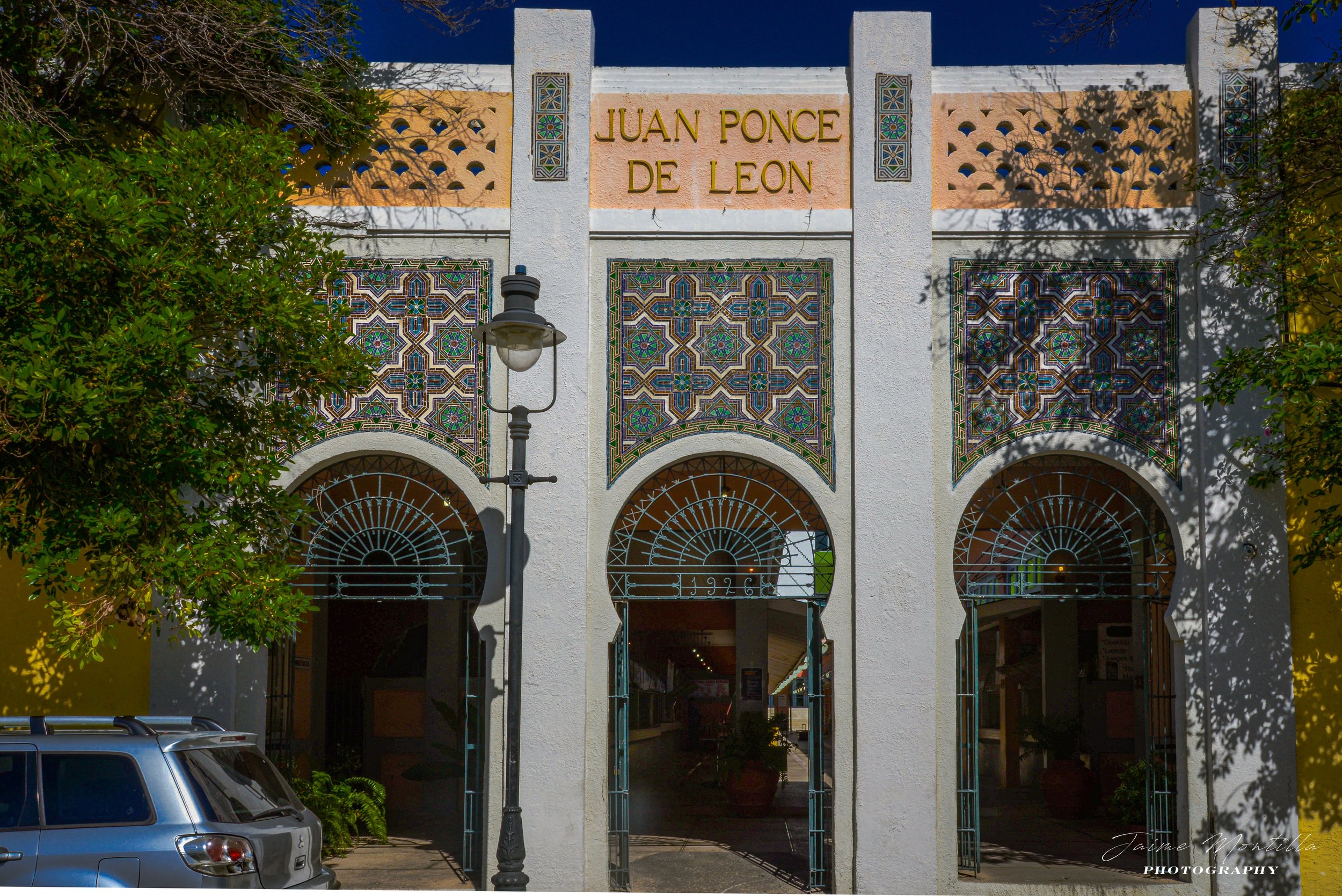
Plaza Juan Ponce de León aka Mercado de los Perros and Mercado de las Carnes - Ponce, 1926 design using glazed mosaics, horseshoe or Moorish arches and galleries in a mosque-like space for commercial usage.
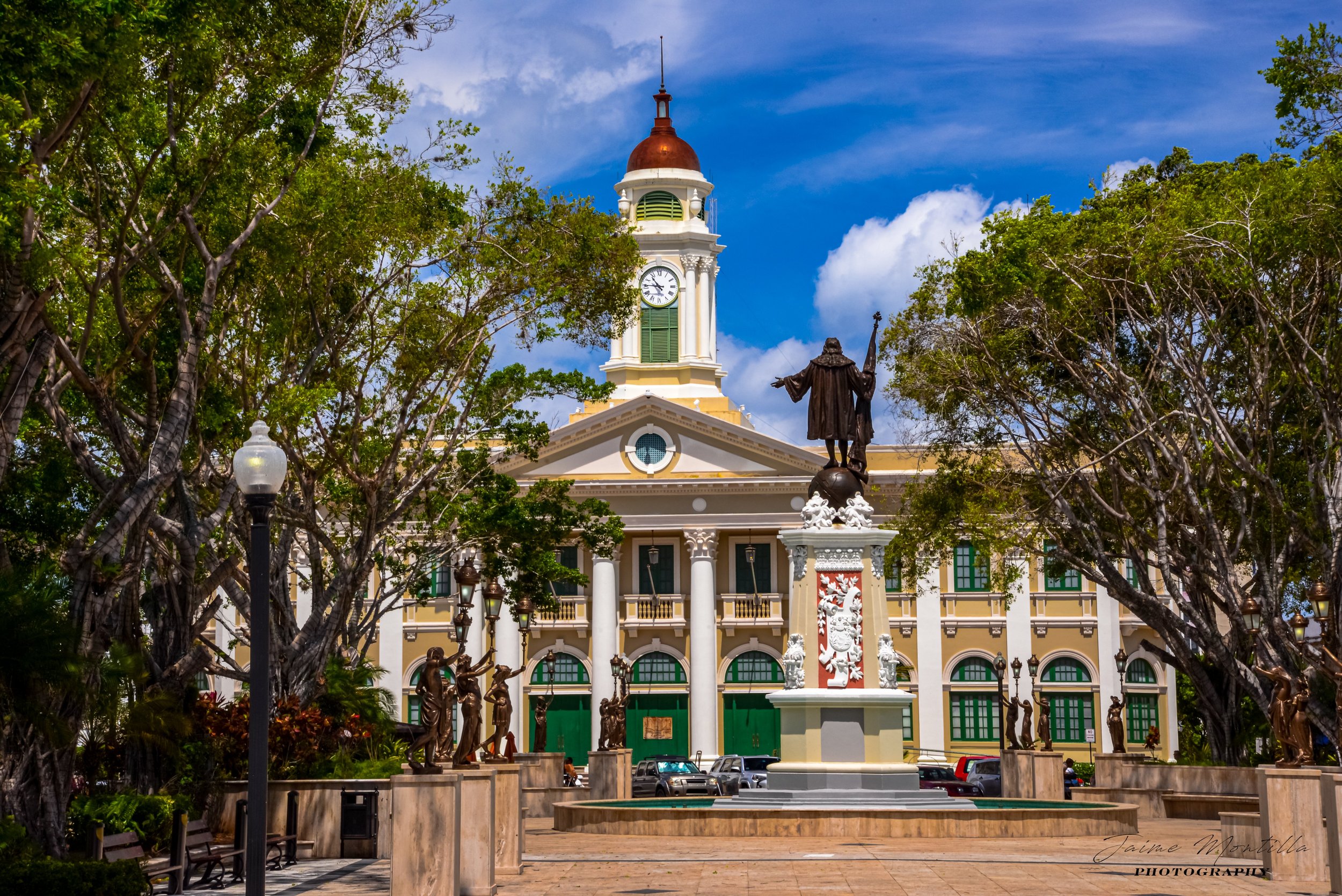
Mayagüez City Hall - 1926 construction after the original structure built in 1845 was damaged in the 1918 San Fermín Earthquake. Other architects that reportedly collaborated in this design were Fidel Sevillano Espinosa (1894-1989) and Antonio S. Burés.
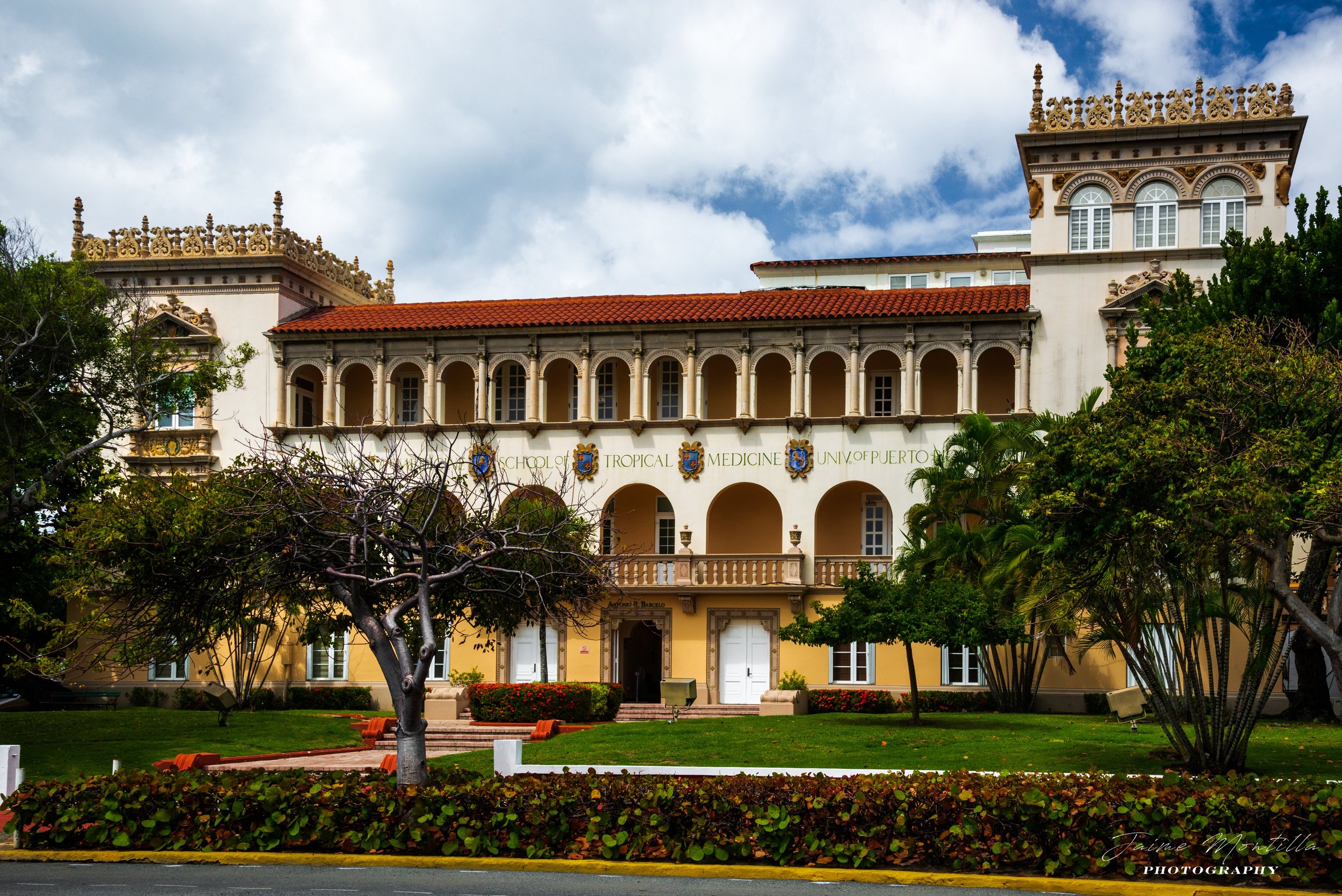
School of Tropical Medicine - San Juan, 1926 design based on the Rodrigo Gil de Hontañón and Fray Martín de Santiago 16th Century design of the Monterrey Palace in Salamanca, Spain.
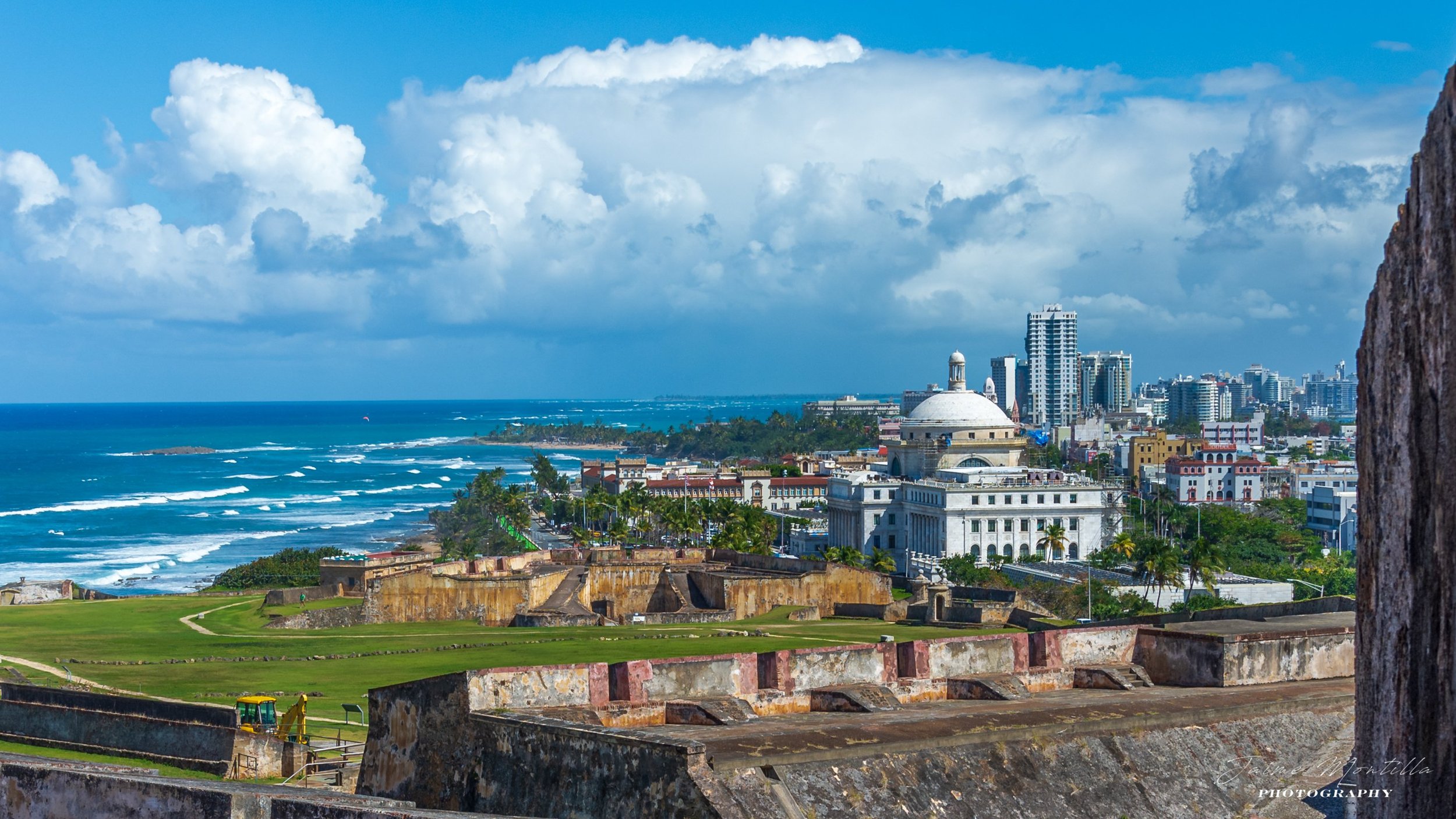
Capitol Building - Initial design in 1907 by Frank E. Perkins of New York never built, second design in 1920 by Adrian C Finlayson partially built by Rafael Pons between 1921-22, third design in 1924 by Rafael Carmoega completed in 1929.
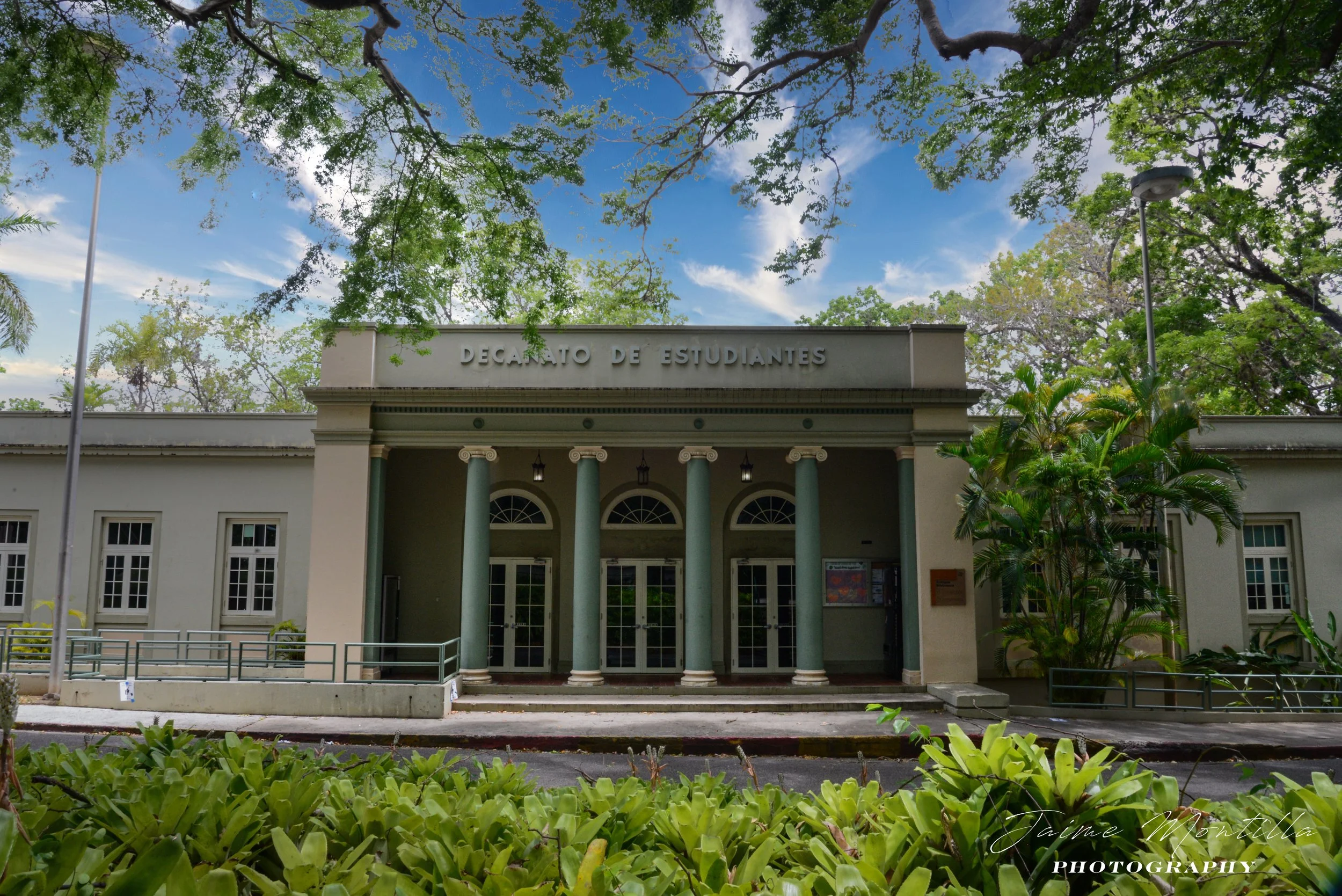
Colegio de Agricultura y Artes Mecánicas (CAAM) - Mayagüez, 1935 design under the auspices of the Puerto Rico Emergency Relief Administration (PRERA) to house the college library.
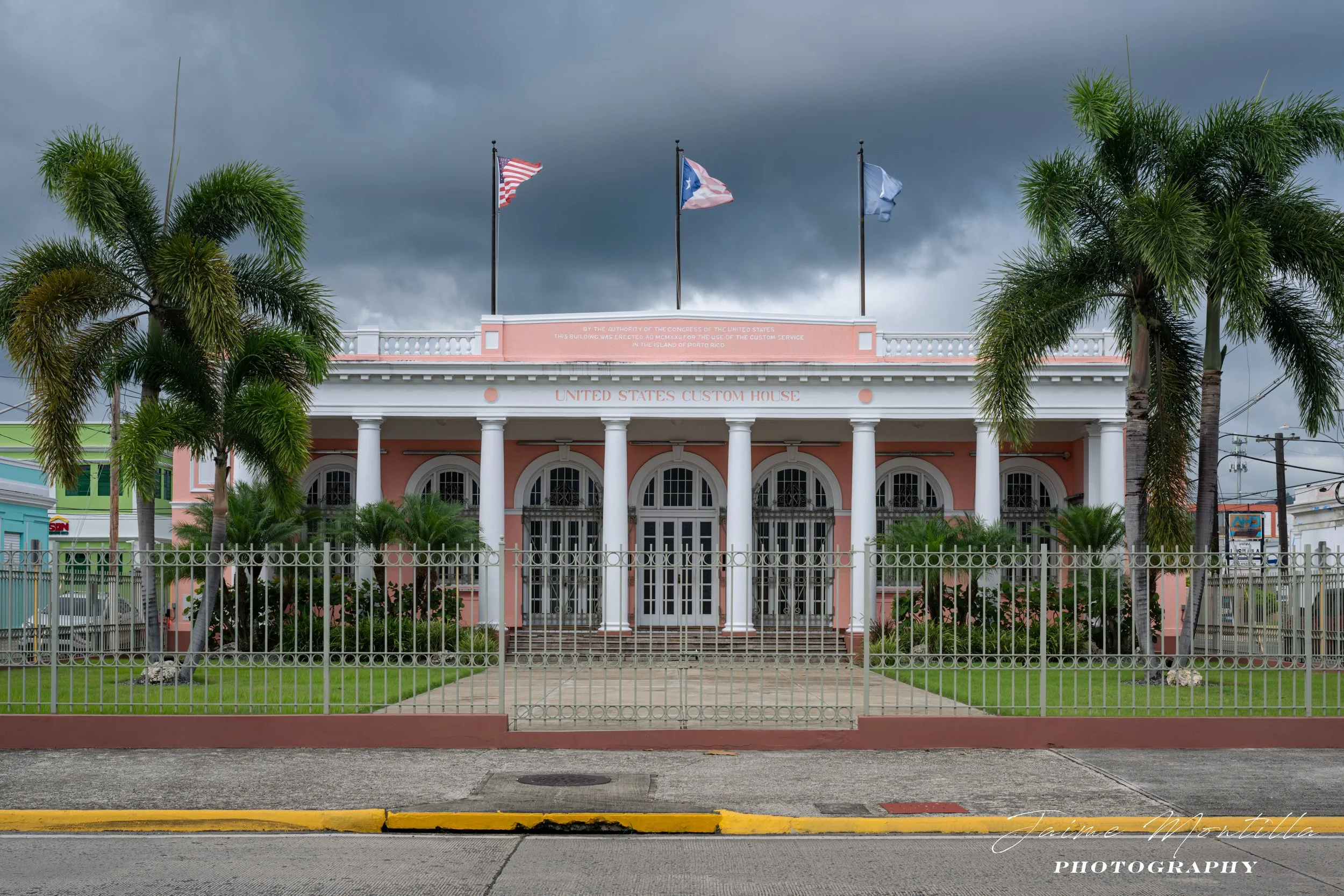
U.S. Customs House - Mayagüez, 1922 design in Beaux-Arts style. It was built between 1922 and 1924 and is the first customs house built by the U.S. government in Puerto Rico.
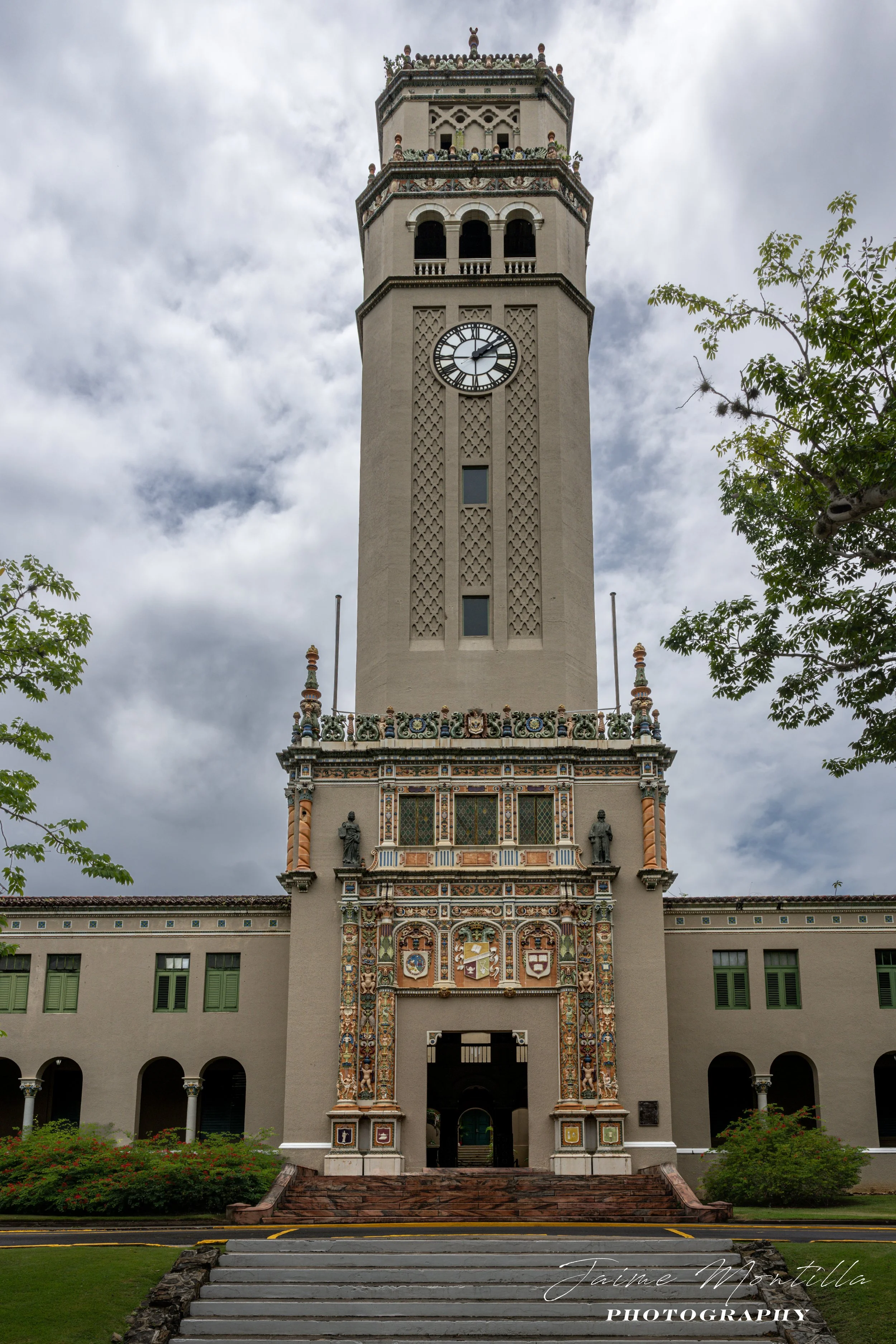
University of Puerto Rico Rio Piedras Campus Franklin Delano Roosevelt Tower aka "La Torre" - San Juan, 1937 design following Andalusian/Spanish Gothic and Baroque Revival styles.
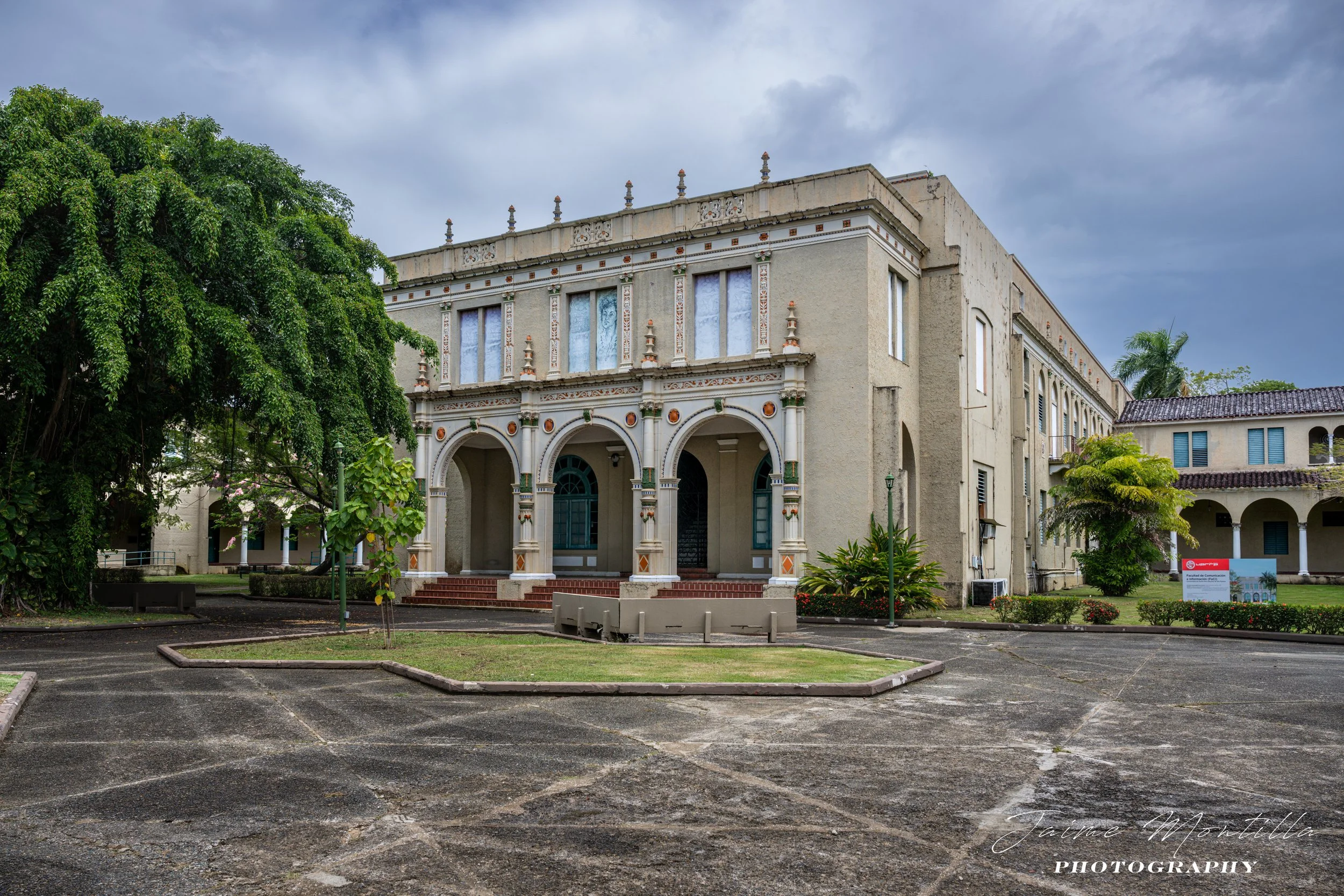
Original University of Puerto Rico Rio Piedras Campus Library - San Juan, 1930s design in Spanish Revival/Plateresque style as part of the area behind the Univesity Tower known as "The Quadrangle", now houses the university's Registrar's Office.
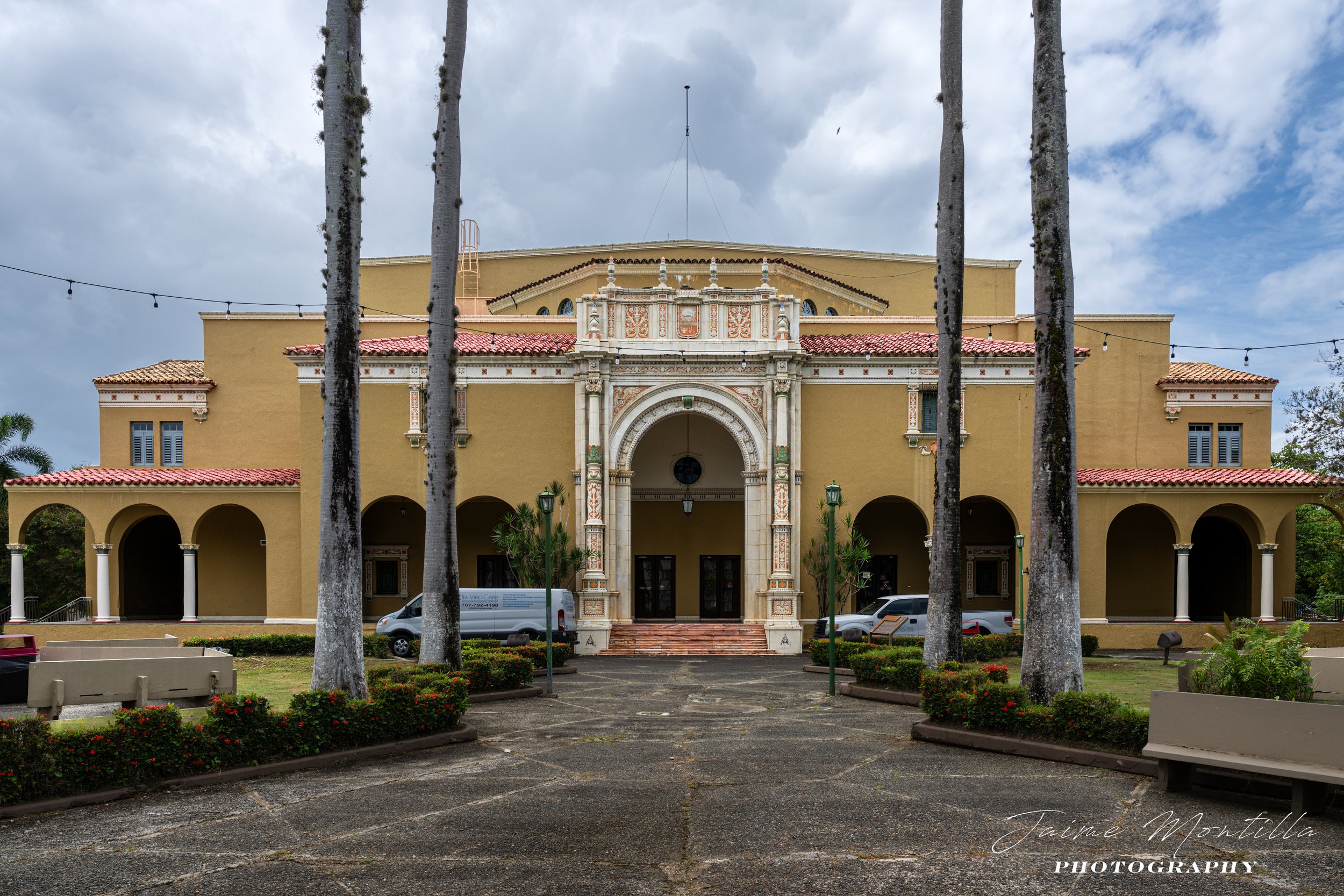
University of Puerto Rico Rio Piedras Campus Theater - San Juan, 1939 design in Spanish Revival style combining Andalusian and Baroque Revival features notable for its ornate Plateresque decorative details. Located on the Quadrangle, opposite the Franklin Delano Roosevelt Tower was primarily designed by Carmoega as chief architect for the Department of the Interior alongside architects William H. Schimmelpfennig and Francisco Gardón.