Betty’s Hope
Betty's Hope was supposedly the first sugar plantation on Antigua and certainly the largest, spanning more than seven hundred acres in its heyday. It was founded in 1651 in St. Peter Parish by then Governor Christopher Keynell. Upon his death in 1663, it was inherited by his widow Dame Joan Hall, who had to flee Antigua due to the French occupation of the island from 1666 to 1674. When the British regained control of Antigua, the British Parliament annulled all prior land claims of those who had fled the island. King Charles II then gave the property to Barbados resident at the time Col. Christopher Codrington (ca. 1640-1698). Col. Codrington named the property Betty's Hope in honor of his daughter. Col. Codrington was appointed Captain-General of the British Leeward Islands from 1689 to 1698 and in addition to Betty’s Hope, he received a fifty year renewable lease for the neighboring island of Barbuda.
Before leaving Barbados to settle in Antigua in 1683, Col. Codrington acquired additional lands to add to Bettys’s Hope and ordered sugarcane planted, eventually covering more than one thousand acres. Betty's Hope was equipped with the newest methods for cultivating sugarcane and became the island's first large scale sugar plantation. Around four hundred slaves worked Betty's Hope during its heydays when it could produce 12 m.t. of sugar per season. The success of Betty's Hope proved to other landowners on the island that sugar was a viable and lucrative crop, turning them away from their largely unsuccessful tobacco cultivation. By the mid 1680s Col. Codrington had joined the council and was wielding great power and influence. Betty's Hope even served briefly as the Government House during the time Col. Codrington was Governor of Antigua and Captain-General of the British Leeward Islands.
The restored windmill pictured below was built in 1690, it had three vertical rollers that could to crush sixty to seventy cart loads of sugarcane or about two acres per day. The sugarcane had to be passed through the rollers twice in order to extract only about 60% of the juice which then flowed by gravity to the boiler house. In the 1700s, vertical rollers were changed to horizontal rollers allowing a double crush in a single pass, the juice was then held in a tank and pumped on demand to the boiling house. Still with the new advances, it took ten workers to operate the mill. The two windmills have not been operational since ca. 1850 when steam was introduced to the estate.
Upon the death of Col. Codrington in 1698, the plantation was inherited by his son Christopher Codrington (1664-1710) who always lived in Barbados and never married or had children and who was also Captain-General of the British Leeward Islands from 1869 to 1704. Betty's Hope was then inherited by his nephew William Codrington 1st Baronet of Dodington. From there on the descendants of William Codrington were absentee owners living at Dodington Park in England. By 1752 the Codrington’s owned several plantations in Antigua including Betty's Hope, Potworks, Cotton New Work and Cotton Old Work also known as Garden, all which totaled one thousand six hundred eighty nine acres of continuously adjoining lands. The family holdings also included the lease of the island of Barbuda.
In 1904 when the Gunthorpe Sugar Mill was began to operate, sugar production at Betty’s Hope sopped and a forty nine mile railway system was built to transport freshly cut sugarcane from betty’s Hope to Gunthorpe Sugar Mill. The first trains were narrow-gauge saddle tank locomotives built by Kerr, Stuart & Co. of Stoke-on-Trent known as Tattoo class locomotives, today in exhibit at the in Museum of Antigua in St Johns. In 1955 diesel locomotives started to be used. Sir Gerald W. H. Codrington sold Betty's Hope in 1944 to the Antigua Syndicate Estates Ltd. Since 1968 the remains of the estate have been owned by the Government of Antigua and managed by the Betty’s Hope Trust. The sugar mill machinery now housed in its tower is not the original machinery, it was removed from the Thibous Plantation.
The webpage Antigua Sugar Mills includes an interesting and detailed history of Betty’s Hope.
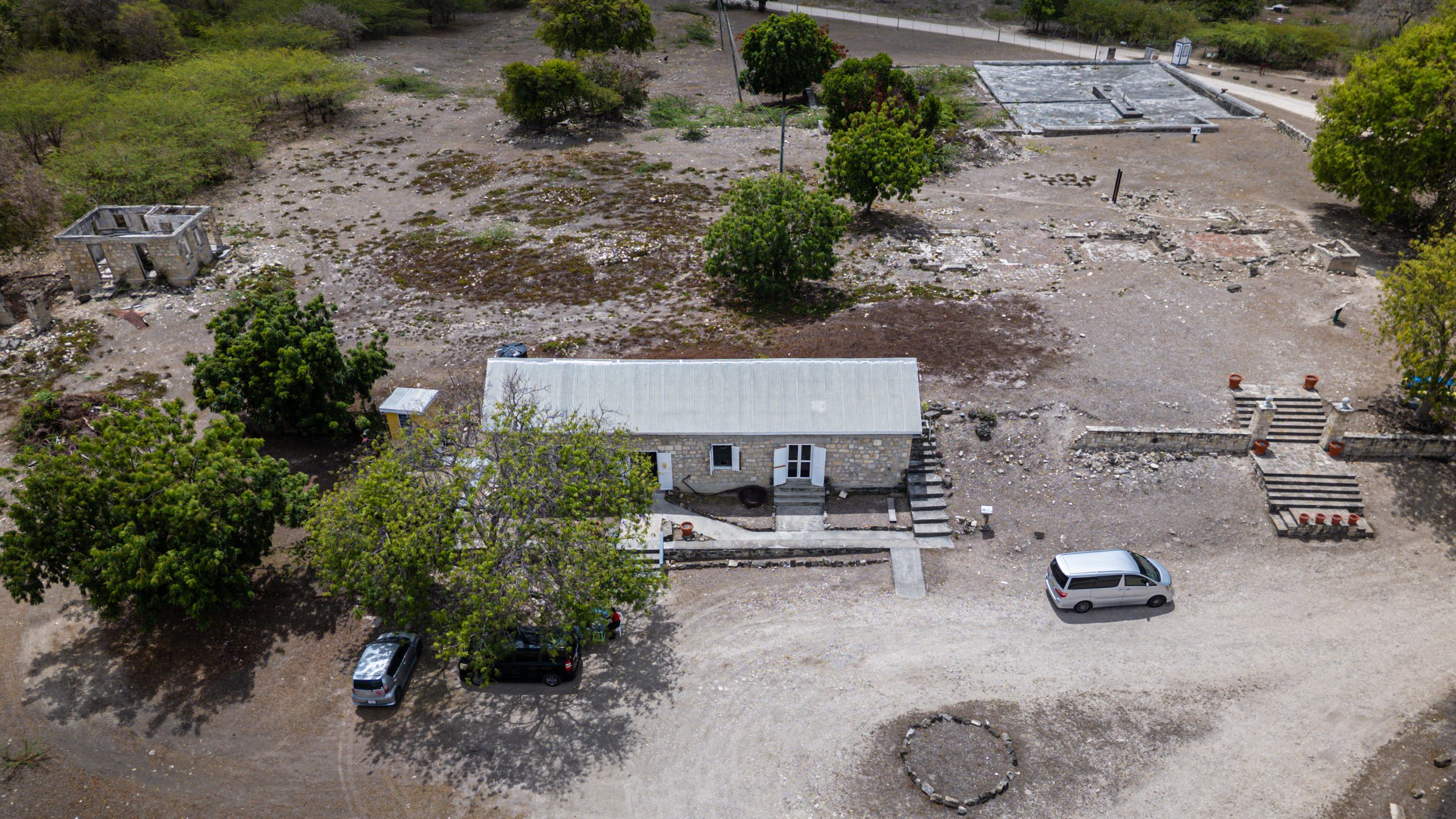
Visitor Center housed in a converted former cotton storeroom, Great House footprint, the estate master's residence situated on a slight elevation overlooking the production zone , cistern complex, four deep, interconnected stone rainwater catchment basins and subterranean reservoirs and kitchen
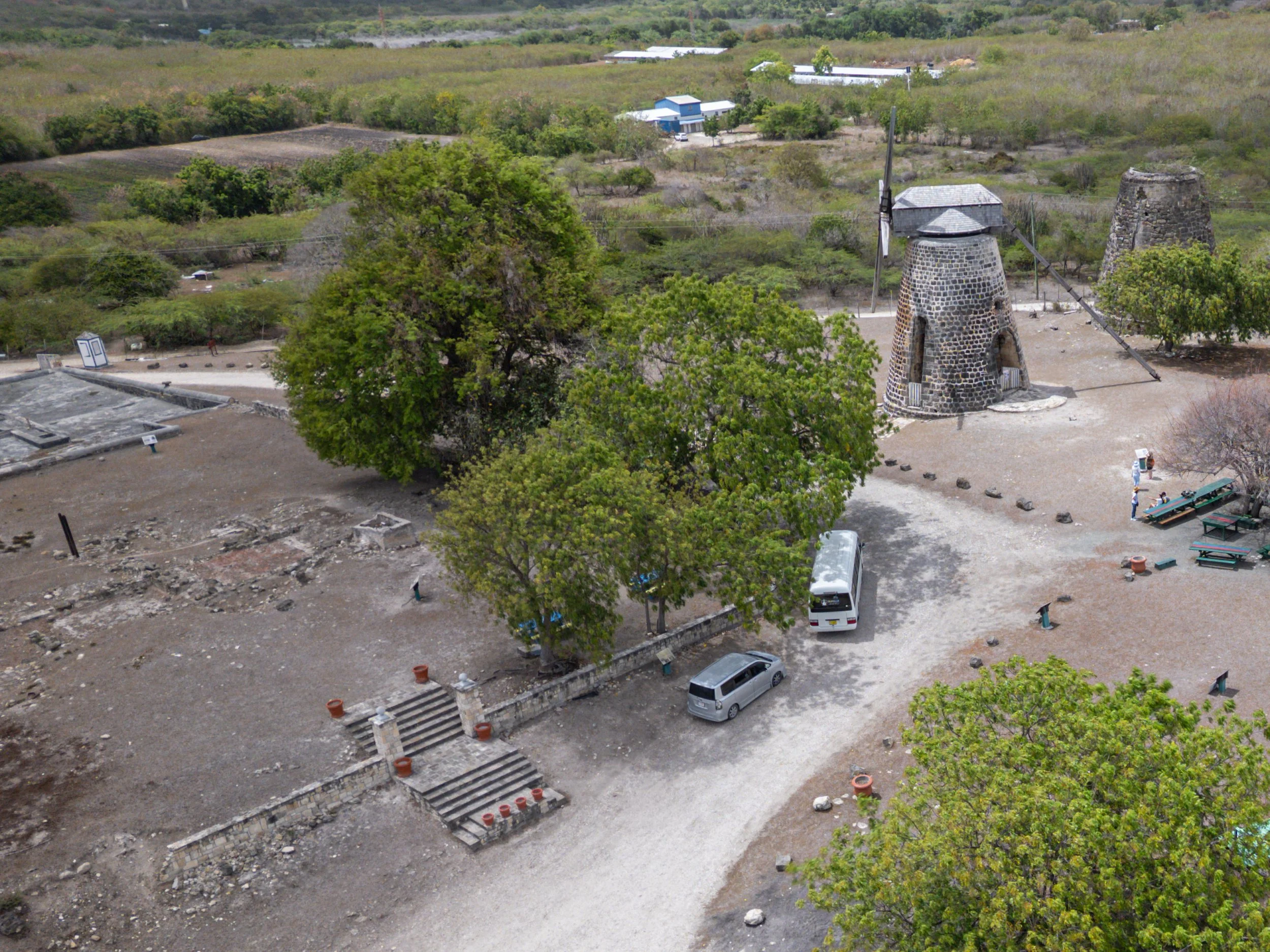
Great House footprint of structure destroyed by fire in the 1930s, cistern complex in back and new and old windmills
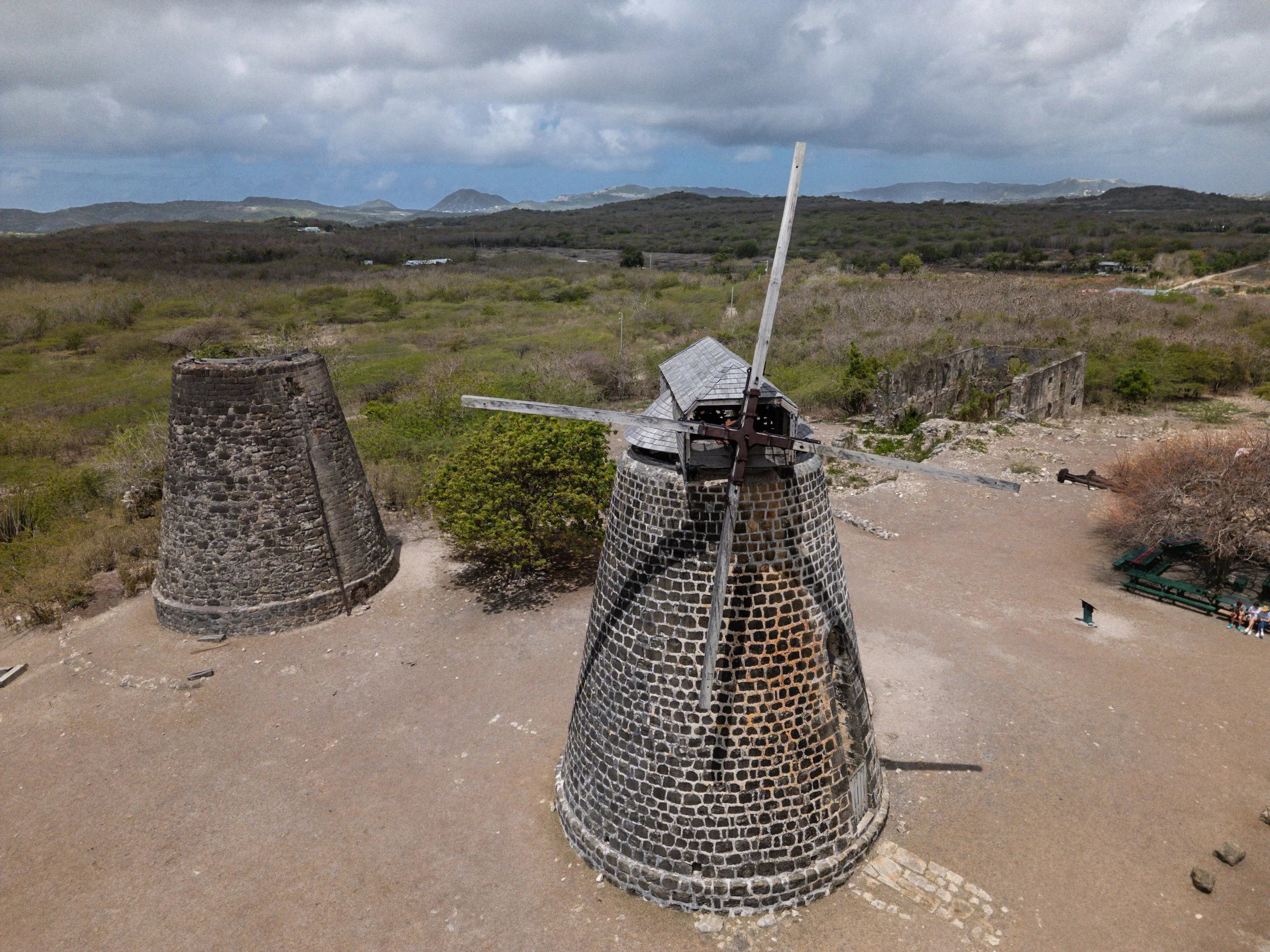
Old Windmill Tower right, New Windmill Tower, left in front of industrial complex where curing house and boiling house were located
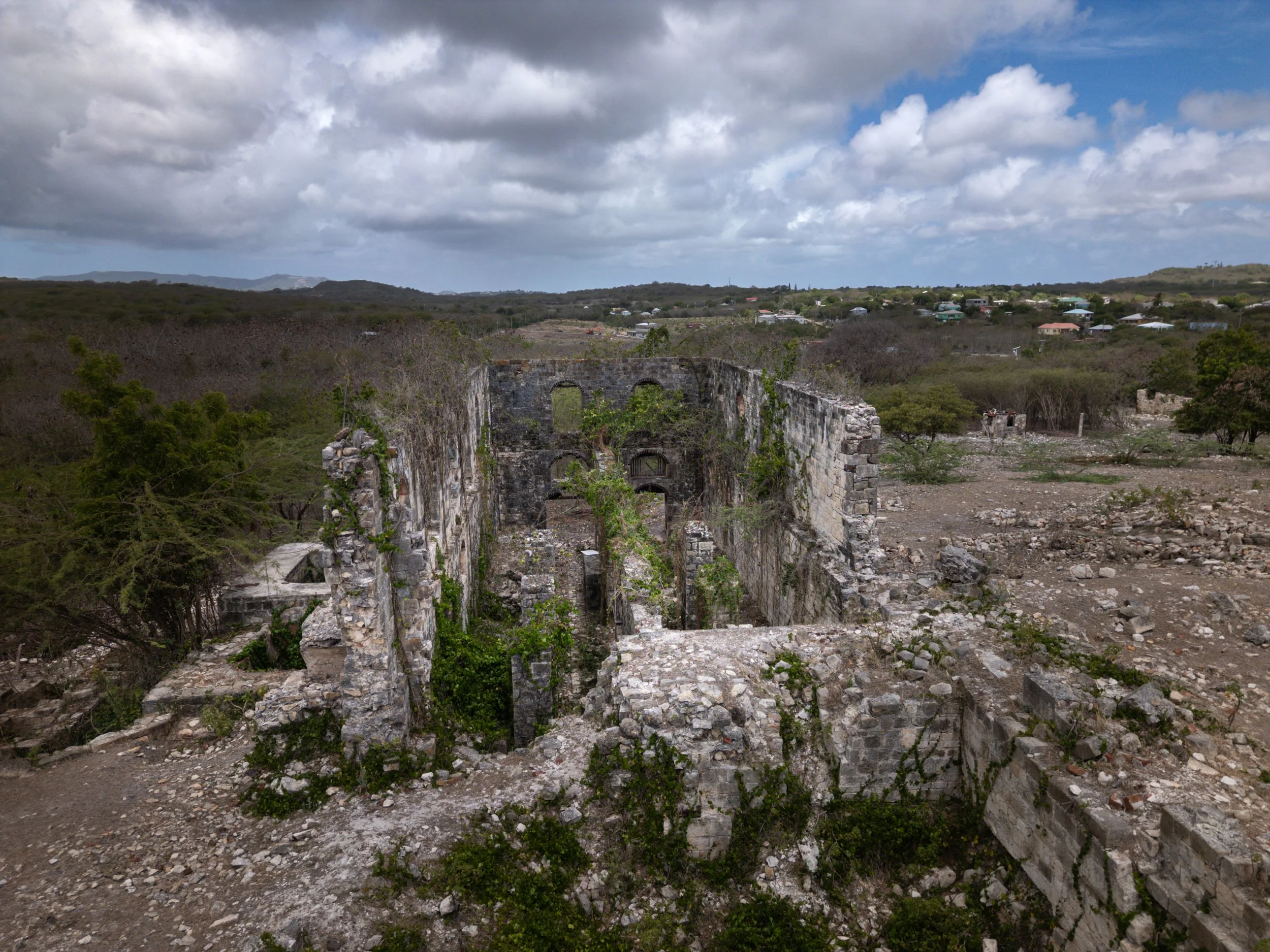
Remains of still house, part of a T-shaped building containing a curing house in the foregroundand a boiling house to the right featuring copper hoppers where extracted cane juice was boiled into crystalline sugar
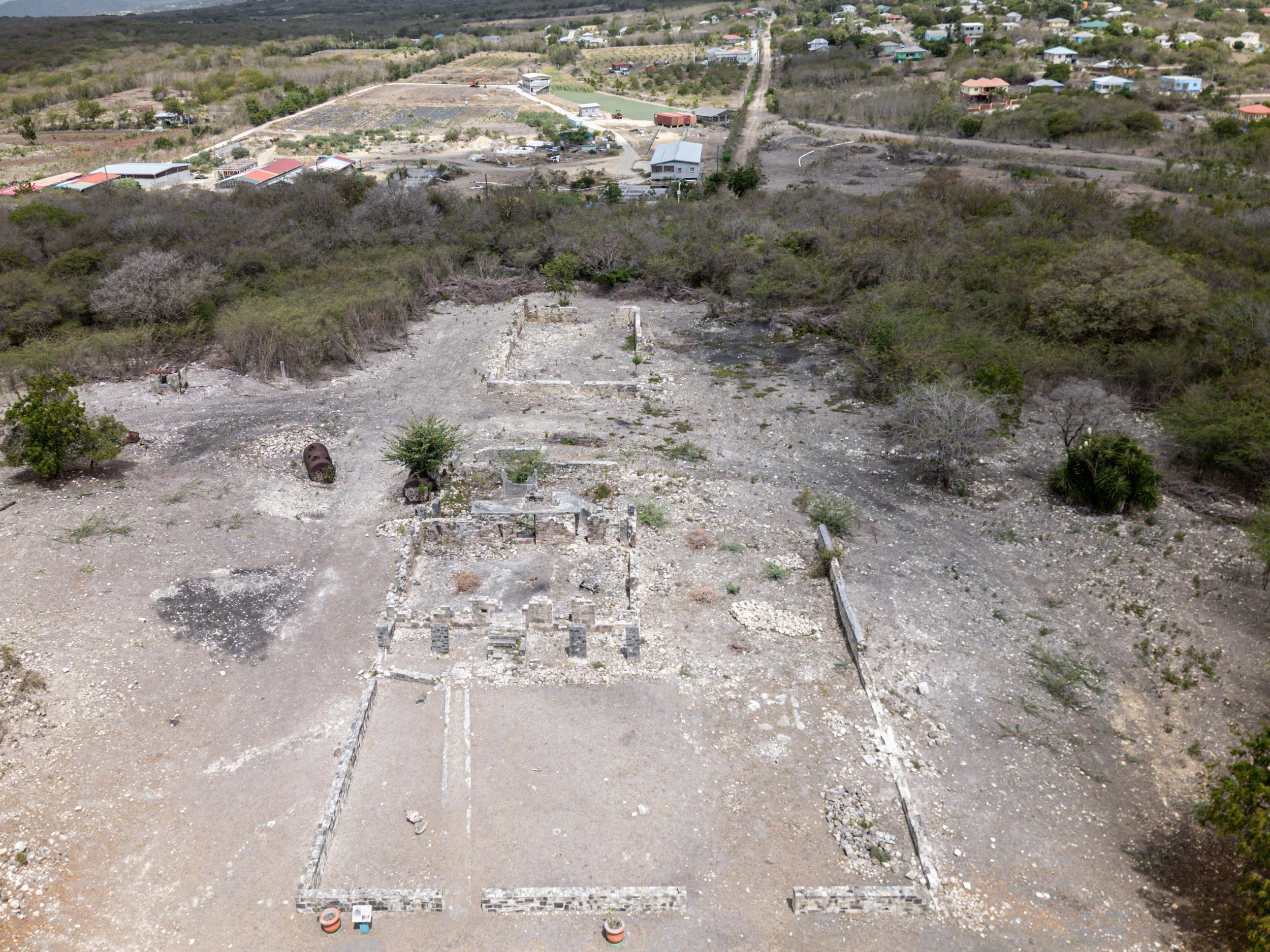
Footprint of Manager's House
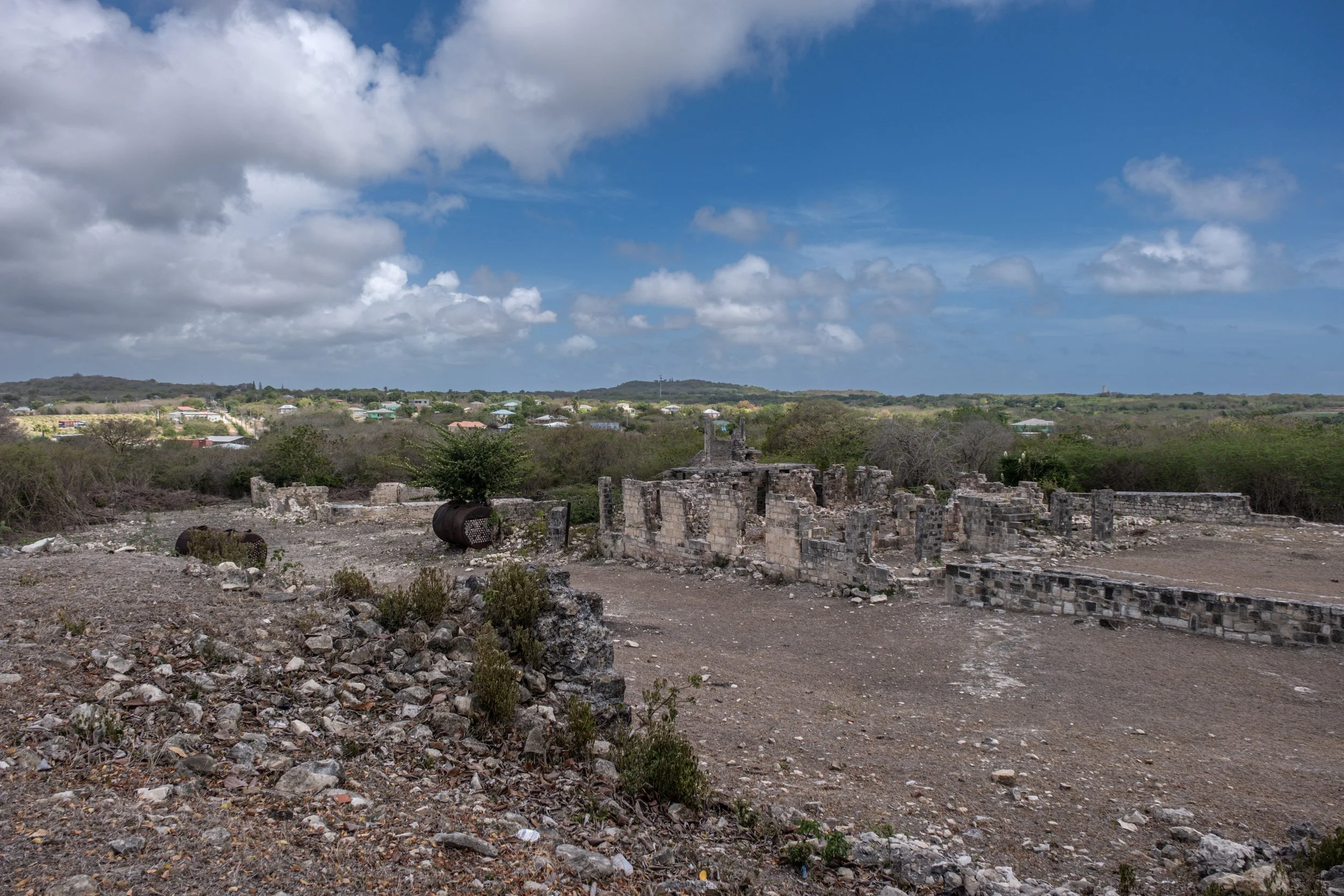
Manager's House, a two story structure withh wooden second floor and carriage house to the side, destroyed by fire
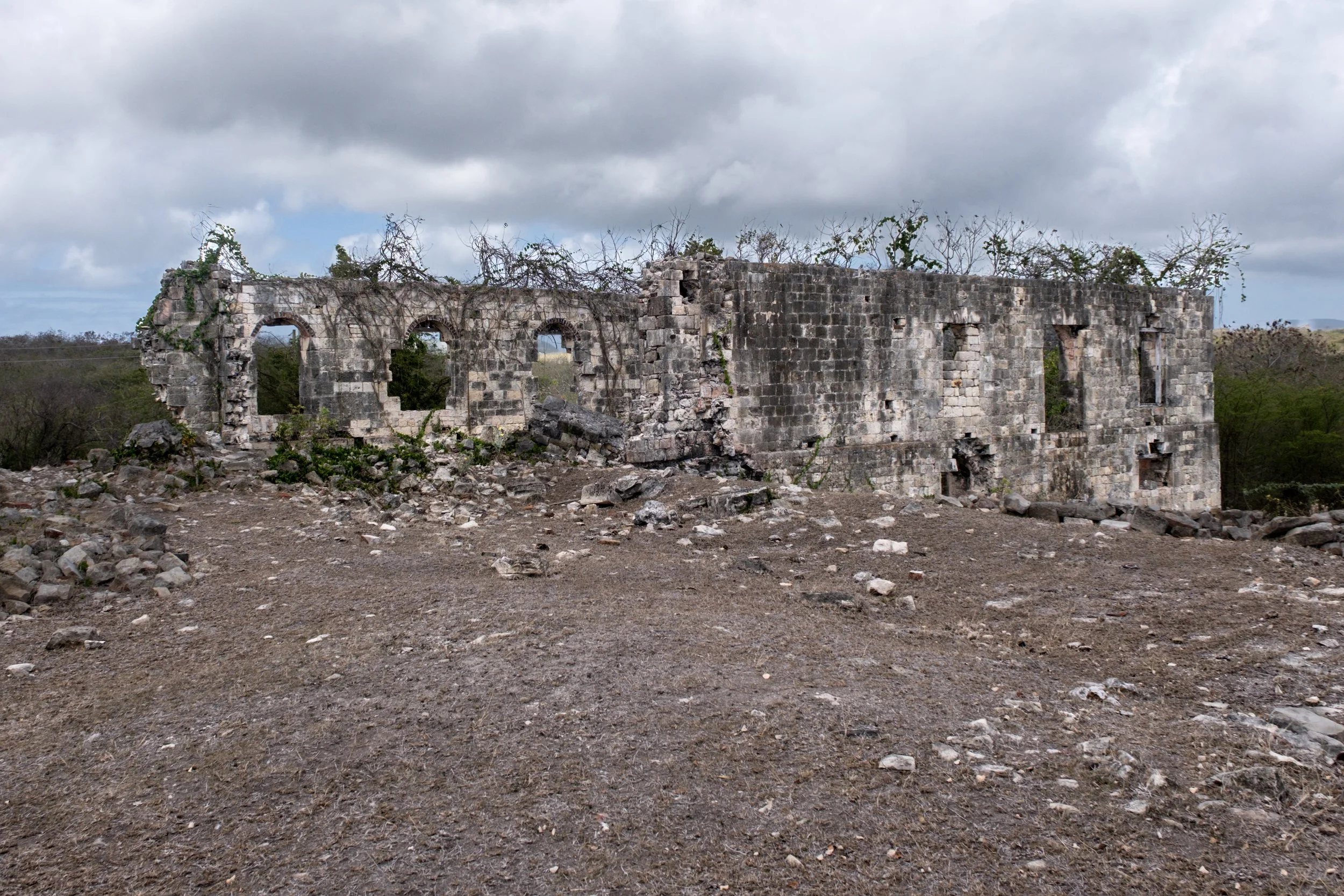
Still House, stone-arched rum distillery ruin located adjacent to the processing line
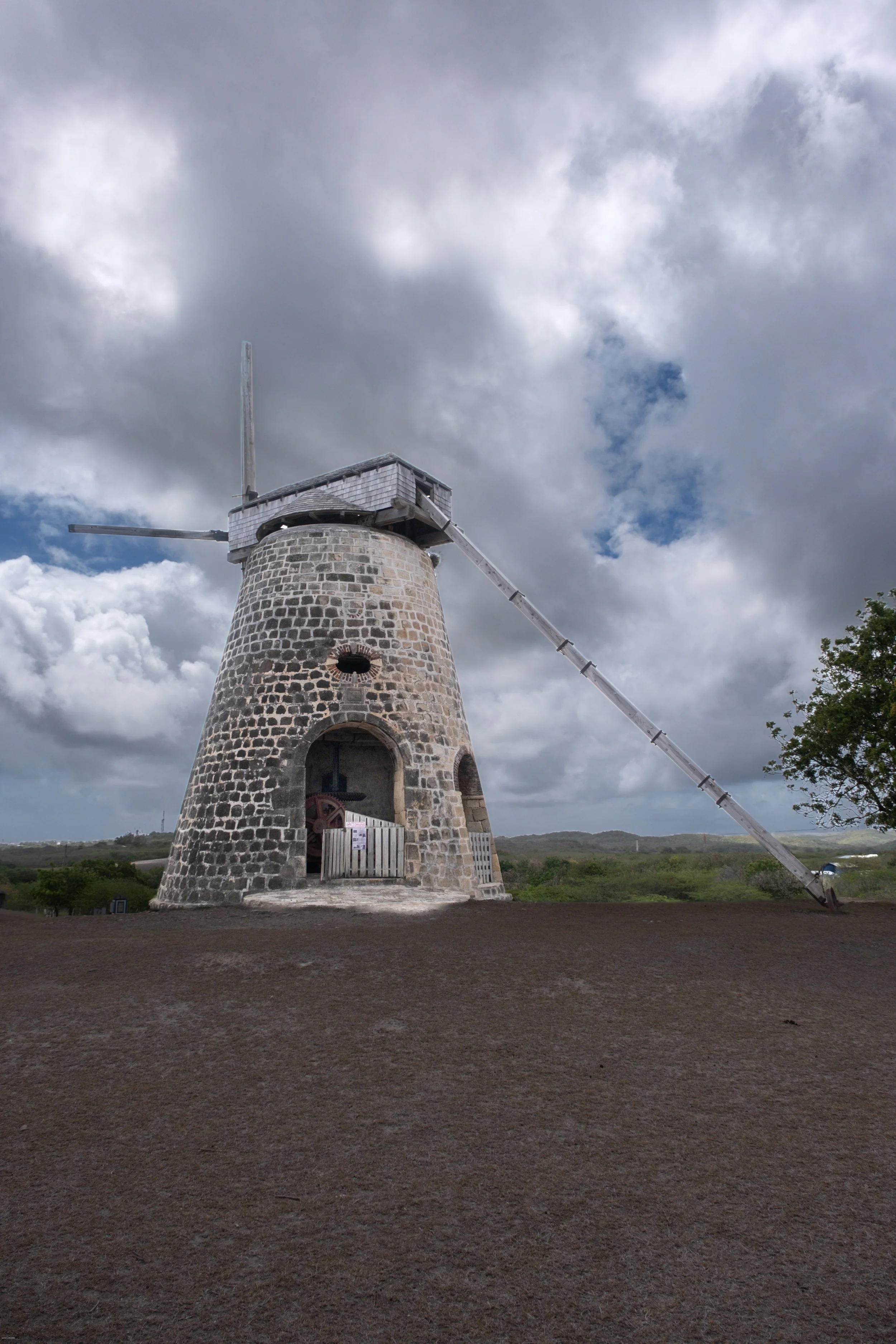
Old Windmill
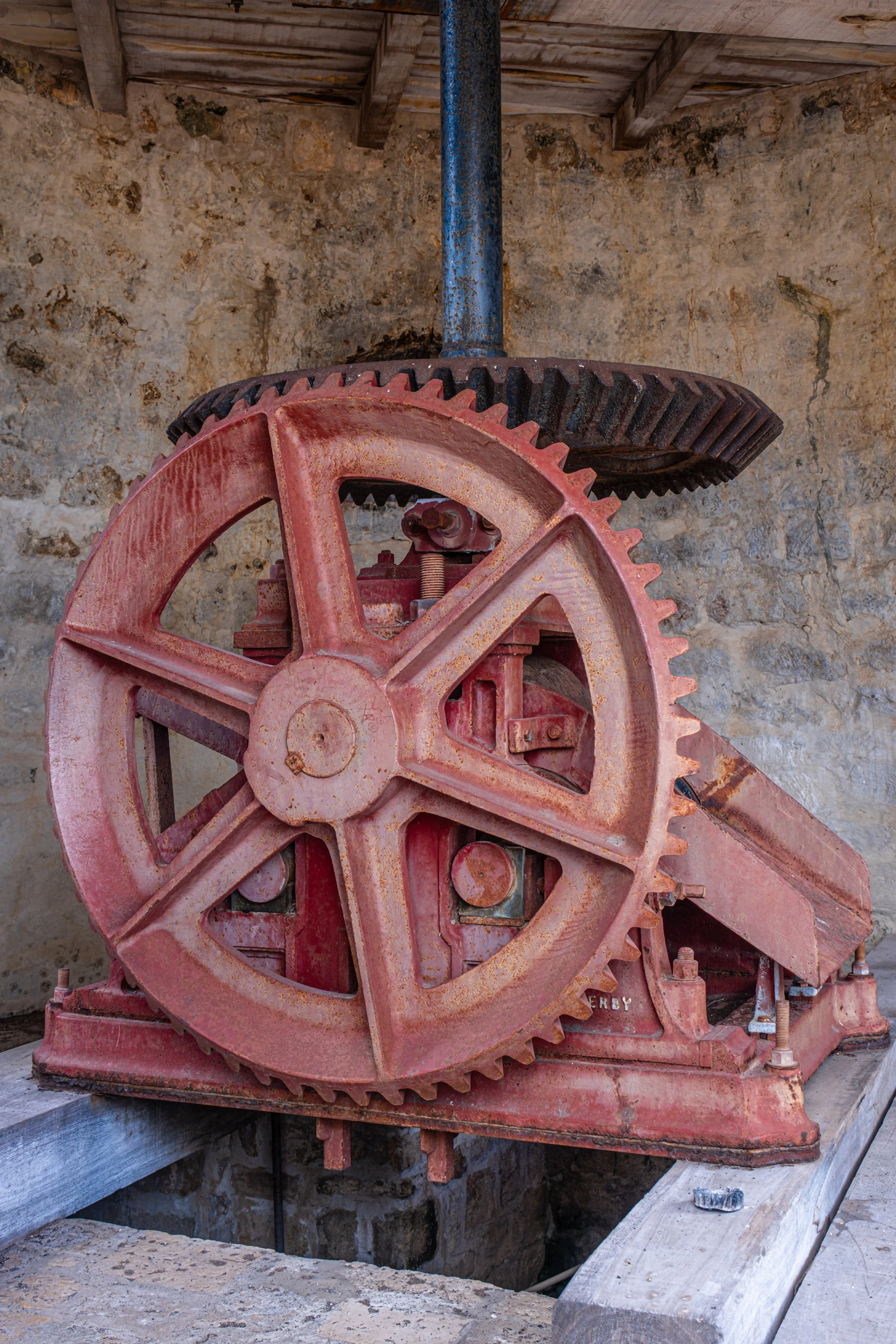
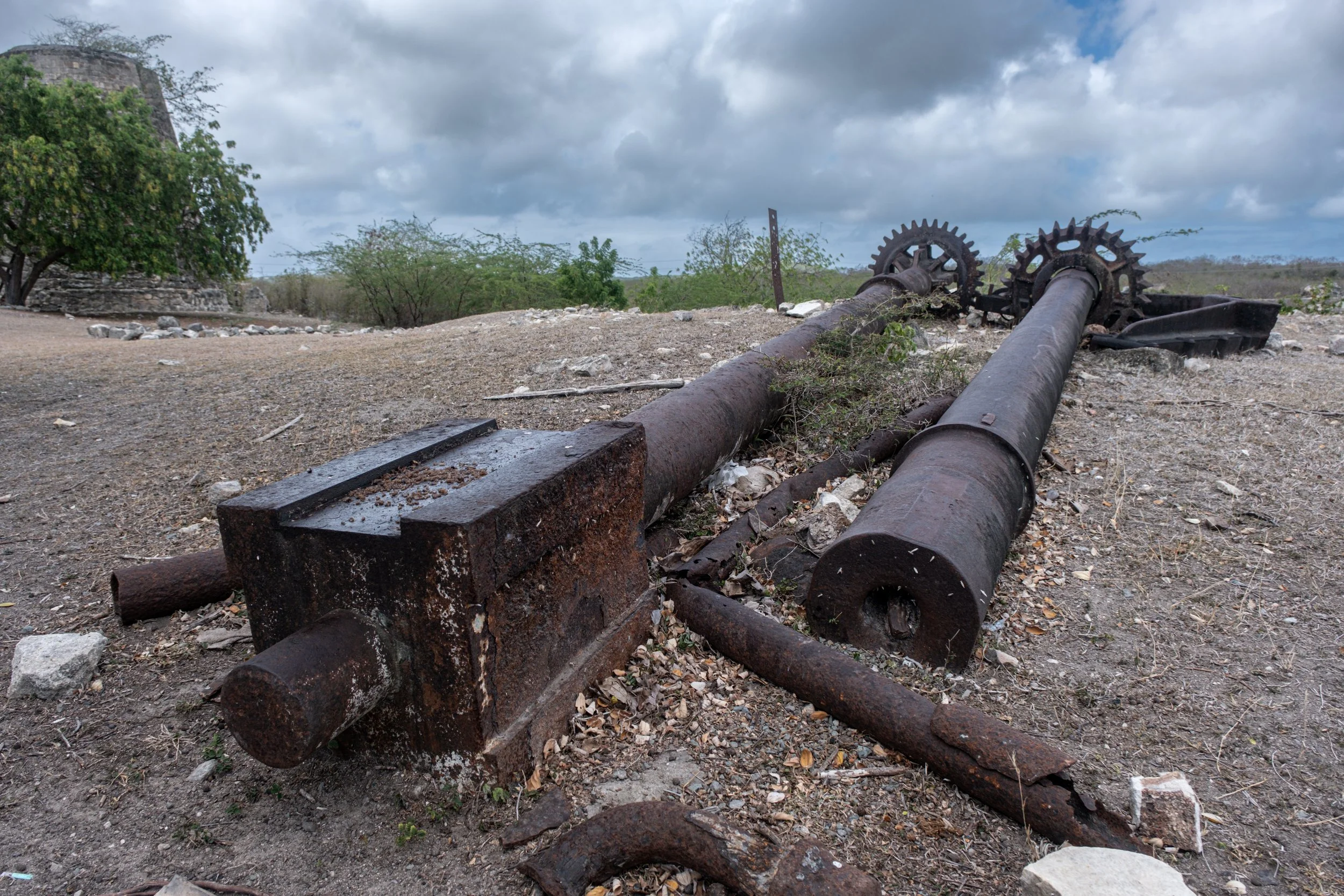
Old shafts that moved the sugarcane crushing rollers inside the windmills