Puerto Rico
The 1898 Colonial Business Directory of the Island of Puerto Rico lists twenty distillers and thirteen liquor manufacturers then operating on the island. It may be worthwhile noting that not all distillers necessarily produced alcohol for the elaboration of rum or other spirits. In January 1898 James D. Dewell visited Puerto Rico and in his book Down in Puerto Rico with a Kodak he writes of his visit to the Mercedita Estate;
“The sugar turned out at Mercedita is of the highest grade of centrifugal. The residuum, or low grade molasses, which comes from this process is too poor to export, in fact it would have no market value in the States, but is utilized here by distilling it into what is called “nigger rum,” being very low grade and sold at a correspondingly low price.”
In 1862 Miguel Roses Bisbal and Sebastián García established the firm Roses & García and in 1868 began bottling a rum the called Ron de la Casa Roses. By 1891 then under the name Roses & Cia., Miguel and his brother Antonio had acquired hacienda Santa Barbara in Arecibo and began bottling Ron Llave which eventually became the best selling rum on the island. Although Miguel and Antonio owned Hacienda Santa Bárbara in Arecibo, Roses & Cia. did not own sugar estates per se. The firm went directly into establishing a distillery equipped with a German still and acquired the molasses from the surrounding sugarcane haciendas. In that sense, Roses & Cia. became a pioneer, establishing a trend of distilleries separated from the sugar estates, an orientation that would eventually characterize the industry in the 20th Century.
Federico José Hernandez in his book Puerto Rico Rum-Clopedia: a Brief History of Puerto Rico’s Rum Industry states that the register books at the PR State Department show that between 1902 and 1916 there were sixty five rum brands registered on the island. But in 1919 prohibition came and many distillers went out of business. Alcohol was only allowed to be sold for medicinal, sacramental, scientific and industrial purposes so there was during those years a drastic increase in the production of illegal rum from molasses bought from local sugar manufacturers purportedly for cattle feed. It was not after the end of prohibition in 1933, that the rum industry in Puerto Rico began to flourish.
In 1911 Puerto Rico Distilling Co. was established in Arecibo, the result of the amalgamation of rum and sugar producers Roses & Cia. (Ron Llave), Juan Pizá (Ron Pizá), Eduardo Giorgetti (Central Plazuela) and liquor manufacturers and distributors José Romaguera of Ponce, Pedro Grau of Mayagüez and Luis Rubert of San Juan. The “Distilling” as it was affectionately called, was the only distillery that kept on producing alcohol for medicinal and industrial purposes through the entire prohibition era. During those years, almost all alcohol exported from Puerto Rico to the US or produced for local consumption was made by the “Distilling”. That being the case, when prohibition was repealed in 1933, the infrastructure of the Puerto Rico Distilling Co. was easily and quickly switched to the rum production once again.
After the end of prohibition, Puerto Rico Distilling Co. entered into a partnership with Florida Cane Products, Inc. that led to the creation of a subsidiary company called RonRico Corporation, producers of RonRico Rum, which became to be very well know in the US market. They also produced neutral spirits for non-distilling producer on the island mainly in Mayagüez, most likely Ron Superior and in Bayamón, most likely Ron del Barrilito. During World War II, E. Seagram & Sons Ltd. of Canada imported rum from Puerto Rico which led to the acquisition of a majority interest in Puerto Rico Distilling Co. In 1968 the Puerto Rico Distilling Co., under a subsidiary company called Destilería Ron Granado, Inc., brought to market a four year old rum called Ron Granado which was very well acclaimed by the general public. In 1985 Destilería Serrallés acquired the production facilities and all the brands produced by Puerto Rico Distilling Co. and its subsidiaries.
During World War II, demand for Puerto Rican rum far exceeded expectations and existing appropriately aged rum supply. That being the case, rum suppliers began to sell rum with little or no aging, which damaged the reputation of Puerto Rican rum. By the end of the war, rum sales had fallen significantly. Fearing that a declining rum industry would harm the island’s economy, the Puerto Rican government stepped in to revive the industry. A number of laws were established around the distilling and aging of rum subjecting the process to a government mandated standard of quality. The government also sponsored a rum research program which was maintained by the University of Puerto Rico with a $500,000 appropriation. The university founded the Rum Pilot Plant, which served as an experimental distillery completed in 1953 using state of the art equipment to allow researchers to experiment with fermentation, distillation and aging techniques. Researchers freely shared their findings with commercial distillers, including offering yeast strains that they determined to be the highest quality. Until it closed down in 1990, researchers also offered consulting services free of charge to distillers who wanted assistance in any part of the production process.
It is frequently stated and used as a marketing tool, that Puerto Rico produces over 70% of the rum consumed in the U.S. Although this may be a correct statement, this statistic is heavily influenced by one brand, Bacardí, who produces at its plant in Cataño about 85% of all the Bacardi rum consumed worldwide. According to a U.S. federal excise tax rule commonly referred to as federal "cover-over" taxes on spirits, excise taxes collected on Puerto Rican rum sold in the U.S., whether shipped in bulk or bottled on the island, are returned to the Puerto Rican government to support the island's economy and infrastructure. The Bacardí distillery in Cataño, the largest producer on the island and in the world, ships its rum in bulk to its mainland bottling facility in Jacksonville, Florida. This allows Bacardí to scale production for the massive U.S. market efficiently. However, not all Puerto Rican rum is exported to the U.S. in bulk, the Serrallés distillery which is the second largest producer on the island, exports unlabeled bulk rum to the continental U.S., which is then often purchased by third party brands to be bottled and sold under different labels, but its Don Q brand is bottled in Puerto Rico then shipped to the states as so does Ron del Barrilito.
The Puerto Rican government has simple but specific requirements for a rum to carry the island's seal and be labeled as a "Rum of Puerto Rico": (1) has to be manufactured from molasses, (2) distillation must be continuous, (3) has to be aged in oak barrels for a minimum of twelve months [1] and (4) must be distilled and aged entirely on the island. Because Puerto Rico receives federal "cover-over" taxes on spirits, the local and federal governments require that any distilled spirit shipped from Puerto Rico to the mainland U.S. must have at least 92% of its total alcohol content come from real rum. Normally Puerto Rican rum should be bottled at 40% ABV minimum though exceptions apply. Today, there are only two major rum distilleries in Puerto Rico, two major non-distilling producers and a number of smaller “artisan” manufacturers.
Puerto Rican rum is categorized in general as light or Spanish style rum, a type of rum that is not necessarily appealing to sophisticated rum connoisseurs. Notwithstanding, Matt Pietrek and Carrie Smith in their book Modern Caribbean Rum state that between brands like Bacardi, Havana Club, Ron Barceló and Don Q, Spanish style rum is easily the most popular style of rum consumed globally. Spanish style rum is distilled using column stills and rarely use airborne yeast or long fermentation periods, resulting in a delicate flavor and a lighter color natural spirit. In Spanish style rums, flavor is mostly imparted during the aging process as compared to for example Jamaican rum, where flavor is mostly imparted during the fermentation period and is known for strong, pungent flavors. Although this may apply to typical white and gold rums aged not more than twenty four or thirty six months, in recent years some rum producers in Puerto Rico have brought to market several full flavored and aged expressions that will excite the palate of any rum enthusiast.
Edmundo B. Fernandez, Inc.
Edmindo B. Fernandez, Inc., manufacturers of Ron del Barrilito in Bayamón, is the island’s oldest rum brand using the exact same formula its founder Pedro F. Fernandez Umpierre (1849-1921) developed in 1880 at Hacienda Santa Ana. Ron del Barrilito though, does not distill its own spirits, it is a non-distiller producer or blender, sourcing neutral spirits or alcohol from bulk distillers. They take the sourced spirit to Hacienda Santa Ana where they macerate less than 2.5% with fruits and spices and then blend it with the remaining ±98% before aging it in sherry casks. Per the US Alcohol and Tobacco Trade Bureau (TTB) regulations, rum can contain up to to 2.5% by volume of “harmless coloring, flavoring, or blending materials”. Barrilito’s macerated rum fits this description, so per TTB’s rules, it’s legally rum, not flavored rum, spiced rum, or a spirit drink.
Mark Pietrek, author of the book Modern Caribbean Rum, in his website Rum Wonk states that it’s often incorrectly assumed that Hacienda Santa Ana buys its unaged distillate from Bacardí. He states that while this may have been true in the past, it’s doesn’t appear to be the case today. Puerto Rico publicly available US import data show Edmundo B. Fernández, Inc. importing a large amount of rum from the Dominican Republic, as well as lesser amounts from Guatemala. Some of the Dominican Republic rum came from Alcoholes Finos Domincanos, while much more came from a company called Flexitank who appears to be the logistics company doing the shipping. The Guatemalan rum came from Mag Alcoholes SA, a large Guatemalan agro-industrial producer.
Ron del Barrilito is one of the most sough after rums from Puerto Rico, undoubtedly because of its quality and probably because of its long history of being in the Fernandez family for almost one hundred fifty years. From its founder Pedro F. Fernamdez Martinez who married his cousin Maria Latimer Fernandez the daughter of José Ramón Fernandez Martinez Marqués de la Esperanza owner of Hacienda La Esperanza and Central Canovanas, the business passed on to his son Edmundo B. Fernandez Latimer (1865-1991) and then to his two sons Manuel Fernandez Marrero (1933- ) and Fernando Fernandez Marrero (1944- ). Throughout the three generations, the formula has always stayed the same.
After many months of discussions and careful consideration, in 2017 Manuel and Fernando, neither one having any descendants, decided to sell the company to a group of investors. The new ownership group is headed by Joaquín Bacardí, a member of the well known rum making family though not to the rum making company itself. Joaquín worked for Bacardí Rum for thirty years getting to be president of Bacardí Puerto Rico operations. His son Eduardo, twenty six years old at the time of the purchase, was given the responsibility to bring the brand into the 21st Century, part of his commitment was the addition of a new line up including Barrilito four and five stars (aged 20-35 years) expressions to the company’s long time lineup of two stars (aged 3-5 years) and three stars (aged 6-10 years) and a new 138˚ proof Hacienda Santa Ana rum and the purchase of twenty eight thousand new oloroso sherry butts [2] from Spain .
Trigo Corporation
The Trigo family has operated in the Puerto Rico market since 1886. Trigo Corp. was established in 1971, and like Edmundo B. Fernandez, Inc. in nearby Bayamón, it is a non-distiller producer that reportedly purchases its neutral spirits from Bacardí. Trigo Corporation blends and ages its rum brands which include its flagship premium 10-year-old Reserva Añeja, Cañita de Alambique, Coquito Trigo Coconut Cream Liqueur, Twin Isle Rum and Ron Bugalú coconut and lemon flavored rums. In the 1980's Beningno Trigo was at the head of the family business and decided to sell many of their business ventures including Trigo Hermanos, Inc., a distributing company, Casera and others manufacturing enterprises. He did retain Trigo Corp., a small wine and liquor manufacturing and distributing operation located in the grounds of the old Central Constancia sugar mill in Toa Baja.
Today, Trigo Corp. principal wine products are Ponte Vecchio brand products, under which they have developed a series of wine varietals ranging from the traditional lambrusco, cabernets and rosé wines to sangrias. They also produce liqueurs, artisan Vodka and other traditional products such as Ron Cañita Artesanal Alambique, Coquito Trigo and their premium rum Trigo Reserva Añeja among others, mainly for the Puerto Rico market and some export to the United States, the Caribbean and duty free markets.
Bacardí Corporation
The history of Bacardí Corporation is available at their website , however, following is some additional information not therein available that illustrates the development of the corporation and the vision its members had in order to survive and thrive after its assets in Cuba were nationalized and confiscated by the Fidel Castro regime. The book Bacardi and the Long Fight for Cuba: The Biography of a Cause by Tom Gjelten is excellent reading to better understand what is hereby briefly stated.
In the early years of the 19th Century, brothers Juan and Magín Bacardí Massó left Sitges, Catalonia to look for a better life and fortune in Santiago de Cuba. In a few years they had been able to save some money and establish a successful general store they called El Palo Gordo in partnership with Juan Carbonell Ibori. In 1830 their brother Facundo Bacardí Massó (1815-1886) joined them and a few years later so did their younger brother José. In August 1843 Facundo married Lucía Victoria “Amalia” Moreau, granddaughter of a wealthy coffee plantation called El Amor and three months later Facundo was able to open his own general store registered as Facundo Bacardí & Cia.
On August 20, 1852 an earthquake hit Santiago de Cuba that prompted a cholera epidemic that killed almost a hundred people including their six year old son Juan and their infant daughter María. As a result, in December 1852 Facundo, Amalia and their two surviving sons Emilio (1844-1922) and Facundo Jr. (1848-1926) left Santiago for Sitges for a few months until the epidemic brought about by the earthquake had subsided. After a few months, except for Emilio who stayed in Spain until 1957 to go to school, the family returned to Santiago just to find out their business had been looted and commercial activity in the city had declined substantially. Facundo tried to return his business to profitability but in 1855 Facundo Bacardí & Cia. had to close down. However, through liquidation of assets and a reorganization of his financing, Facundo was able to repay the money he had borrower from his wife’s godmother Clara Astié ( -1859) and his his mother-in-law thereby safeguarding his wife’s savings.
Facing the prospect to start all over again after twenty five years in Santiago, Facundo realized the grocery business was not the way to go, he had to produce something. At the time, the sugar industry in Cuba was flourishing but the related rum industry was poorly developed, the product had, as historian Manuel Moreno Fraginal stated, “an unpleasantly musty taste and smell” and the price Cuban rum commanded was way lower than rums from Jamaica, Barbados and Martinique. Since 1838, Cuban of British ancestry John Nunes had been operating a small distillery on Matadero St. called La Tropical with relative success. Cuban of French descent José León Boutellier rented a property from Clara Astié on Marina Baja St. where he had a pot still used for making cognac and wines from oranges and candies under the name Caramelos Carbanchell. Upon the death of Clara Astié in 1858, she left the property on Matadero Street to her godchildren including Amalia and Emilio. As part of Boutellier’s rental agreement he agreed to share the still with Facundo and help him experiment with different fermentation and distillation methods to produce a better rum. After a few months they began selling some of their unlabeled rum with relative acclaim at El Palo Gordo. At that time and by pure coincidence, John Nunes decided to sell La Tropical, so in February 4, 1862 Boutelier, Facundo and his brother José bought it for 3,000 gold pesos. That same month, they acquired a second distillery from also Catalonian immigrant Manuel Idral and in May 1862 they incorporated as Bacardí, Boutelier & Cia. In 1874 José who had contributed most of the money to buy La Tropical, sold his shares in Bacardí, Boutelier & Cia. to Facundo and Boutelier, in declining health, did the same. The new company named Bacardí & Cia. prospered and in 1877 Facundo decided to retire, handling the business to his children Emilio, Facundo Jr., José (1857-1907) and Amalia (1863-1929), leaving his older son Emilio at the helm.
The last twenty five years or so of the 19th Century were difficult years for Bacardí & Cia., in 1879 Emilio was imprisoned due to his political beliefs for nearly four years and again in 1896 for two years or so. Also in 1879 for pure legal reasons to protect it from creditors, the Matadero St. distillery was sold to José Bacardí Massó who was not involved in the company’s operation. In 1880 the company had to file for bankruptcy due to mounting debts and that same year the Marina Baja St. distillery was destroyed by fire but fortunately they were able to increase production at the Matadero St. distillery to compensate. In 1884 Henri “Enrique” Schueg Chassin (1862-1950) was hired to manage the firm’ troubled finances becoming a partner in 1893 when he married Amalia Bacardí Massó. Finally, in 1886 Facundo Bacardí Massó died having not lived long enough to accumulate any wealth from the firm he created.
In December 1898 shortly after the end of the Cuban War for Independence, Emilio returned from exile in Jamaica and rejoined the company. In 1899 Emilio was appointed Mayor of Santiago by U.S. General Leonard Wood of the US military government, position to which he was elected again in 1991 and which he held until the December 1905 when he ran and was elected a Senator where he served briefly until the collapse of the Cuban republic and the second US military occupation began in September 1906. During his absence, although he remained president, the company was run by his brother Facundo Jr. who mastered all aspects of rum making from distillation to filtration, aging and blending. However, much of the credit for the development of the company in the early years of the 20th Century go to Shueg who was responsible for the company’s expansion first by partnering with Spanish distiller Francisco Alegre to produce the product in Barcelona and exploring the possibilities in Puerto Rico which would later become their most important operation outside of Cuba.
In 1911 the old pot still at the Matador distillery was replaced by a modern Coffey still. In 1919 the company was organized as Cia. Ron Bacardí S.A. with Emilio still as president but every day with less involvement in the company’s operations run mainly by Facundo Jr. and Enrique Shueg as 1st and 2nd Vice President respectively. A new distillery to replace the one at Matadero St. was inaugurated on February 4, 1922 shortly before the death of Emilio in August 1922. It was upon Emilio’s death that the company’s directors elected Enrique Shueg as the company’s second president. Under Shueg’s leadership, in 1927 Bacardi acquired the Santiago Brewing Company and launched the Hatuey beer brand in Cuba which quickly became Cuba's most popular premium beer. In 1929 they established a distribution center in Mexico and contracted for the construction of a new rum blending facility and bottling plant opened in 1931 at La Galarza and Tultitlan. However, in 1933 Shueg realized the Mexico operation was not a good one and assigned his son-in-law José “Pepin” Bosch (1898-1994) who was married to his daughter Enriqueta, to close it down and sell any assets. Once in Mexico, Bosch decided it was premature to close down the operation which by December 1934 he had turned around doubling sales and paying off all debt associated with it.
When prohibition ended, foreign liquor companies could not sell directly to consumers, they could sell only to a wholesaler. In October 1938 Bacardí selected an importing subsidiary of Schenley Distillers Corp. as its distributor in the US. However, this relationship ended in 1944 with the creation of Bacardí Imports, Inc. in New York which later relocated to Miami. In view of the newly opened US market and the potential sales that it brought about, and impressed by Bosch performance in Mexico, Shueg assigned Bosch to explore the possibility of producing Bacardí rum on US territory. In February 1936 Bacardi Corp. was given a license to establish a rum factory in Puerto Rico which started production in January 1937. Today, the Bacardí Cataño facility is the largest rum distillery in the world.
In November 1944 Shueg named Bosch as Bacardí Corp. deputy managing director for all practical purposes assuming all day to day operations and decisions. Enrique Shueg passed away in August 1950 and promptly thereafter the company’s board of directors elected Bosch to succeed him. Under Bosch leadership the company’s structure and operations expanded globally. Several corporations were established in the US, Puerto Rico, Mexico, the Bahamas and Bermuda, all with common shareholders but none affiliated or subsidiaries of the same corporation. This corporate structure proved to be vital in the survival of the Bacardí organization in 1960 when its Cuban assets were nationalized. Even though the Fidel Castro regime tried to continue production of Bacardí rum after confiscating the company’s assets in Cuba like they did with the Havana Club label of the Arechabala family, they were prevented from doing so due to the Bacardí’s foresight, legally protecting markets, intellectual properties and trademarks outside of Cuba.
International expansion continued in 1961 when a new plant was opened in Brazil and the company announced plans to open a plant in the Bahamas that opened in January 1965, which product could be exported to British Commonwealth nations on a tax-free basis. New plants followed in Canada, Martinique, Panama and Spain. In 1965 Bosch organized Bacardi International Ltd. in the Bahamas who owned the rights to manufacture and sell Bacardí rum outside Cuba except in the US, Mexico and Puerto Rico, and opened a distillery and bottling plant in the Bahamas mainly for export.
In 1976 Bosch resigned to his position and in 1977 he, his sons and other family members sold their 12% share in the company for $45 million to Canadian liquor company Hiram Walker who then became the first non-member of the Bacardí family to own shares in the company. In 1986 though, then CEO Alfred O'Hara and president Manuel Luis Del Valle bought back the shares sold to Hiram Walker in 1977. In 1983, about two thirds of all rum sold in the world was Bacardí, with excess amounts of cash on hand and realizing they did not need additional production capacity, they decided to expand outside the liquor industry. This proved to be a big mistake so after some $80 million in losses they divested of the electronics and capital markets/financial services ventures they had explored unsuccessfully.
In 1992 an internal dispute between family factions was settled with the agreement that the five Bacardí companies (Bermuda based Bacardí International Ltd., Bahamas based Bacardí & Co. Ltd., Puerto Rico based Bacardí Corp., US based Bacardí Imports, Inc. and Mexico based Bacardí & Cia S.A. de C.V.) should be acquired by a new holding company to be called Bacardi Ltd. based in Bermuda with a single chairman and one board of directors. Shortly thereafter expansion, this time within the liquor industry, began when in 1993 Bacardí Ltd. paid $2.1 billion for Italian firm Martini & Rossi and continued in 1998 with the acquisition of John Dewar’s & Sons and Bombay Spirits Co. and further in 2003 with the acquisition of the Cazadores tequila brand and in 2004 with the purchase of Grey Goose vodka.
Other rum brands produced by Bacardí at the Cataño, PR plant are Havana Club, Facundo Exquisito and Ron Castillo, the latter produced since 1966 when realizing that the now defunct Puerto Rico Distillers’ cheaper brand Ronrico was outselling Bacardí and being widely used as well rum in bars, the company launched Ron Castillo that would sell for even less than Ronrico thus keeping the Bacardí Silver label image it always had enjoyed.
Destileria Serrallés, Inc.
Destilería Serrallés makers of the Don Q label, was established in 1865 when Juan Serrallés Colón ( -1921), the patriarch of the Serrallés family in Puerto Rico, produced the first rum casks in a batch still topped with a short recycling column he had imported from France. This still is today on exhibit at the Museo Casa Serrallés. The history and evolution of the Serrallés family and their sugar mill can be read by clicking on this link Central Mercedita, which will take you to my write-up in this website. In 1903 Destilería Serrallés installed the first continuous still in Puerto Rico. In 1934 they installed a Vendòme multicolumn still and launched the Don Q brand, since, the best selling brand on the island. In 1985 Destilería Serrallés acquired all the brands from Puerto Rico Distillers that included Ronrico, Ron Palo Viejo, Ron Llave and Ron Granado. This deal also gave them the rights to produce and distribute the Captain Morgan brand rum in the US under licensing agreement with Seagram’s, the brand owner. In 2011, Diageo, who had acquired Seagram’s in 2001, moved production to St. Croix due to $2.7 billion in tax benefits granted Diageo by the government of the USVI. Destilería Serrallés made up the lost business by being the leading producer and exporter of unaged bulk rum in Puerto Rico which represents about 80% of their total production.
Destilería Serrallés ferments its light and heavy rum products using different yeast strains isolated in the 1950s. About 95% of their distillate is a light style fermented around forty hours, their heavy rum is fermented between two and a half to twelve and a half days which represents a very long time for this type of rum. Distillation is done in the 1934 Vendòme multicolumn still and a new five column still made by Julius Montz GmbH in Germany installed in 2007. They age on site mostly in ex-bourbon casks. Their premium line-up includes the Don Q Gran Reserva Añejo aged between nine and twelve years and solera rums aged up to fifty years, Don Q Double Aged Cognac Cask Finish aged in American white oak barrels for five to eight years then rested and finished for an additional two years in French oak cognac casks, Don Q Double Aged Zinfandel Cask Finish aged five to eight years in American white oak barrels and then rested an additional three years in zinfandel casks from California, Don Q Double Aged port cask finish aged five to eight years in American white oak barrels resting another three years in old European tawny port wine casks, Don Q Double Aged Vermouth cask finish aged five to eight years in American white oak barrels and then finished for four to six weeks in Mancino Vecchio vermouth casks, Don Q Double Aged Sherry Cask Finish aged five to eight years in American white oak barrels and then rested for an additional year in select American white oak barrels previously used in the aging of Spanish oloroso sherry and the Don Q Signature Release Single Barrel, 2009 hand selected by the master distiller in 2009 from a private selection of the Serrallés family’s finest rum stocks then aged in charred American oak barrels and rested until final bottling in 2019.
Club Caribe Distillers, LLC
Established in 2012, it is nestled in the mountain region of Puerto Rico in the town of Cidra, at the industrial facilities previously occupied by Glaxo Smith Kline Pharmaceutical Co. It is part of Florida Caribbean Distillers based in Lake Alfred, FL, established in 1943 today one of the oldest registered distilleries in the US and the first registered distillery in Florida. In 2010, Florida Caribbean Distillers was acquired by CC1 Companies, Inc., and now forms part of a conglomerate that includes Coca-Cola Puerto Rico Bottlers, CC1 Beer Distributors, Inc., Caribbean Bottlers (TT) Ltd., KOSCAB Holdings Ltd., CC1 Virgin Islands, Puerto Rico Coffee Roasters, CC1 Foods, Pet Plastics and Caribbean Can Manufacturing Co., LLC.
Club Caribe Distillers has a unique way of operating as part of its manufacturing process is done in Florida and part in Puerto Rico. It starts with molasses sourced locally in Florida from suppliers like the Florida Sugar & Molasses Exchange, Inc., making it one of the few distilleries that uses molasses from sugarcane grown in Florida. These molasses are fermented using commercial yeast at one of the three Florida Caribbean Distillers facilities at Lake Alfred, Auburndale or Winter Haven, where they undergo a first distillation to produce what is called flema. Flema is the raw, high-proof spirit not rectified enough to drink safely produced from the first distillation of fermented sugarcane or molasses typically containing around 90% ABV.
The flema is then shipped in bulk to their facilities in Cidra where it undergoes a second distillation and aging. Club Caribe Distillers uses a column still and a large Charentais style pot still, a traditional copper alembic designed for distilling wine into fine brandy, famous as the only legal method for making Cognac. They produce four different rums; a light rum aged one year, an unaged light rum for bulk sale, a five year aged dark rum and a series of custom blends for private label customers. Their brands are Club Caribe rum, a line of white, gold, overproof and fruit flavored rums and Alto Grande five year aged rum.
San Juan Artisan Distillers
San Juan Artisan Distillers in Vega Alta was established by José “Pepe'“ Alvarez and his son José Roberto Alvarez Jr. who is the head distiller. Pepe is the son of José “Pepón” Alvarez after whom their ron agrícola is named and grandson of Spanish immigrant from Asturias José Alvarez who arrived in Puerto Rico in 1915 as head of the Singer Manufacturing Co. on the island. It is the island's first and only estate distillery that grows, mills, ferments, and double-distills juice from the heirloom sugarcane variety in French Cognac pot stills. They have two main labels, both pot distilled; Ron Pepón Agricola Añejo, Puerto Rico’s only ron agrícola [3] first produced in 2020 bottled at 45% ABV and Ron Tresclavos Ron Caña Agricola, a line of artisanal flavored rums infused with locally farmed tropical fruits, except for coconut which is imported from the Dominican Republic bottled at 30% ABV. They also produce the Ron Tresclavos Ronsanto expression, a blend made in Puerto Rico using Ron Pepón Agrícola Añejo with neutral spirit bought from Alcoholes Finos Dominicanos, both made from sugarcane juice, aged for thirty months in ex-whisky barrels bought from Jack Daniels Distillery in Kentucky, bottled at 43% ABV. For the elaboration of Ron Tresclavos Ron Caña Agricola, they buy the neutral spirit from Alcoholes Finos Dominicanos then infuse it with locally sourced pineapple, mangoes, passion fruit, Spanish lime or quenepa, ginger, coconut and natural flavors to produced their labels Bilí Quenepa, Rumba Mango, Sweet Piña, Coco Loco and Ginger Spice.
Destilería Coquí
Destilería Coquí in Mayagüez was established in 2007 by husband and wife Hector Augusto Quiñones and Maria Cristina Morales and brought their first product to market in 2009. Their project started with the idea of growing sugarcane and producing molasses for other local rum producers. After they started growing sugarcane in a tract near Mayagüez, the project did not evolve as planned so they ended up selling sugarcane juice or guarapo at local flea markets on Sundays. Eventually they switched to molasses and the idea took off after experimenting with different products and determining which one was preferred by consumers.
Their current product line includes their flagship product Pitorro, Ron Coquí Blanco a white rum aged one year, carbon filtered and bottled at 39% ABV and the limited production Carjakers overproof rum aged one to three years and bottled at 60% ABV. Their advertising states that they are known for for legalizing the local moonshine commonly referred to as pitorro, a high proof concoction traditionally produced illegally in the rural areas of the island at very high levels of alcohol content by volume (ABV) that could reach up to 80% ABV. Although they were successful in trademarking and legalizing the use of the pitorro name, as an unaged product bottled at between 15% and 35% ABV, Destileria Coquí Pitorro product cannot be identified as rum as it is not aged and has less than the minimum 40% ABV required by the the government. However, in continuing with the tradition of local moonshiners, the Destileria Coquí Pitorro label is available in seven different fruit flavors; pineapple, coconut and mixed fruit all bottled at 22% ABV, passion fruit, strawberry and tamarind bottled at 15% ABV, and coffee bottled at 35% ABV. With their Pitorro product, Destleria Coquí may have created a new product category within the Puerto Rican liquor industry, which in my opinion can be better classified as a liqueur and not a rum and a far cry from the moonshine traditionally identified with the name.
According to government regulations, for a spirit to be labeled as rum in Puerto Rico it must be bottled at no less than 40% ABV. So how is it possible that their white rum expression, Ron Coquí Blanco, can be bottled at 39% ABV and still be labeled as a rum? The answer is that it is infused with natural flavors and labeled as such. Regulations allow a rum made in Puerto Rico bottled below 40% ABV, as long as it has natural flavored added and labeled as such in which case it is taxed at a lower rate than actual rum. Taking advantage of this provision, Destilería Coquí adds undisclosed natural flavors to their Ron Coquí Blanco in order to comply with the regulations and save in taxes.
Rincón Rum
Ron Rincón is a small-batch company established in 2017 in the town of Rincón on the island’s west coast. They are known for their local craft approach and their aged Ron Rincón Reserva. Ron Rincón is additive free made by blending molasses based column-distilled rum and sugarcane based pot still distilled rum. Not much more information has been found on this producer.
Crab Island Rum Distillery
Crab Island Rum Distillery was established by Iván Torres in 2010 and launched its firs expressions in 2019. Torres, born and raised in the island of Vieques about six miles off the east coast of Puerto Rico, did not venture into the business without first taking courses at the Vermont Applied Agriculture and Food Systems Institute of the Vermont Technical College now part of the University of Vermont. In the beginning he was also aided by the consulting services of Luis Planas, former master blender at Bacardí and Vice President & master blender at Ron Del Barrilito.
The molasses based rum they produce is according to Torres, the first and only hand crafter rum distillery in Vieques. The fermentation process at Crab Island distillery takes place for six to seven days and the distilling is made using a traditional alembic copper pot still. Their aging is done in Wild Turkey bourbon barrels. They produce some two thousand four hundred cases of rum annually with their signature offerings being the one year old Añejo, a three year old, a five year old and a nine month orange infused flavored rum and an eight month coffee infused flavored rum.
La Destilería Craft Spirits Co./Destileria Cruz
La Destilería micro distillery was established in 2012 in Jayuya by Luis J. Cruz Rivera. They produce molasses based rum distilled in an Arnold Holstein hybrid copper pot still. They age their rum using different types of barrels including ex-bourbon casks. They produce the fruit flavored PitoRico brand they label as “Premium Hand Crafted Pitorro Rum” bottled at between 11.2% ABV for the tamarind flavored to 16.7% ABV for the coconut flavor and the non flavored PitoRico 106 white rum bottled at 53% ABV. Their other products include Bohique Spiced Rum and the limited edition five year 106 Golden Cask Strength Rum bottled at 54% ABV.
Artesano Rum Corp.
Former advertising and marketing executive José J. Muñoz González established Artesano Rum Corp. in 2020 in partnership with Luis Cruz of La Destilería Craft Spirits Co. in Jayuya and Spaniard Javier Herrera a renowned rums expert as the “maestro ronero”. Originally, the partnership called for the production of the rum by Cruz, but since May 2024, Artesano Rum Corp. is in no way related to their former distillery. Today, instead of relying on a single dedicated distillery, the Artesano brand works alongside multiple premium craft distilleries and produce their inventory as a completely independent rum brand.
Ron Boricua LLC
Ron Boricua LLC manufacturer of Ron Boricua, was established in 2016 by Augusto Ponce, an industry veteran having retired in 2015 from Bacardí Corp., and his daughter Monica Ponce. They own and operate their own distillery and rectification plant called the Ron Boricua Distillery located in Caguas. In 2018 they launched their first and only product today Ron Boricua Premium white rum, aged for eighteen months in slightly charred white oak casks bottled at 40% ABV.
Scryer Rum & Barrelhouse
Scryer Rum is the creation of Garrett Robinson and Derek Schwarz. Their project was prompted by their work at Derek’s mother family farm in Sabana Grande after Hurricane Maria in 2017. Their idea came to fruition when they were finally given the license to sell in March 2021. Scryer is a non-distiller producer sourcing their natural spirits from Barbados. They apply strict, whiskey style maturation rules to its rum production adding absolutely no sugar, artificial colorings or natural flavors to their spirits. Their rum then undergoes a secondary maturation of up to six to seven years inside the tropical climate of Old San Juan in premium European port and sherry casks.
Ron Sonrisa
A press release dated June 6, 2024 stated “Headquartered in Miami, produced in Puerto Rico, and bottled in the U.S., Sonrisa Premium Puerto Rican Rum is dedicated to producing premium rum that celebrates the rich heritage and vibrant spirit of Puerto Rico.” Sonrisa is co-owned by Puerto Rican musicians Fat Joe and Yandel, baseball player Martín Maldonado, hospitality and finance entrepreneur Shareef Malnik and marketing and entertainment executive Jae Goodman, alongside Chief Marketing Officer Orlando Baeza. At inception they launched three expressions all bottled at 40% ABV: Reserva, aged a minimum of three years; Oro Especial, aged (no term stated) then twice finished in once-used bourbon casks and Platino, their white rum aged a minimum of one year. Not much information about the manufacturing process is available, even the exact location of the distillery remains undisclosed. The limited information available on the brand is available on their website.
Rones Superiores de Puerto Rico & Co. Inc.
Rones Superiores de Puerto Rico & Co. Inc. is a boutique producer in Cabo Rojo, established to reintroduce the historic 1909 Ron Superior Puerto Rico brand produced by the old José Gonzalez Clemente & Cia. Although it is still registered as an active business, their premium flagship and only product, Ron Superior Ultra Premium Rum is currently out of regular production and is only available as a collector's item.
___________________________________________________________
[1] Applies to all rums including white rums.
[2] A butt is not the same thing as a cask; rather, it is a specific type of cask, a large wooden cask typically holding around 500 liters primarily used for aging sherry and Scotch whisky.
[3] Ron Agrícola is the Spanish translation for the French term rhum agricole produced mainly in the French Caribbean Islands of martinique and Guadeloupe. While all rhum agricole is made from fresh sugar cane juice, not all rum made from cane juice is rhum agricole. As an example, Rum Barbancourt is made in the former French colony of Haiti from sugarcane, however, it is not considered rhum agricole.
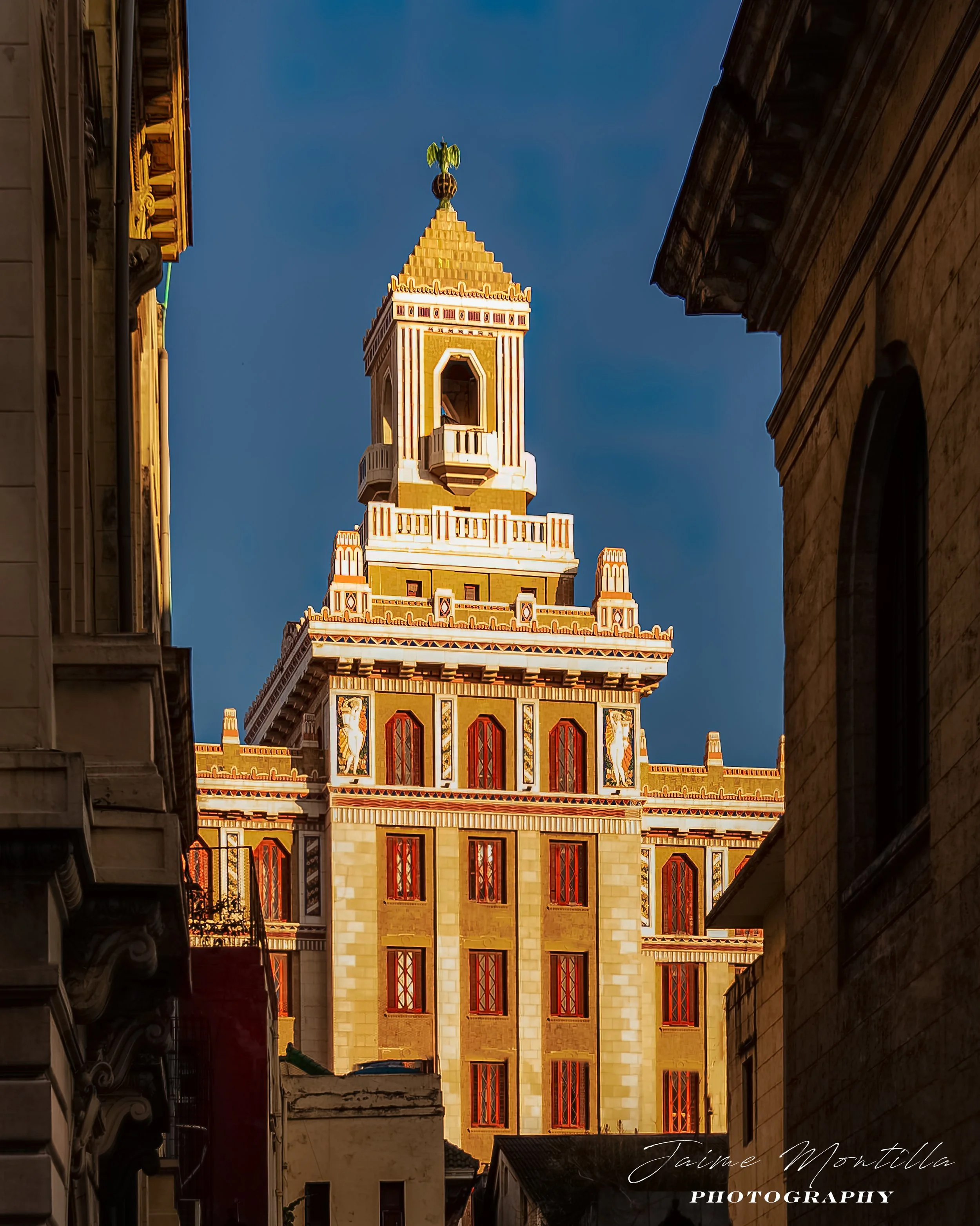
Bacardi Building - Havana, built in 1924 design by architects Esteban Rodríguez-Castells and Rafael Fernández Ruenes
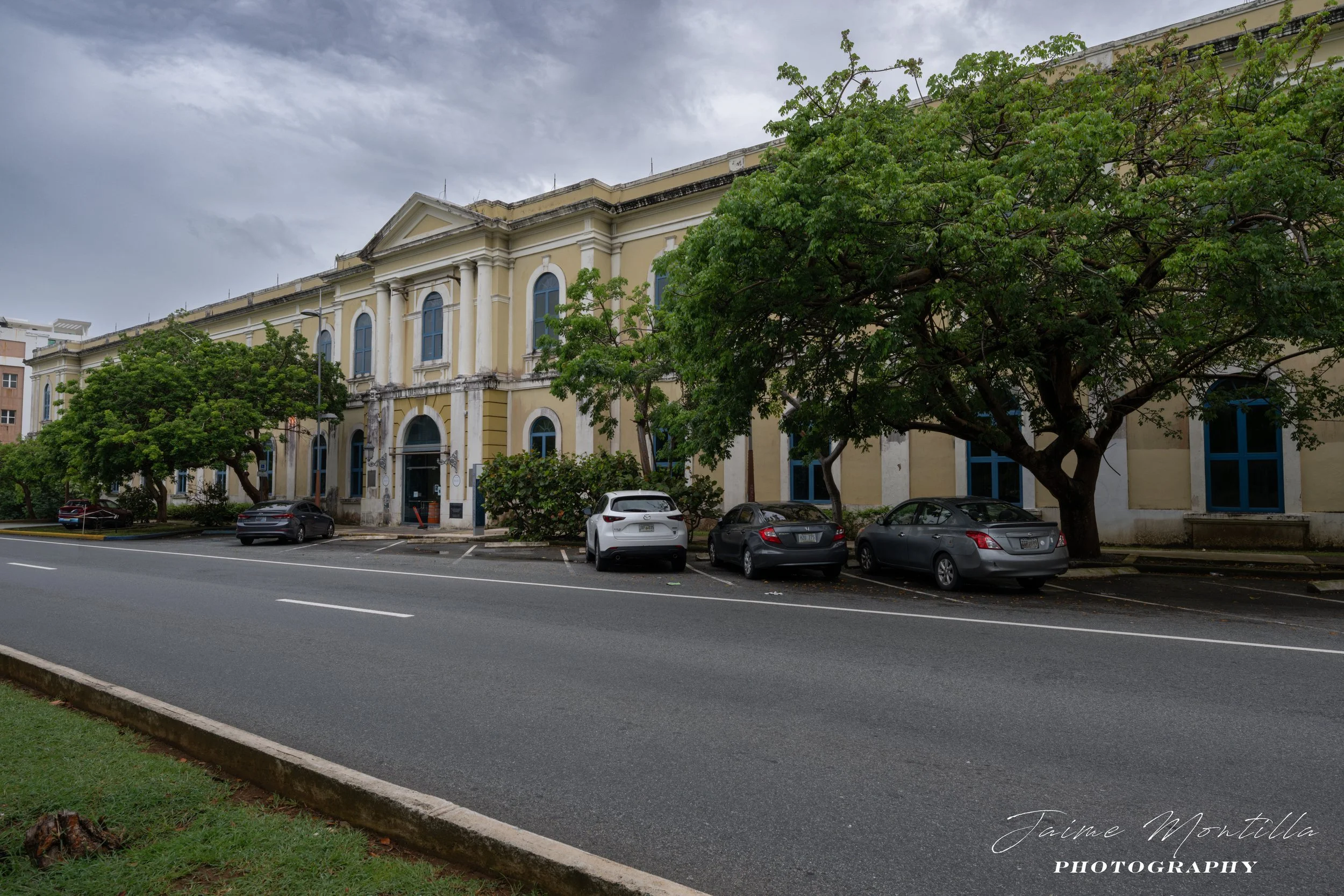
Bacardi - Puerta de Tierra/San Juan, first facility in Puerto Rico built in 1877 as the Spanish Civil Hospital by the Spanish Corp of Engineers, was previous to housing Bacardi Corp., home to the Puerto Rican American Cigar Co. and today the home of the Puerto Rico General Archives and the Puerto Rico National Library
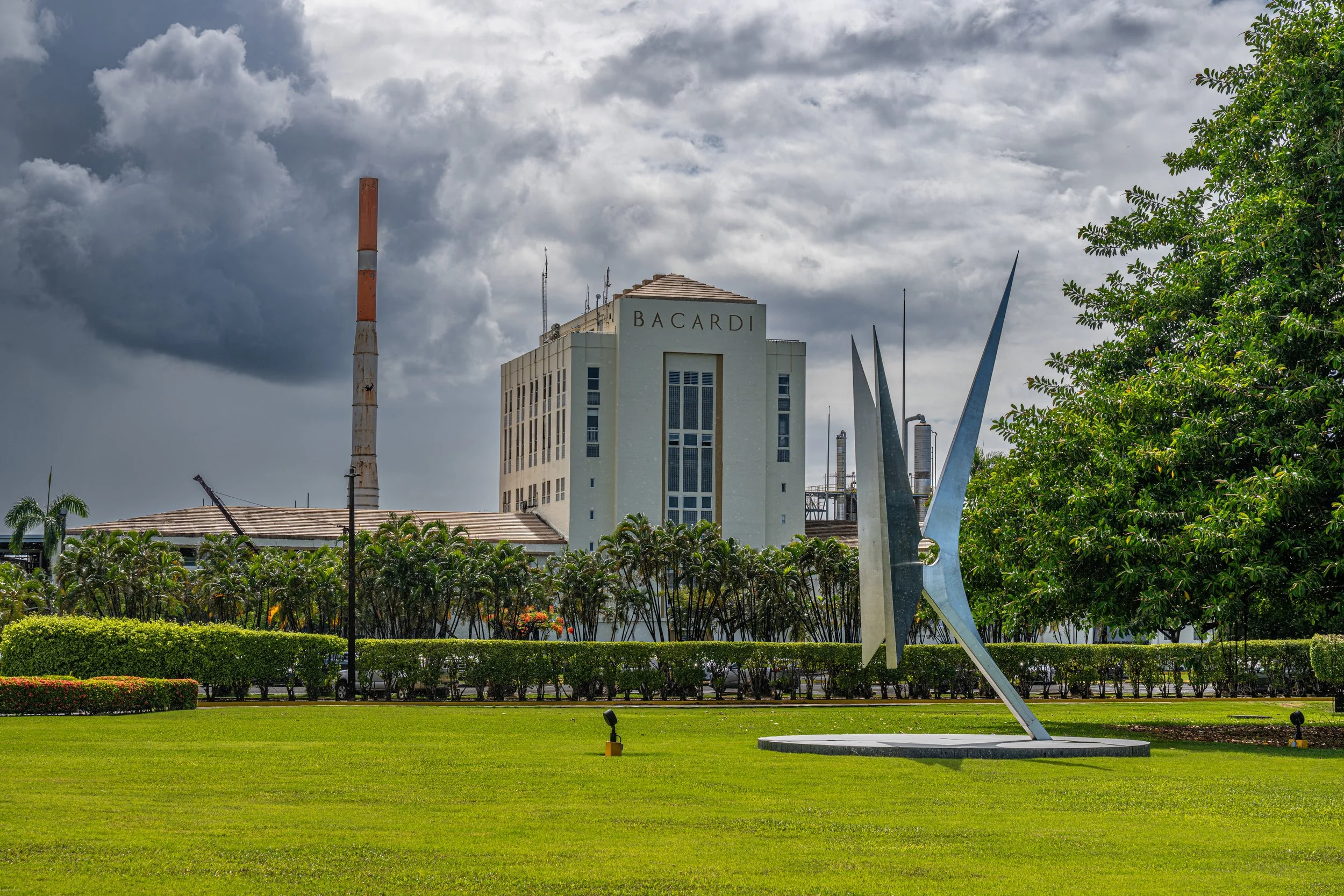
Bacardi Corp. - Cataño, Puerto Rico, 1947 design by W. Donald Christie along the Streamline Art Deco style
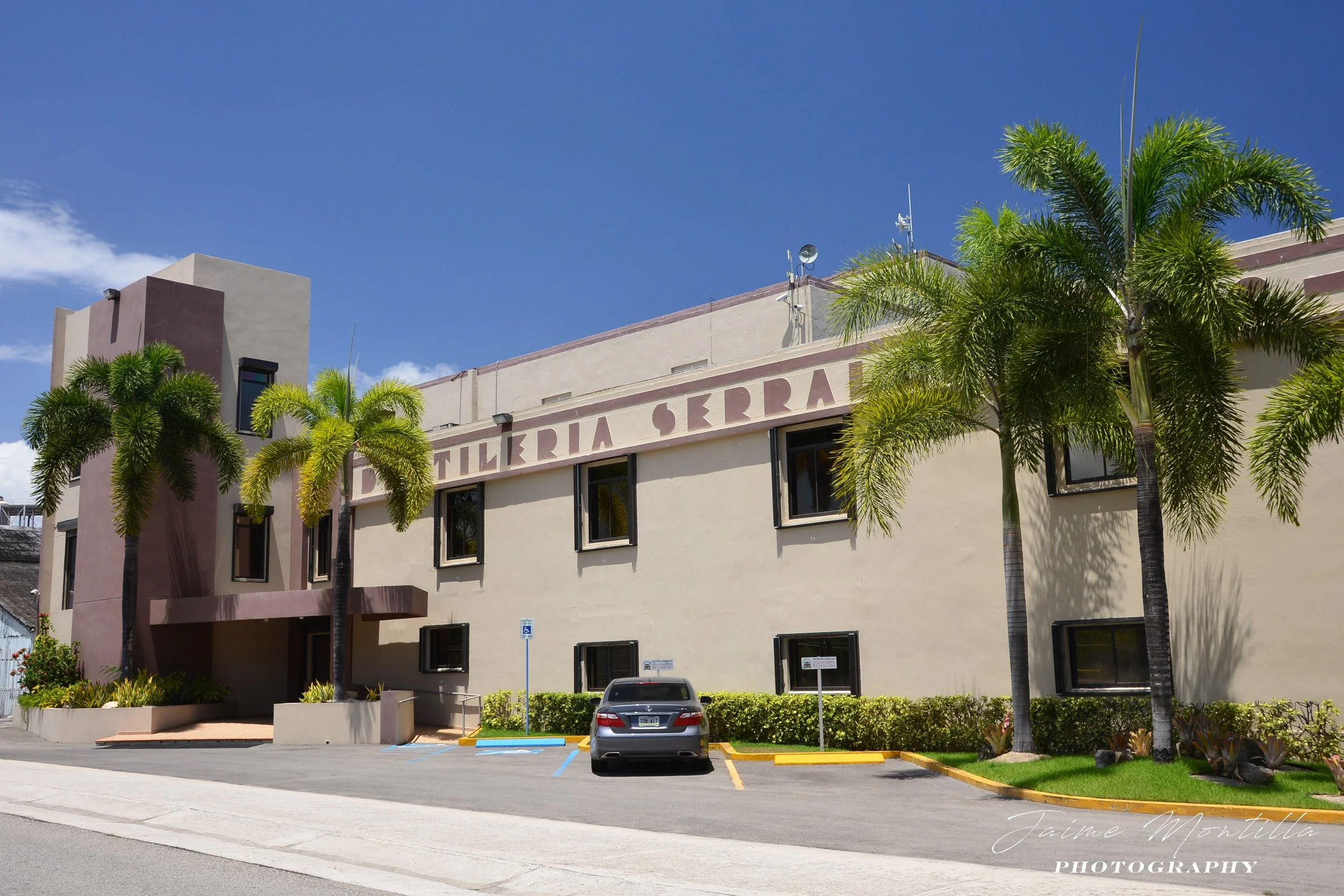
Destilería Serrallés - Ponce, administrative offices
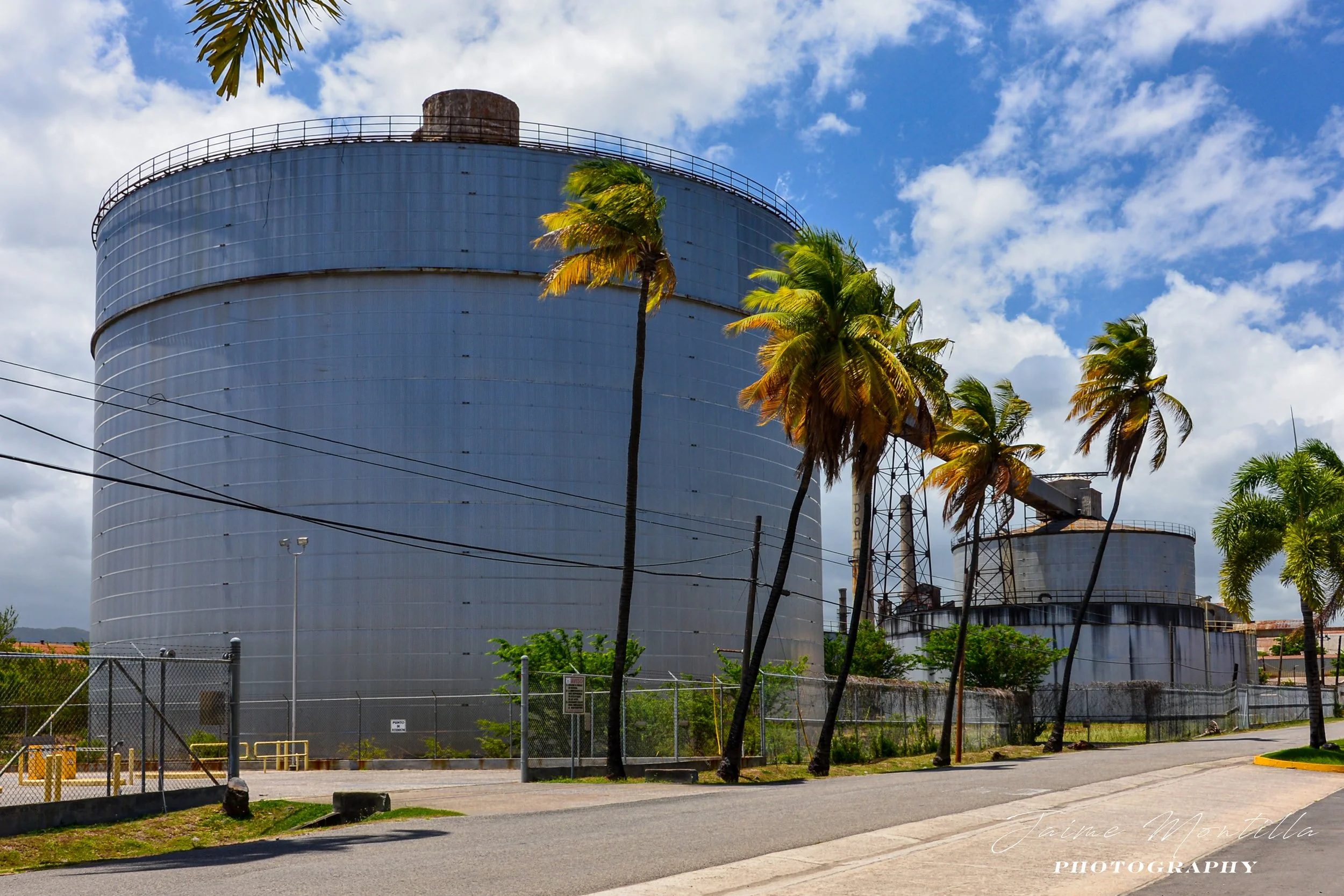
Destileria Serralles - Ponce, molasses and water storage tanks
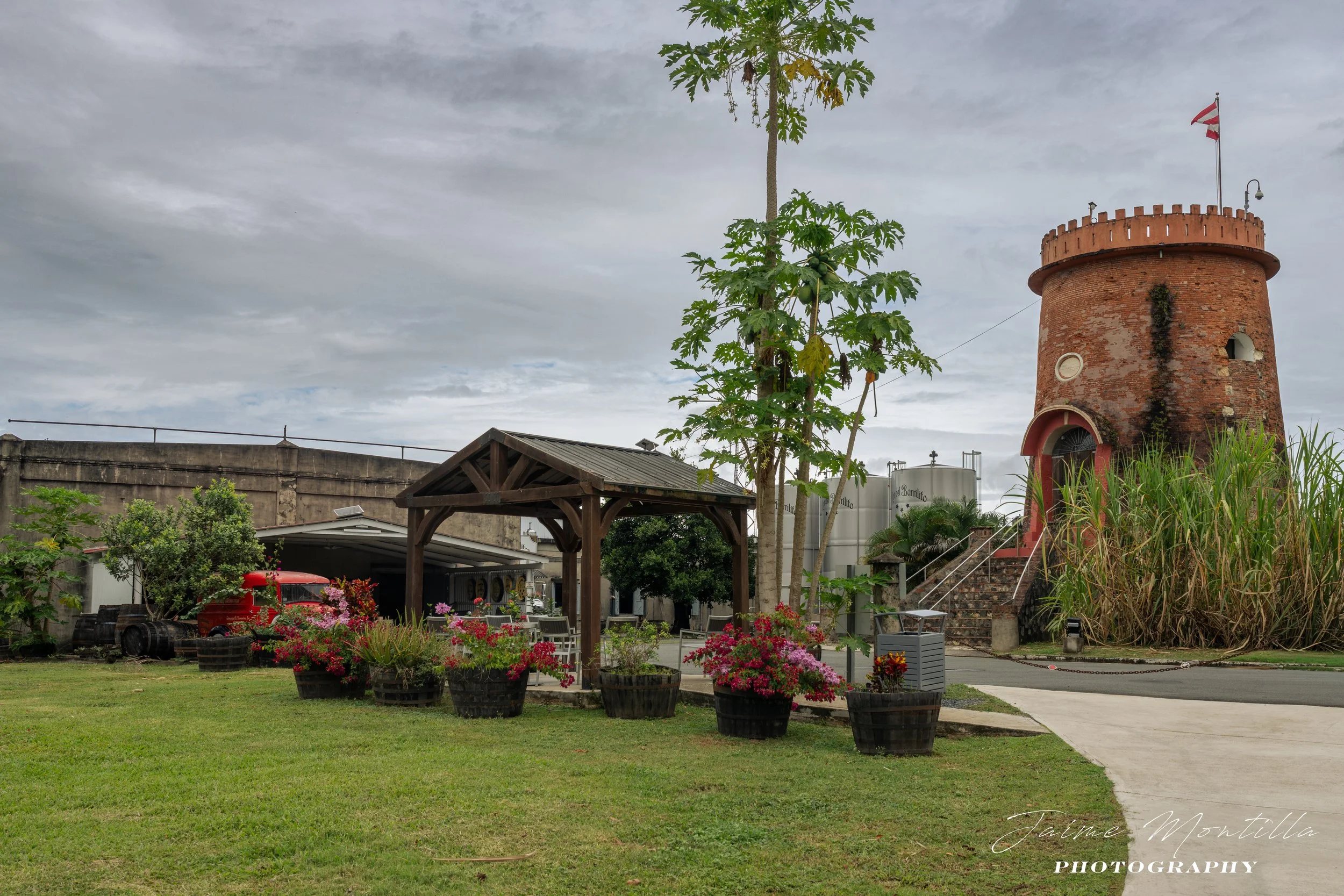
Hacienda Santa Ana - Bayamón, home of Ron del Barrilito
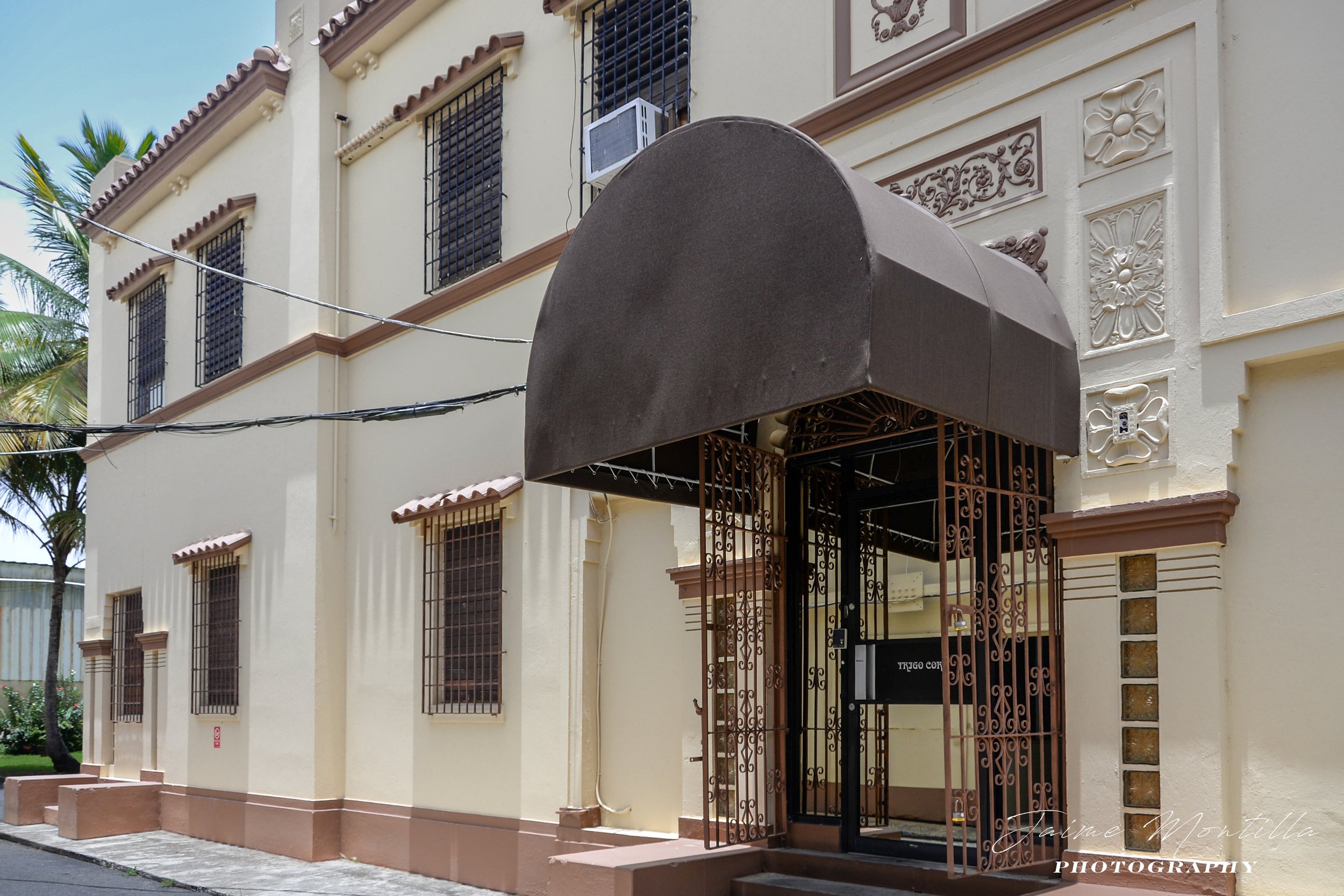
Offices of Trigo Corp. at the facilities of the old Central Constancia sugar mill in Vega Baja
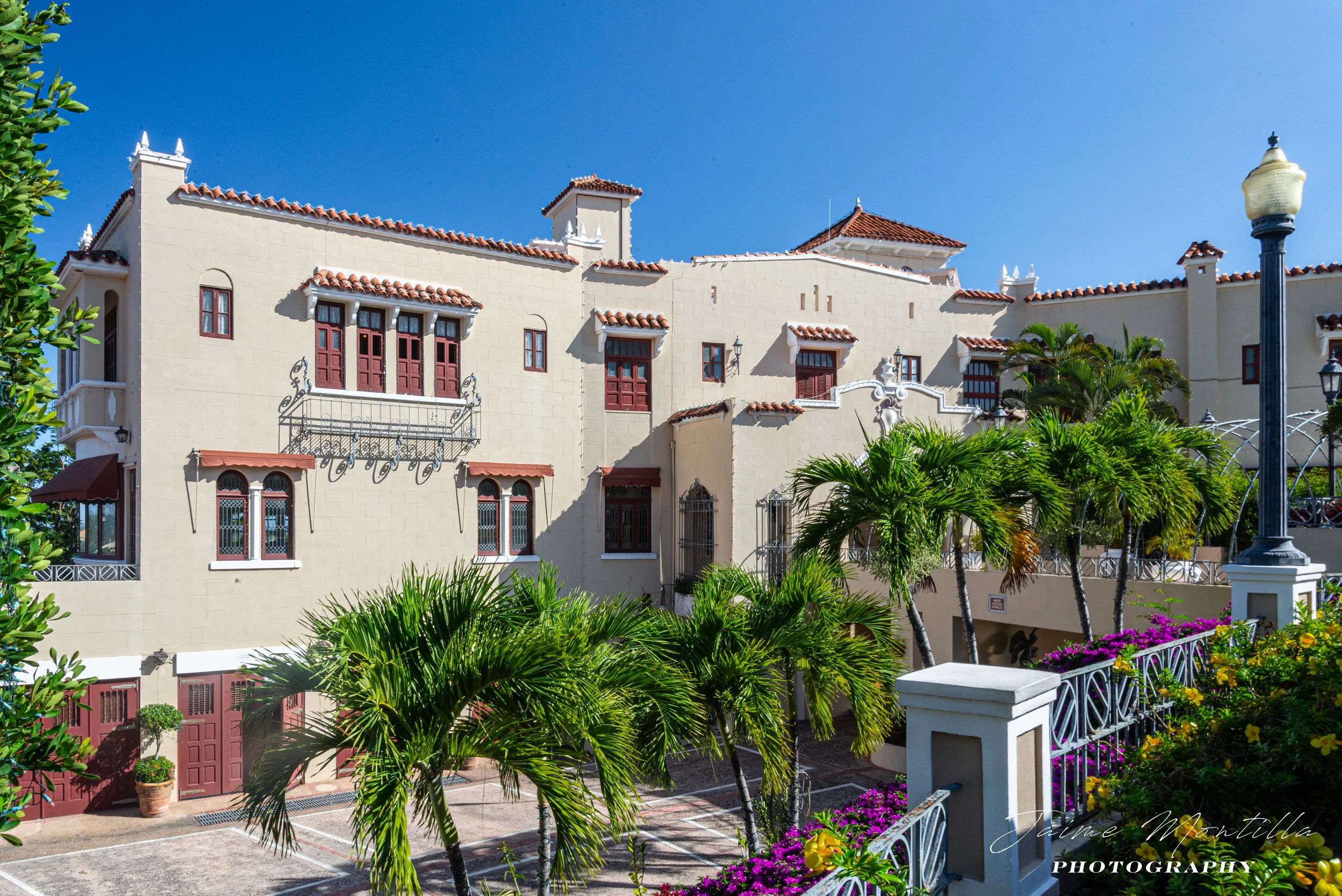
Castillo Serrallés - Ponce, 1930 design by Pedro Adolfo de Castro for Juan Eugenio Serrallés Pérez, today the home of the Museo Casa Serrallés